By Darlington Onedibe
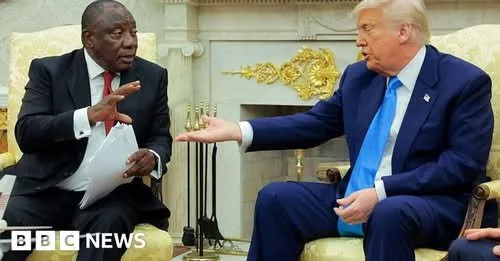
The United States government has announced plans to permanently phase out its funding for the world’s largest HIV/AIDS relief program in South Africa, citing severe concerns over the treatment of the country’s white-minority Afrikaner community and agricultural landowners.
The decision, which will bring an end to over two decades of support through the U.S. President’s Emergency Plan for AIDS Relief (PEPFAR), marks a historic and highly controversial low point in diplomatic relations between Washington and Pretoria.
According to a U.S. State Department official, the decision follows South Africa’s “failure to make demonstrable progress” on specific political and structural conditions set by the Trump administration.
The U.S. State Department confirmed that the permanent drawdown was initiated after the South African government repeatedly declined to meet several race- and policy-related benchmarks, including Protection of Landowners and Public Condemnation of Incitement;
A failure by senior leadership to unequivocally condemn anti-apartheid chants like “Kill the Boer,” which the U.S. argues incites violence against white farmers.
”South Africa is a middle-income country and is more than capable of supporting its own health programs,” a State Department spokesperson stated, defending the decision to tie humanitarian medical aid to domestic policy adjustments.
The announcement has sent shockwaves through the global health community. South Africa is home to roughly 8 million people living with HIV, the highest number of any nation globally.
Since its inception under President George W. Bush in 2003, PEPFAR has injected over $8 billion into South Africa’s healthcare system, financing everything from mobile clinics to antiretroviral (ARV) medication and community-based testing.
A congressional aide warned that the sudden withdrawal could have “catastrophic, cascading effects,” potentially leaving hundreds of thousands of the country’s most vulnerable citizens without consistent access to life-saving treatments.
“We are fighting political and cultural wars that are not ours,” remarked one South African public health official, speaking on the condition of anonymity. “Cutting medicine over land and political chants will cost human lives.”
The South African Ministry of Health stated it is preparing for a “self-reliance plan” to absorb the financial shock, emphasizing that the country’s national health system already self-funds a large majority of its domestic HIV response.
South African officials have consistently rejected the White House’s allegations of an targeted campaign against Afrikaners, maintaining that its economic policies are vital mechanisms to correct legacy inequalities left behind by the apartheid era.
U.S. Ambassador Leo Brent Bozell III is expected to formally meet with South Africa’s Health Ministry next week to outline the timeline for the withdrawal, with program awards expected to wind down by early next year and healthcare worker funding completely concluding by 2027.