By Agbeze Ireke Kalu Onuma (AI-KO)
Today is a public holiday across Nigeria. Here in Lagos it’s all wet and raining. I doubt many people would venture out. And staying nome wouldn’t be fun either. Because there no light and this comes with many accompanying side effects. The rain here in Lekki-Epe express axis, is not the theatrical kind that crashes in with thunder [though where I am the thunderstorm is unrelenting] and leaves just as quickly; it is the slow, stubborn sort that has lingered for days, seeping into walls, into clothes, into thought. As Democracy Day ceremonies spill from radios and televisions, that stillness thickens, almost tactile. Flags hang limp, their colours dulled by the wet breeze. And the city – vast, restless, impossible to quiet – feels less like a nation taking a breath and more like one holding it, waiting for a promise made thirty three years ago to finally arrive in full.
June 12 has always lived in the Nigerian imagination as both a wound and a window – an unhealed scar from 1993 and an opening into what democracy could be if the nation ever fully embraced its promise. Every year, the date returns like a question mark, asking not only what happened, but what has happened since, and what still remains undone. It is a day that forces the country to look at itself honestly, without the comfort of slogans. And in 2026, with President Bola Ahmed Tinubu’s Democracy Day address echoing across the nation, the question becomes even sharper: What’s really democratic about June 12?
There is a peculiar kind of grief that comes with celebrating a wound. Every year, Nigeria marks the day that is simultaneously a triumph and a tragedy, a monument and a question, a holiday and a haunting. The bunting goes up, the speeches are broadcast, and somewhere in the country – probably in many places at once – someone is asking a question that no official ceremony has ever fully answered. Not in the rote, recited sense that everyone already knows – the election, the annulment, the martyrdom of Moshood Abiola, the long road back to civilian rule in 1999, the eventual recognition of the date as Democracy Day in 2018. Not those facts, which have been rehearsed so often they have started to calcify into legend.
But in the deeper, more demanding sense: what does June 12 actually mean for the democracy that Nigerians live today? What does it reveal about the nature of democratic aspiration, about the distance between the symbolism a state deploys and the substance its citizens experience? And what does it say about a country that marks the anniversary of a stolen election while those who stole it – and those who succeeded them in less dramatic but no less consequential ways – have never truly been held to account?
These are not comfortable questions. They are not the questions that official Nigeria invites on Democracy Day, when the choreography of commemoration requires a certain dignified solemnity, a forward-looking hopefulness, a gratitude for the civilian rule that has, against considerable odds, survived twenty-seven years. But they are the questions the day itself demands, if you listen closely enough to what it is actually saying, beneath the speeches and the flags and the declared public holiday. With 27 years of civilian rule on the clock, the question has not gotten smaller. It has gotten sharper.
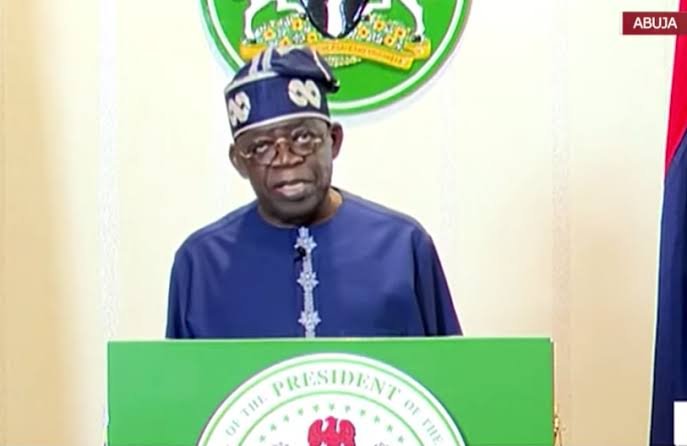
On the morning of June 12, 2026, President Bola Ahmed Tinubu delivered his Democracy Day address to the nation. It was, by the standards of the genre, a substantial speech – sweeping in its historical references, sober in its acknowledgment of ongoing crises, and aspirational in its framing of the moment. The president opened by observing that for twenty-seven unbroken years since May 29, 1999, Nigerians had chosen their leaders through the ballot, witnessed peaceful transitions of power, and resolved disagreements in courtrooms and legislative chambers rather than through violence.
He called this the longest stretch of civilian rule in the nation’s history, and he was right to do so. It is an achievement that, given Nigeria’s violent democratic interruptions before 1999, should not be dismissed. And yet even in the speech’s opening lines there was already a subtle elision at work – the president counted Nigeria’s unbroken civilian rule from May 29, 1999, which is the date of the Fourth Republic’s inauguration, not from June 12, 1993, which is the date of the election that gave Democracy Day its name. That slippage – from the wound to the recovery, from the crime to the consequence – is not merely rhetorical. It is diagnostic. It reveals something fundamental about how the Nigerian state has absorbed June 12: as origin story, not as unresolved indictment.
Tinubu went on to declare that June 12 occupies a sacred place in our national memory, that it represents more than an election but a defining chapter in the national story. He invoked Chief M.K.O. Abiola, who won what he described as a pan-Nigerian mandate transcending ethnicity and religion. He named the dead: Alhaja Kudirat Abiola, Chief Gani Fawehinmi, Chief Bola Ige, Chief Alfred Rewane, Pa Abraham Adesanya, Dr Beko Ransome-Kuti, Frank Kokori, Chima Ubani, and a long roster of activists whose sacrifices, he said, helped secure the freedoms Nigerians enjoy today.
Then came the pivot that every Nigerian has come to expect from every June 12 speech since the date was formally adopted: every generation has a defining responsibility. The generation of our founding fathers secured independence – the generation of June 12 secured democracy. Our generation must secure prosperity. The implication is clear and, structurally, always the same. The heroism has been done. The dying is over. What remains is the economic work – the reforms, the budgets, the policies, the patient grinding of governance. The democratic question, implicitly, has been settled. What is left is the question of development.
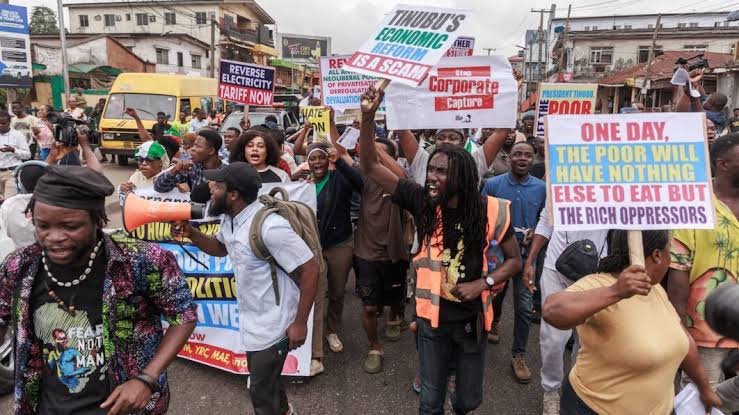
But has the democratic question truly been settled? That is what this essay wants to interrogate. Because the very day on which the president made this speech, a grand coalition of civil society organisations, labour unions, youth groups, and prominent activists – led by human rights lawyer Femi Falana and musician-activist Falz – had declared June 12, 2026 a day of nationwide protest over worsening insecurity, economic hardship, and deteriorating living conditions.
The coalition said Nigerians had little to celebrate on Democracy Day as communities across the country continued to grapple with terrorism, banditry, kidnappings, and violent attacks. They expressed solidarity with the families of abducted schoolchildren in Oyo and Borno. They demanded the release of citizens held captive in multiple states. They accused the government of failing to protect lives. And, most pointedly for our purposes, they invoked June 12 itself – the name and the spirit of the date – as the moral ground for their protest. They were not protesting against Democracy Day. They were protesting in its name. Which raises the most interesting question of all: who owns June 12? The state that has adopted it as holiday, or the people who made it a struggle?
To begin to answer this, you have to go back to what actually happened on June 12, 1993, and more importantly, what it meant – not as frozen history but as living inheritance.
The story is well known but rarely told in its full democratic texture. On that June morning in 1993, Nigerians went to the polls to elect a new president in an election that would be widely regarded as the freest and fairest in the country’s history under military rule. They did so under the Option A4 voting system – a method so transparent and direct it stripped away every layer of manipulation and forced voters to declare their preference openly, by standing in line behind their chosen candidate’s image. There was nowhere to hide and, on that day, Nigerians did not want to hide. They came out in millions, weary of military dictatorship, and they did not vote as atomized tribes, nor did they vote along the rigid, weaponised fault lines of religion that so often paralyse Nigerian politics.
The overarching intention – felt in the queues, expressed in the results – was the pursuit of an egalitarian society, the banishment of poverty, a collective yearning for a functioning nation rather than a performing one. The contest was between Moshood Kashimawo Olawale Abiola of the Social Democratic Party and Bashir Tofa of the National Republican Convention. What made the election extraordinary was not merely that it was peaceful and credible, though it was those things. What made it extraordinary was the nature of Abiola’s victory – his appeal cut across ethnic, regional, and religious lines, winning widespread support, with early results indicating decisive leads including victories in regions traditionally resistant to southern candidates.
For the first time in a country riven by structural divisions that had already produced one civil war and multiple military coups, Nigerians voted for a man based not on where he came from or what religion he practiced, but on what he represented: a genuine pan-Nigerian vision. Abiola ran on a Muslim-Muslim ticket – he and his running mate Babagana Kingibe were both Muslims – and won anyway, including many Northern states such as Kano, once thought impossible for a southern Muslim candidate. This was the democratic miracle that June 12 achieved. Not simply a credible election, but a demonstration that Nigeria could transcend itself.
Then it was stolen. The military administration of General Ibrahim Babangida annulled the election before the official results could be declared. The reasons cited included alleged irregularities and security concerns, though no evidence was publicly presented to justify the annulment. What followed was not a policy disagreement. What followed was a full assault on the democratic will of a people: mass protests, brutal suppression, the seizure of newspapers, the harassment and arrest of journalists and activists, the eventual coup by Sani Abacha in November 1993, and years of a dictatorship so vicious that it executed writers and murdered dissidents. Abiola was arrested in 1994 after declaring himself president, kept in solitary confinement for four years, and died in custody on July 7, 1998, shortly before he was due to be released, just weeks after Abacha himself had died. Two deaths, each mysterious in its own way, each casting long shadows that have never been fully illuminated.
The annulment had far-reaching economic and social consequences. It shattered investor confidence, deepened economic instability, and isolated Nigeria internationally. Several countries including the United States and members of the European Union imposed diplomatic sanctions. Domestically, the annulment eroded public trust in government institutions and gave rise to a new generation of pro-democracy activists – Gani Fawehinmi, Beko Ransome-Kuti, Wole Soyinka – who became central to resistance movements. It gave birth to NADECO – the National Democratic Coalition – which became the organised spine of resistance to military rule, coordinating activists, exiled politicians, and ordinary citizens in a sustained campaign that would cost some of them their freedom, their safety, and in several cases their lives.
Kudirat Abiola was assassinated. Alfred Rewane was murdered. Journalists were detained, newspapers seized, voices silenced. The resistance bled, but it did not dissolve. It is important to understand this: the annulment did not simply interrupt Nigeria’s democratic journey. It shaped the character of Nigerian civic culture, forging in many Nigerians a deep skepticism about the state’s relationship with the popular will that has never entirely healed, and perhaps should not.
Here is where the question of what is democratic about June 12 becomes more complex and more interesting. Because the date does not commemorate an election victory. It commemorates an election annulment. The democracy that June 12 symbolises is not a democracy that was successfully installed and consolidated; it is a democracy that was demanded, fought for, bled for, and only partially delivered. It is a democracy whose original mandate was never honoured. When civilian rule returned in 1999, many regarded it as the fulfilment of the uncompleted June 12 mandate.
But is it, really? The civilian government that arrived in 1999 was the product of a transition managed by the very military establishment that had suppressed June 12. The political class that populated the Fourth Republic was in significant measure a recycled version of the same power elite – military governors turned senators, military contractors turned party financiers, coup-plotters turned elder statesmen. Democracy came, but it came through the same back door it had been denied through the front.
This paradox is not incidental to understanding June 12. It is central to it. What was democratic about June 12, 1993 was precisely what was not delivered: a sovereign popular expression of will, freely made, that was then discarded by men with guns and connections and institutional power. The democracy that June 12 gestures toward is not the procedural democracy of elections held and governments inaugurated. It is something rarer and more demanding: a democracy in which the will of the people is not merely collected but actually honoured, not merely recorded but actually translated into governance, not merely protected during the voting process but made real in the quality of the lives that follow.
The question, then, is whether Nigeria has achieved that. Whether twenty-seven years of uninterrupted civilian rule constitutes the fulfilment of what was implicit in that June morning in 1993.
To answer that question honestly, you have to grapple with some discomfiting numbers and some discomfiting realities. Nigeria’s voter turnout trajectory is one of the most alarming in the democratic world. In the 1999 elections, turnout was 52.2 percent. In 2003 it rose to 69 percent – a peak that has never been approached since. By 2019 it had fallen to 35 percent. By the 2023 presidential election, only 24.9 million of 93.47 million registered voters cast ballots, representing just 26.72 percent – the lowest turnout since the return to democracy in 1999. As of 2026, INEC Chairman Professor Joash Amupitan confirmed that voter turnout had fallen from over sixty percent in 2003 to below thirty percent recently, describing an indifferent electorate as “a democracy in retreat”.
These numbers do not merely describe electoral behaviour. They describe a civilisational relationship between a people and the idea of their own governance. When nearly three-quarters of registered voters decline to vote in a presidential election, they are not simply being apathetic. They are issuing a verdict. They are saying, collectively and in the only language that does not require a microphone or a press pass: we do not believe this process will change anything meaningful in our lives.
That verdict is issued not from ignorance but from experience – from the accumulated weight of elections held and politicians elected and promises made and conditions unchanged. The roots of voter apathy in Nigeria are deep and corrosive: vote buying, electoral violence, rigging, falsification of results, voter suppression, constitutional loopholes, INEC incompetence, politicians’ desperation, and the often-indifferent posture of security agencies – together reinforcing the dangerous perception that votes do not count.
What is democratic about June 12, when the act of voting – the fundamental democratic ritual that June 12’s martyrs died to protect – is boycotted by the majority of those it was fought for? This is not a rhetorical question. It is a genuinely difficult one. You can argue, as democracy’s defenders often do, that the right to not vote is itself a democratic right. Both technically true. But neither of these addresses the specific Nigerian context, which is that the people who are not voting are not exercising a sovereign preference for abstention – they are withdrawing in despair from a system they believe has already been decided by forces they cannot influence. The distinction matters enormously. An electorate that chooses not to vote because everything is fine is a democratic success. An electorate that chooses not to vote because everything is rigged is a democratic emergency.
The Movement for Credible Elections warned in March 2026 that INEC’s newly released guidelines were overregulated, impracticable, and insufficient to guarantee credible elections ahead of 2027, describing Nigeria as standing at a critical democratic crossroads. A Centre for Democracy and Development analysis from May 2026 noted that the National Assembly had failed to pass an unambiguous provision mandating real-time electronic transmission of election results, leaving the process between polling unit collation and final declaration vulnerable to interference – a gap that had fuelled widespread allegations of manipulation in 2023. You can hold elections in conditions like these. You cannot have democracy in conditions like these – not democracy in the full, substantive sense that the heroes of June 12 imagined when they marched and died and went to prison for it.
There is a recurring phrase in Nigerian political culture, deployed most often on Democracy Day, that deserves scrutiny: the idea that Nigerians “fought for” democracy. The phrase is true, but its use often functions as a kind of closure – as if the fight is over, the victory secured, the chapter closed. In Tinubu’s 2026 address, the pattern was reproduced faithfully: the generation of June 12 secured democracy. Past tense. Secured. As if democracy were a territory captured and held rather than a process that must be continuously struggled for and continuously defended.
This framing has political consequences. When democracy is presented as something already secured, the emphasis naturally shifts to what comes next – development, prosperity, economic reform. These are legitimate concerns. Nobody disputes that Nigerians need and deserve economic progress. But the shift can also function as a way of foreclosing democratic questions that remain very much open. Questions like: who actually controls Nigerian politics? How are candidates selected? Who can afford to run for office? Whose interests do elected officials primarily serve? These are not questions about the past. They are questions about the present, and they are not answered by pointing to the calendar and counting twenty-seven years of uninterrupted civilian rule.
Consider the Inter-Party Advisory Council’s assessment on this same Democracy Day: the most obvious achievement of Nigeria’s democratic journey is the twenty-seven years of uninterrupted civilian governance, but the democratic experience had not translated into meaningful development – insecurity, poverty and corruption had worsened compared with what was witnessed during past military regimes.
This is a remarkable statement, worth pausing over. A body representing Nigerian political parties – a body with institutional investment in the survival of democracy – is saying that by some measures, civilian rule has performed worse than the military governments it replaced. Not in terms of political freedom, perhaps. But in terms of the material conditions of ordinary Nigerians. Not in terms of the right to vote. But in terms of whether that right, exercised year after year, has produced anything that resembles the aspirations that animated the June 12 struggle.
The African Democratic Congress used its Democracy Day statement to argue that democracy can no longer be measured merely by the passage of years since military rule but by the quality of life and freedoms enjoyed by citizens, in an open letter titled “When Is Democracy?” – three words that contain more democratic philosophy than most full speeches. When is democracy? Not just where or how, but when – implying that there are conditions under which the word applies and conditions under which it does not, whatever the constitutional arrangements might say.
The Falana-Falz coalition put the question more bluntly: innocent Nigerians are being killed, abducted, displaced and traumatised while government responses have remained largely inadequate and ineffective. They were demanding the release of children abducted in Oyo and Borno – thirty-nine schoolchildren and seven teachers taken from primary schools in Oriire Local Government Area, one teacher beheaded; and forty-two pupils abducted from a school in Askira-Uba, Borno State, by suspected Boko Haram militants. Children abducted from schools, on Democracy Day, in a country supposedly securing prosperity through democratic reform. That is not incidental detail. It is the sharpest possible rebuttal to the claim that the democratic question has been settled.
Tinubu acknowledged this honestly. This year’s mood is dampened by the abduction of our children in Oyo and Borno, he said. He announced a security emergency, fifty thousand new police officers, and the largest ever defence budget of N5.41 trillion. He spoke of terror-related deaths down eighty-one percent since 2015 and thirteen thousand terrorists neutralised in the past year. These figures are significant, if accurate. But they exist alongside the reality of children sitting in unknown captivity as their country celebrates the freedom that was promised them. Statistics cannot fully absorb that contradiction. Numbers are not the same as reckoning.
Perhaps the most underexamined dimension of the democratic question as it relates to June 12 is the question of memory – of who remembers, what is remembered, and what the act of remembering is made to do. Collective memory is never neutral. It is always in the service of something. The canonisation of June 12 as Democracy Day in 2018 was a significant act, and it was welcomed – genuinely, not merely performatively – by many Nigerians who had been demanding this recognition for decades. The posthumous conferral of the GCFR on Abiola by President Buhari, the naming of the Abuja airport after him, the public holiday – these were not nothing. They represented a formal acknowledgment that an injustice had been done, that Abiola’s sacrifice was real and his mandate legitimate. When civilian rule returned in 1999, many regarded it as the fulfilment of the uncompleted June 12 mandate.
But there is a difference between honouring a martyr and honouring what a martyr stood for. And there is a further difference between recognising an injustice historically and actually accounting for it. This distinction is made especially sharp by the identity of the man delivering the 2026 Democracy Day address. Bola Ahmed Tinubu is not a bystander to the June 12 struggle. He was a participant in it – a politician who cut his teeth in the trenches of that resistance, who fled into exile to fight the annulment and returned to build a political career on the democratic mandate that the struggle eventually produced.
The irony is almost too dense to navigate. The same man who once ran from Abacha’s security apparatus now commands Nigeria’s security apparatus. The man who was once chased out of the country by an authoritarian government is now the government. This is not an accusation. It is an observation about history and what it does to people – how the proximity to power changes the relationship with the ideals that were once the reason for the fight. Tinubu has acknowledged this inheritance. He has honoured the martyrs by name. But the question that June 12 insists on is whether honouring the martyrs means anything if the conditions that made their sacrifice necessary are quietly being recreated in civilian form.
Babangida, the man who annulled the election, remained for decades one of the most powerful behind-the-scenes figures in Nigerian politics, consulted by presidents, courted by aspirants, never prosecuted, never marginalised, until only recently – in his memoir launched in Abuja – did he finally admit that Abiola won the June 12 election, describing the annulment as “an accident of history”. That phrase – “accident of history” – applied to an act of deliberate, calculated political sabotage, tells you something essential about the terms on which democratic accountability has been negotiated in Nigeria. Regret without reckoning. Admission without consequence. Memory without justice.
This matters because the culture of impunity that allowed the June 12 annulment to happen did not die with Abacha or disappear with the arrival of civilian rule in 1999. It adapted. It found new forms. The same structural logic that allowed a military cabal to override the popular will in 1993 – the assumption that power is something seized and managed rather than entrusted and returned – has continued to shape Nigerian political life, dressed now in civilian clothes, armed now with court injunctions rather than guns, operating now through party primaries and ballot manipulation rather than outright coups. You cannot fully celebrate June 12 without confronting this continuity. To celebrate the date while ignoring the culture is to miss the point of the martyrdom entirely.
Now let us turn to the economy, because you cannot interrogate the democratic meaning of June 12 while ignoring the material conditions under which Nigerians actually live. Democracy is not an abstraction. It is not a constitutional clause or a date on a public holiday calendar. It is felt – or it isn’t – in the daily texture of people’s lives: in whether they can afford to eat, send their children to school, access a functioning hospital, walk safely in their own streets, and earn wages that don’t dissolve in the heat of inflation before they reach the end of the month.
By those measures, the democratic dividend of twenty-seven years of civilian rule is, at minimum, deeply contested. According to the World Bank, more than 60 percent of Nigerians were estimated to be living below the national poverty line in 2026, with an additional seven million people falling into poverty that year alone despite economic reforms and moderating inflation. Seven million more people in poverty in a single year, in a country celebrating democracy.
The 2022 Multidimensional Poverty Index found that 133 million people – 63 percent of the population – were multidimensionally poor, encompassing deprivations not just in income but in healthcare, education, sanitation, housing, and employment. These are not peripheral footnotes to the democratic story. They are the central democratic reality for the majority of Nigerians. The poverty incidence ranges from 27 percent in Ondo State to a staggering 91 percent in Sokoto State – a variation so extreme that citizens of the same republic might as well be living in entirely different countries.
What does it mean to tell a person living in Sokoto that their democracy is 27 years old and going strong? What does June 12 mean to a graduate who drives a motorcycle for a living because there are no graduate-level jobs? One young Nigerian captured the despair with disarming precision: we love our country, but the country doesn’t seem to love us back. When I compare my effort to my income, migration begins to look like the logical option. That sentence is a democratic indictment. It is the sound of a citizen reaching the limit of what formal democracy, unaccompanied by economic justice, can offer.
And the failures are not only structural. They are also spectacularly specific. Kidnapping and banditry have metastasised into what is effectively a parallel economy – a ransom economy estimated to be worth trillions of naira, in which ordinary Nigerians, schoolchildren, farmers, and commuters are abducted and held as income-generating assets by armed groups operating with an impunity that mocks every claim about security progress. The state issues ultimatums. The bandits collect ransoms. The cycle continues. Then there is electricity – or rather, its absence and its management.
The government’s response to the chronic power crisis has been to segment the grid into tariff bands, grading citizens’ access to electricity by their ability to pay, and charging premium rates to those lucky enough to receive Band A supply while millions in lower bands sit in prolonged darkness. This is not a technical policy. It is a democratic statement. It tells citizens that their access to one of the basic conditions of modern life is contingent on their income rather than their citizenship. It punishes the poor for being poor while presenting itself as reform.
This is the context in which Tinubu’s pledge that democracy must be felt in the pocket must be read. It is a good line. It is even a true line. But it is spoken by a government whose own economic reforms – the removal of the fuel subsidy and the unification of the exchange rate – have, whatever their long-term necessity, caused immediate and severe pain to the people already most vulnerable. The reforms triggered severe economic hardship, rising inflation, and public discontent. The government insists these are corrective measures, that the pain is temporary, that the structural adjustments are unavoidable.
Perhaps so. But the politics of democratic legitimacy are not long-term politics. They are immediate. They are felt in the market, in the fuel queue, in the school fees that can no longer be paid. And while politicians deliver speeches about democratic gains, many young Nigerians say they have inherited a country weighed down by debt, unemployment and inflation, and that democracy’s dividends have been captured by a tiny elite while the majority struggle merely to survive. That is not ingratitude. That is a democratic accounting.
The structural dimensions of this failure run even deeper. Nigeria’s inequality had entered crisis level by 2019 according to Oxfam’s Commitment to Reducing Inequality Index, and the trajectory has not reversed since. The country is simultaneously home to some of the wealthiest people on the African continent and some of the poorest populations on earth. This is not a paradox that democracy has resolved. If anything, it is a paradox that some dimensions of Nigeria’s democracy – the transactional politics, the clientelism, the monetisation of the electoral process, the elite capture of state resources – have deepened. Economic inequality fuels unrest, which is linked to political instability and security issues, which in turn hinder democratic consolidation and progress. This is the vicious circle that Nigeria’s democracy has been unable to break in twenty-seven years of trying. It is the circle that June 12 implicitly promises to break, and the circle that the institutions born of June 12 have, as yet, failed to break.
There is a concept that has become the defining demographic expression of Nigerian democratic failure. It is called Japa – a Yoruba slang term meaning, simply, to flee. In contemporary Nigeria it means something very specific: to leave, to emigrate, to abandon the country in search of a life that the country has been unable to provide. It is used playfully but it is not funny. It describes an alarming wave of emigration in which doctors, nurses, engineers, academics, and even skilled artisans are leaving the country in droves, seeking better opportunities abroad. The health sector is perhaps the hardest hit, with hospitals across Nigeria haemorrhaging nurses and doctors trained at public expense who are now staffing wards in the United Kingdom, Canada, and the United States. Key drivers include economic instability, career stagnation, insecurity, poor educational infrastructure, and political corruption.
What is the democratic meaning of Japa? On the surface, it might seem like a purely economic or social phenomenon, separate from the question of political rights and democratic governance. But it is not separate. It is democracy’s most honest verdict. When the educated, the skilled, the young, the ambitious – the very people that every democracy needs as the foundation of its civic life – choose to leave rather than stay, they are making a democratic choice.
Not the choice Tinubu appealed to when he urged young Nigerians to build here, code here, work here, and vote here, but a choice nonetheless. A choice that says: we have looked at what this democracy offers, and we believe somewhere else offers more. Every doctor that leaves is a potential life saver lost. Every teacher that relocates is a generation of students deprived. Every engineer or innovator that exits is a missed opportunity for growth. And every person who chooses to leave rather than to vote is a small withdrawal from the democratic project, accumulated across tens of thousands of individual decisions into something that begins to look like institutional abandonment.
This makes the president’s appeal to the young all the more poignant and all the more complicated. It is easier to tell someone to stay and build when the building is taking place on level ground. When the ground is crumbling – when inflation eats earnings, when insecurity threatens physical survival, when hospitals lack basic supplies, when universities cannot keep the lights on – the invitation to stay sounds less like civic inspiration and more like an ask to accept conditions that the people issuing the invitation would never accept for themselves.
The Japa phenomenon is, in the end, a referendum on the democratic contract. It is the population’s answer to the question that June 12 keeps asking: is this the democracy we fought for? And the answer, expressed in departure lounges and visa application queues and diaspora WhatsApp groups, is: not yet. Not enough. Not what we deserved.
Any honest examination of Nigeria’s democratic health must also examine the institutions that hold the edifice together – the judiciary, the legislature, the press, the civil service, the anti-corruption bodies. Because democracy is not just elections. It is the quality of the architecture that elections are supposed to fill with people capable of managing it. And here, the picture is significantly more mixed than the Democracy Day address acknowledges.
Take the judiciary first. In his 2026 speech, Tinubu saluted the National Assembly, the Judiciary, the Press, and Civil Society as the guardrails of our republic. The language is right. The institutional reality is, by multiple independent assessments, considerably more fragile. Nigeria’s judiciary has experienced significant declines in judicial independence, access to justice, and effective parliamentary oversight over the last five years. The judicial appointment process lacks transparency, creating opportunities for corruption.
In 2023, judges received the largest monetary bribes of all public officials, according to a United Nations report. The state of the judiciary is not a technical footnote – it is a democratic crisis. Because if you cannot trust the courts, you have no reliable mechanism for resolving the very electoral and governance disputes that democracy generates. You replace one kind of impunity – military – with another kind – judicial – and the net result for ordinary citizens is the same: power without accountability.
The legislature fares no better. The current National Assembly has been described by some observers as a “rubber stamp” legislature, perhaps even worse than the last assembly, which was blamed for giving previous presidents a free pass on debt, incompetent appointees, and failing to exercise oversight. At the state level, governors use financial power to control the legislature and judiciary, while the independence of local governments is widely disregarded.
This is not abstract constitutional theory. When state legislatures are controlled by governors and local governments are controlled by states, the entire pyramid of democratic representation collapses into a single point of power. The 774 local government councils – which ought to be the most immediate, most responsive unit of democratic governance, the places where roads get fixed and markets get managed and communities get heard – become patronage networks for governors rather than democratic vehicles for citizens.
The press is constitutionally free. In practice, officials restrict press freedom by publicly criticising, harassing, and arresting journalists, especially when they cover corruption, human rights violations, or other politically sensitive topics. Journalists and civic activists routinely face harassment, arrest and intimidation, often for merely demanding accountability. The press is one of the most courageous institutions in Nigeria’s democratic life.
Nigerian journalists have done extraordinary work in investigating corruption, documenting atrocities, and holding power to account at enormous personal risk. But they operate in an environment that is structurally hostile to the sustained, investigative accountability journalism that healthy democracies require. Between the sedition laws, the defamation suits, the economic pressures from advertisers with political connections, and the occasional gunshot, the democratic ecosystem for a free press remains constrained in ways that are incompatible with the vision of June 12.
Now consider what happened on the night of October 20, 2020, at the Lekki Toll Gate in Lagos – not as a historical event but as a democratic document. Young Nigerians had been on the streets for weeks calling for the disbandment of the Special Anti-Robbery Squad – a police unit notorious for brutality, extortion, and extrajudicial killings – under the hashtag #EndSARS. The movement was one of the most significant expressions of democratic will in Nigerian history since June 12 itself. It was young, leaderless, organised through social media rather than through party structures, and it was demanding something entirely within the spirit of June 12: that the state should protect citizens rather than prey on them.
On that night, the military and police opened fire on protesters at the toll gate. At least nine protesters were killed. More were injured. The lights went out before the shooting started, and when they came back on, the world was already watching. The Lagos Judicial Panel of Inquiry eventually concluded that the Nigerian military and police were responsible for what it called a massacre. The Nigerian government denied responsibility. And five years on, no one has been held accountable. Not one soldier. Not one officer. Not one official. The streetlights that went dark before the shooting have become symbols of Nigeria’s moral blackout.
This is the democratic reality that no Democracy Day speech has ever fully reckoned with. Because what happened at Lekki Toll Gate was not an aberration. It was a revelation. It revealed, with brutal clarity, what the Nigerian state does when young people exercise their democratic rights in ways that threaten the interests of those in power. And it revealed something that goes to the very heart of what democratic legitimacy means: when the government responds to protests with bullets instead of actual policy changes, citizens lose faith not just in security agencies but in democracy itself. Repression of protesters signals the government is willing to apply rules unevenly and protect power at all costs – and that accountability does not matter. Trust, once broken in this way, does not mend easily.
The parallels with 1993 are not exact, but they are instructive. In 1993, a military government overrode the popular democratic will through annulment. In 2020, a civilian government responded to democratic protest with lethal force and then denied accountability. The vehicle changed. The logic – that the state is the arbiter of how much democracy the people are permitted to exercise – remained the same. June 12 asks Nigeria to bury that logic permanently. Lekki Toll Gate suggests it has not yet been buried.
There is a scene that recurs, in various forms, across Nigeria’s democratic history, that is worth sitting with. It is the scene of the ordinary Nigerian voter – not the activist or the academic or the columnist, but the market woman, the okada rider, the small-scale farmer, the factory worker, the unemployed graduate – standing in a queue on election day. Standing sometimes for hours. In rain, in heat, in both. Sometimes in fear. Carrying a voters card that represents, in theory, their share of sovereign power. They vote. They go home. They wait. The result is announced. Sometimes it is the result they expected, sometimes it is a result that bears no obvious relationship to what they saw at their polling unit. Either way, the government that follows governs for someone, but that someone is rarely them. The next election comes, and they must decide whether to stand in that queue again.
This scene is the lived experience of Nigerian democracy, and it is radically different from the official narrative of Democracy Day. The official narrative is about heroes and sacrifices and a country that has held firm. The lived experience is about a relationship between citizens and their government that has never been adequately repaired – that has, in many respects, been systematically broken down – since the promise of June 12, 1993 was snatched away. The democracy that June 12 died for has been haemorrhaging its own constituency, election cycle by election cycle. What would it mean to take this seriously? Not to explain it away with references to global trends or structural difficulties, but to actually reckon with what it means that the majority of Nigerians eligible to vote do not vote – that the government claiming the mandate of June 12’s democratic legacy is elected, in practice, by a minority of the population.
This is not a partisan point. It applies to every government that has taken power in Nigeria’s Fourth Republic. None of them has been able to make the claim that June 12 genuinely invites: that the government of Nigeria reflects the expressed will of the Nigerian people. Some have come closer than others. The 2015 defeat of Jonathan by Buhari was celebrated globally as a sign of democratic maturity: for the first time, an opposition candidate defeated a sitting president through the ballot box, and power was peacefully transferred. A genuine democratic achievement. A genuine expression of the spirit of June 12. But it sits alongside elections that were manifestly stolen, results manifestly manufactured, and a system in which vote buying, electoral violence, rigging, and INEC incompetence have combined to create a perception – among millions of Nigerians – that their votes do not count.
The perception, it should be noted, is not entirely a perception. It is, in many documented cases, a description of documented reality. The delayed and inconsistent result uploads on the INEC portal during the 2023 elections fuelled widespread allegations of manipulation. A democracy in which a significant portion of the population does not accept the legitimacy of an election result is a democracy with a serious problem, and the problem does not disappear by pointing to the court ruling.
There is a question that Nigeria has never fully faced about the nature of its own democratic identity, and it goes something like this: is Nigeria a democracy that has problems, or is it a country with problems that has elections? The distinction is not semantic. The first describes a functional democratic system struggling with implementation challenges – corruption, inequality, security – that better governance can address over time. The second describes a system in which elections serve primarily as legitimation devices for a political class that governs in its own interest.
Nigeria exhibits mid-range performance in representation, rights, and participation, but is in the low range with regard to rule of law. It is among the top 25 percent of countries in civic engagement and press freedom, but among the bottom 25 percent for several factors of rule of law and rights. Over the last five years, it has experienced significant declines in judicial independence, access to justice, and effective parliament. A country simultaneously in the top quarter for civic engagement and the bottom quarter for rule of law is a country whose citizens are doing more than the institutions deserve. The people are doing their part. The institutions are failing theirs.
Despite substantial natural resource endowments and episodic periods of economic expansion, the vast majority of Nigerians have seen little improvement in their material conditions. Poverty has become more widespread and multidimensional, reflecting a broader failure of democratic institutions to deliver socio-economic dividends. One academic study calls Nigeria’s democracy, in an exact phrase, “undemocratic democracy.” It is not a paradox. It is a diagnosis. And it is a diagnosis that every June 12 celebration implicitly either confirms or challenges. This year’s celebrations, like those before them, did both at once.
The structural dimensions of democratic failure in Nigeria are not random. They grow from specific roots. There is a widening trust gap between citizens and the political class. Many Nigerians feel disconnected from governance due to economic hardship, perceived electoral irregularities, and unfulfilled campaign promises. That trust gap is not just an attitude. It is a structural consequence of a system in which elections are contests between resource-rich political actors, in which ordinary citizens’ votes are treated as commodities to be purchased rather than mandates to be honoured. Women, youth, and persons with disability remain underrepresented in political leadership. The cost of running for office – the party nomination fees alone – effectively restricts formal political participation to the wealthy and their clients. When the range of options on a ballot is pre-selected by money and network, the ballot is democratic in form but oligarchic in substance.
What does June 12 ask of us, then? Not us as politicians or bureaucrats or institutional actors, but us as thinking people trying to understand what democracy means and what it demands?
It asks, first, that we distinguish between democracy as procedure and democracy as substance. The procedure is the election – the polling unit, the ballot, the count, the declaration, the inauguration. Nigeria has mastered the procedure to a considerable, if uneven, degree. Twenty-seven years of elections held, governments inaugurated, power transferred. This is not nothing. In a continent where coups are still happening, in a region where several neighbours have gone back to military rule in the past five years, the durability of Nigeria’s civilian governance deserves to be acknowledged as a genuine achievement. Tinubu was right to invoke it. The procedure has, with significant imperfections, held.
But democracy as substance is something different. It is the lived experience of what governance does to people – whether it expands their freedoms or constricts them, whether it improves their material conditions or worsens them, whether it responds to their expressed preferences or substitutes the preferences of a governing class. In the language that Tinubu himself used, democracy must be felt in the quality of people’s lives – in opportunities for youth, in prosperous farmers, successful entrepreneurs, and the dignity of workers. Democracy must be felt in the pocket. These are remarkable words from a sitting president, because they constitute a standard by which his own administration can be judged, and by which Nigerian democracy can be judged – a standard that, by the evidence of the civil society protests, the economic data, the security crisis, and the declining voter turnout, has not been met.
It asks, second, that we be honest about what June 12 was actually about at its deepest level. It was about the principle that the expressed preference of a people has legitimate authority that no power, however armed or however institutionally entrenched, has the right to override. That principle is not just about military coups. It applies equally to a civilian government that manipulates electoral results, to a political class that determines outcomes before voters are consulted, to a system in which money is the primary determinant of who can seek and hold office. The enemy of June 12’s democratic spirit is not only the soldier with a gun. It is also the politician with a patronage network, the businessman with a party financier, the electoral official with selective blindness toward ballot-box stuffing. The spirit of June 12 is not satisfied by the absence of coups. It is satisfied only by the presence of genuine accountability.
It asks, third, that we take the protesters seriously. Not the government’s preferred reading of June 12, but the reading that led Femi Falana and Falz and dozens of civil society organisations to declare Democracy Day 2026 a day of nationwide protest over insecurity, hardship, and the abduction of children from schools. This is, in a very real sense, the most authentically democratic thing that has happened on June 12 in recent memory: citizens using the symbolic weight of the date to demand that its promise be made real. They are not asking to overthrow the government. They are asking the government to govern. They demanded what Abiola’s mandate implicitly promised: that the people’s welfare is the first concern of power. That demand is the democratic inheritance of June 12 as surely as any presidential speech.
And it asks, fourth, that we acknowledge what is genuinely democratic about the day. The significance of June 12 derives principally from the election widely regarded as one of the freest, fairest, and most peaceful in Nigeria’s history. It transcended ethnic, religious, and regional divisions, demonstrating the capacity of Nigerians to unite behind a common democratic vision. That demonstration still matters. It showed, once, definitively, that the ethnic and religious divisions routinely used to explain Nigerian democracy’s failures are not permanent or insurmountable. They are political constructions, deployed by political actors for political purposes, and they can be overcome when the conditions are right. June 12, 1993 created those conditions, briefly. The task is to create them permanently.
There is a quiet dimension of the democratic question posed by June 12 that deserves to be named: who, structurally, participates in Nigerian democracy and on what terms. The June 12 election showed, through the broadest possible mandate, that participation could be genuinely national. The Fourth Republic has narrowed that participation, in practice, to whoever can afford entry. The cost of running for office – party nomination fees alone running into tens of millions of naira – effectively restricts formal political participation to the wealthy and their clients.
This is a democratic distortion as fundamental as ballot stuffing. When the range of options on a ballot is pre-selected by money and network, the ballot is democratic in form but oligarchic in substance. When the candidates available to the voter are all drawn from the same social stratum with the same fundamental assumptions about how power should be distributed, the voter’s choice is real but limited in ways that betray the spirit of what June 12 represents.
This structural narrowing of democratic participation is not talked about enough on Democracy Day, precisely because those doing the talking are the same people who benefit from it. But it is there, every election cycle, in the astronomical cost of party primaries, in the monetisation of delegates, in the spectacle of candidates distributing cash as if votes are goods to be purchased rather than sovereign expressions of will. It is there, more insidiously, in the practice of so-called “consensus” – the autocratic mechanism by which party leaders present a pre-selected candidate and declare him the choice of the process, bypassing the very primaries that once allowed citizens even a partial say in who would represent them.
The vibrant, chaotic, flawed but genuinely competitive primaries of earlier democratic cycles have been replaced, systematically, by decisions made in the living rooms of billionaires and then ratified by gatherings dressed as democracy. The citizen’s vote at the general election becomes, in these conditions, a rubber stamp for a choice already made elsewhere. June 12, 1993 was won by a man who, whatever his personal wealth, carried a genuinely popular mandate – who was chosen by the people, not merely presented to them after a transactional primary. The question for this generation of Nigerian democracy is whether the system can rediscover that directness: governments chosen by the people rather than presented to them.
There is one more thing that needs to be named directly, because it sits beneath many of the arguments that are routinely used to defend Nigerian democracy from its critics. It is the deployment of the military past as a silencer of democratic complaint. When citizens object to the cost of living, to the rising tide of insecurity, to the opaque management of public funds, to elections whose integrity is contested, they are often told – explicitly or by implication – to be grateful. Grateful that they at least have a democracy. Grateful that they are experiencing the longest stretch of civilian rule in Nigerian history. Grateful that the man doing the governing is wearing a suit rather than a uniform.
The argument, dressed up in the language of democratic appreciation, is actually an argument for lowered expectations. It says: do not demand what democracy owes you, because the alternative is worse. It uses the trauma of the military years as a ceiling on ambition rather than as a baseline for progress. It is, in the end, a way of demanding that citizens accept systematic economic violence from an elected official on the grounds that it is morally preferable to experiencing it from a soldier. The truth is that the people who make this argument tend not to be the people experiencing the violence. And June 12 – properly understood – does not ask Nigerians to be grateful for civilian rule. It asks them to demand that civilian rule be worthy of them.
What is democratic about June 12 is its insistence on truth. It refuses to let the nation forget the cost of freedom, or the responsibilities that come with it. It reminds leaders that democracy is not a finished project but a continuous negotiation between power and people. It is democratic because it belongs to the people, not the state. Even when the government speaks of it with reverence, the day’s true power lies in the collective memory of Nigerians – the lived experiences of those who marched, protested, hid, fled, or mourned. It is democratic because it is rooted in struggle, not ceremony.
But this is also the point at which June 12’s democratic meaning is most threatened – not by military coup, but by commodification. The date has been progressively hollowed out, its radical and defiant spirit extracted, leaving behind a ceremonial carcass that the government parades once a year to validate its own existence. The political elite have learned to weaponise the memory of the martyrs – to use the blood of the activists and journalists who defied Abacha as a human shield against accountability for their own failures. The names of Abiola and Kudirat and Fawehinmi are invoked at state functions while the institutional conditions that made their sacrifice necessary are quietly being reconstructed. A government that genuinely honoured the spirit of June 12 would not merely name airports after its heroes. It would make the airports work. It would not merely reference the ballot as sacred. It would make the ballot count.
What is democratic about June 12 is the conversation it has sparked on this specific day in 2026 – the protest that used the date as its moral ground, the open letters from opposition parties, the newspaper editorials, the civil society condemnations, the presidential address acknowledging an imperfect democracy that must be defended and deepened. All of this is democracy at work. Not clean democracy. Not the ideal democracy of the civics textbook. But the actual, contested, living democracy of a society in process. Nigerians do not break. We bend, we bleed, but we do not break – that line from Tinubu’s speech is more deeply true than he may have intended. Because what has not broken in Nigeria is not just the institutions of civilian rule. What has not broken is the insistence, carried by ordinary Nigerians across thirty-three years since that election, that their voices matter, that their votes should count, that their government should work for them, and that the promise of June 12 has not expired.
The true legacy of June 12 challenges successive governments and citizens alike to deepen democratic institutions, uphold the rule of law, protect civil liberties, strengthen public trust, and ensure that governance translates into tangible improvements in the lives of ordinary Nigerians. Not some Nigerians. Not the Nigerians with party cards and ministerial connections. All Nigerians. The farmer in Borno. The trader in Onitsha. The student in Sokoto. The nurse who just got her UK visa approved and is deciding whether to use it. The young man driving an okada who has a degree he cannot put to use. The mother waiting for news of her abducted child. All of them are the constituency that June 12 spoke for and the constituency that June 12’s democracy has, so far, incompletely served.
In the end, what’s really democratic about June 12 is its insistence on asking the question that every generation must answer for itself: what kind of democracy do we truly want – and what are we willing to do to achieve it? The heroes of 1993 answered it with their lives. The activists of 2026 are answering it with their protests. The young Nigerians deciding whether to stay or to japa are answering it with their feet. And the millions who have quietly stopped voting are answering it with their absence – an absence that is not apathy but accusation, not surrender but a demand for something better than what has been delivered.
June 12 is not a celebration. It is a demand. A demand that the democracy for which blood was shed be made real – not in speeches, not in holidays, not in posthumous awards and renamed airports – but in the daily lives of the 220 million people who are its intended beneficiaries. Until that demand is met, June 12 will continue to be what it has always been: not an answer, but the question that a people refuses to stop asking. No matter how many years pass. No matter how many speeches are delivered. No matter how wide the gap grows between the democracy that was promised and the democracy that has been delivered.
The men in power today celebrate June 12 because they think it is a completed chapter of history, a trophy on their mantle. But for the exhausted, increasingly impatient citizens of this country, June 12 must function as a mirror. We must look into it and remember that we are the descendants of a people who once voted with absolute clarity and stared down the guns of a dictatorship. Who organised, marched, published, exiled themselves, buried their dead, and kept going.
The fierce, uncompromising democratic agency that June 12 represents did not belong to the politicians. It belonged to the people. And the people have not surrendered it, however hard the system has worked to make them feel otherwise. The true spirit of the day does not ask what the government is doing for us. It asks what we are prepared to do – with our votes, our voices, our presence in civic life, and our refusal to accept a democracy that is civilian in name but oligarchic in practice – to take the republic back.
In the vast, trembling landscape of the Nigerian experience, where history often feels like a long conversation between memory and forgetting, there is perhaps no sensation more sharply felt – and more stubbornly remembered – than injustice. Achebe once suggested that the story of a people begins with the moment they refuse to be silent about the wrongs done to them, and in this he captured something essential about the Nigerian spirit: its instinctive recoil from humiliation, its refusal to accept indignity as fate. From the child who first learns the meaning of unfairness in the small republic of the home, to the adult who confronts the larger betrayals of the nation, the sense of what is wrong – and what need not remain wrong – is keenly alive. It is woven into the texture of Nigerian consciousness the way harmattan dust is woven into the dry season – pervasive, stinging, impossible to ignore once you have named it.
This is not merely a philosophical posture; it is a lived inheritance. Nigerians have long carried, like the characters in Soyinka’s dramas or the wanderers in Okri’s dreamscapes, an acute awareness of the gap between what is and what ought to be. It is an awareness that runs deeper than party affiliation or regional loyalty, older than the republic itself. It stirred the women of Abeokuta to challenge colonial taxation with nothing but their bodies and their refusal. It moved the coal miners of Enugu to strike against a system built on their suffering and indifferent to their humanity.
It compelled the students of 1978 – young, unbriefed by the calculations of power – to march through university gates and declare to the state that a generation had drawn its own line. And it animated the millions who, in 1993, placed their faith in a ballot they believed could change the country’s destiny. They were not chasing perfection – no society ever achieves that – but they were reaching for the removal of clear, remediable wrongs. They were insisting, in the language of lived courage, that injustice is not immutable. That things can be otherwise. That they should be otherwise.
This is the tradition that June 12 belongs to. Not the tradition of institutional democracy, with its constitutions and its courts and its electoral commissions. But the deeper, older, more visceral tradition of popular refusal – the tradition in which ordinary people, confronted with power that has forgotten its purpose, say: enough. The women of Abeokuta said it. The miners of Enugu said it. The students said it. The millions who stood in line under the Option A4 system said it. The young people who took to the streets in October 2020 at Lekki Toll Gate said it at the cost of their blood. And the coalition who chose Democracy Day 2026 as the moment to declare a nationwide protest said it again – not because they have given up on Nigeria, but precisely because they have not. Because you do not march in the name of a country you have abandoned. You march in the name of a country you still believe can be held to its own promise.
And so, when Nigerians speak of June 12, they do so not merely as a date on the calendar but as a moral landmark – a point where the nation’s long, bruised encounter with injustice became impossible to ignore. It is the day when the country’s democratic longing stood naked before power, when the people’s will was unmistakable, and when its betrayal was equally unmistakable. It is also, and this is what the political class consistently misses, a reminder that what moves a people to action is rarely the abstract idea that the world is imperfect, but the concrete recognition that certain wrongs can be righted, certain wounds can be healed, certain futures can still be reclaimed. The Nigerian people have never needed to be taught this. They have always known it. The question is whether the state, and those who operate it, have learned it yet.
June 12 endures because Nigerians, like the protagonists of their own literature – Okonkwo’s sons who survived the fall, Segi’s lovers who refused the silence, Ben Okri’s spirit children who kept returning despite the pain of arrival – have always known how to name injustice when they see it, and how to resist it when they must. It is this instinct, this clarity, this refusal to surrender to the arbitrary, that gives the day its deepest democratic force.
Not the force of a date proclaimed from a presidential podium, but the force of a people who have looked at their own history and decided that what happened in 1993 – the theft of their expressed will, the murder of their chosen direction, the smothering of their loudest democratic voice – was not the end of the sentence. It was the end of a clause. The sentence continues. Nigeria continues. The conversation between memory and the future, between what was promised and what has been delivered, between the democracy the heroes fought for and the democracy that must still be built – that conversation continues, louder now than ever.
And it is this same instinct – this ancient, literary, civic, democratic refusal to be still – that compels us, decades later, standing in the Lagos rain on another Democracy Day that does not yet deserve its name, the water falling steadily as it has fallen for days, washing the streets clean of nothing that matters, to ask again with full force and full hope: What’s really democratic about June 12?
That refusal to stop asking is itself the most democratic thing about Nigeria. And June 12 is its anniversary.
About the Author
Agbeze Ireke Kalu Onuma (AI-KO) is a Nigerian writer, essayist, and public intellectual whose work sits at the intersection of politics, culture, history, and lived experience. Writing from Lagos, he interrogates the gap between Nigeria’s democratic promise and its democratic reality – tracing the fault lines of governance, identity, and civic agency across the Fourth Republic. His essays draw on deep historical research, contemporary reportage, and the texture of ordinary Nigerian life to produce analysis that is both rigorous and accessible.