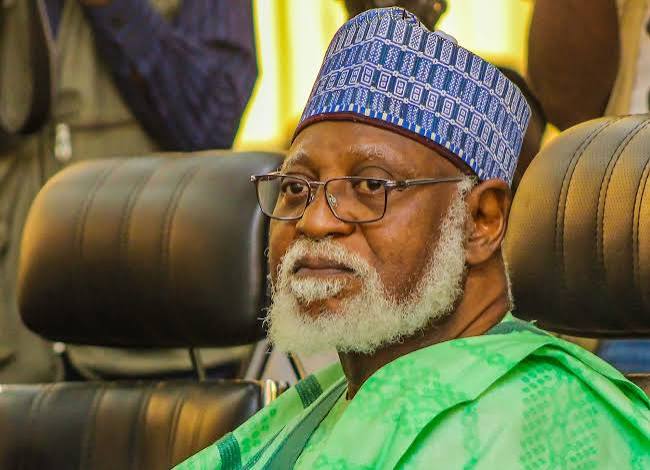
Former Head of State, General Abdulsalami Abubakar (retd.), has revealed that the 1999 Constitution was swiftly adopted with minor amendments primarily to prevent military “hawks” from derailment or delaying Nigeria’s transition to democratic rule following the sudden death of General Sani Abacha.
Speaking on the historical context of Nigeria’s current constitution, General Abdulsalami explained that the supreme document was never intended to be a permanent, flawless blueprint, but rather a strategic necessity born out of a high-stakes race against time.
According to the former military leader, who oversaw Nigeria’s transition to the Fourth Republic in 1999, the political atmosphere after Abacha’s demise in 1998 was fraught with tension. There were strong factions within the military establishment—often referred to as “hawks” who were deeply resistant to relinquishing power to a civilian government.
“We knew that any prolonged delay in handing over power would give these elements the window they needed to manipulate the process and extend military rule,” Abdulsalami stated. To outmaneuver these internal threats, the administration opted to dust off the 1979 Constitution, apply crucial amendments, and use it as a vehicle for an expedited transition.
Critics have long faulted the 1999 Constitution, arguing that it was forced upon the nation by a military decree and lacks true federal principles. However, Abdulsalami defended the decision as the most pragmatic option available at the time.
Writing a brand-new constitution from scratch would have required years of national conferences, debates, and referendums, time the administration simply did not have if it wanted to keep its promise of a quick exit. The Strategy was to Use the existing, tested framework of the 1979 Constitution.
Hand over power to an elected civilian president by May 29, 1999, shutting the door on military intervention, then leave room for future civilian administrations to amend the document as they saw fit. While acknowledging the imperfections of the current document, the elder statesman emphasized that the 1999 Constitution was designed to be a living document.
He noted that it was always expected that successive civilian national assemblies would refine it to better suit Nigeria’s evolving democratic needs.