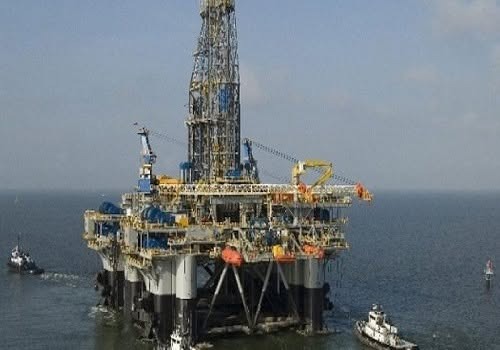
As international oil companies (IOCs) continue to divest from Nigeria’s onshore and shallow-water assets, indigenous service companies are increasingly emerging as operators and asset owners.
The development marks a significant shift in the country’s petroleum industry and is expected to influence the sector’s future trajectory.
For decades, multinational oil companies dominated upstream operations, while indigenous firms largely provided support services, including drilling, logistics, engineering, fabrication and maintenance.
However, Nigerian-owned companies are now acquiring and operating assets previously managed by international operators.
Industry experts who spoke separately with the Newsmen said the transition had been one of the most significant developments in the sector since the introduction of local content policies.
They, however, cautioned that challenges such as limited access to financing, ageing infrastructure, operational efficiency concerns and volatility in global oil prices could affect the pace of progress.
An oil and gas expert, Prof. Wumi Iledare, said that although companies such as Energia and other indigenous firms under the Petroleum Technology Association of Nigeria (PETAN) had recorded notable achievements.
According to him, it is still premature to describe the shift from service provision to asset ownership as an established industry trend.
The Professor Emeritus of Petroleum Economics said that upstream petroleum operations remained highly capital-intensive, technologically demanding and exposed to geological, commercial, regulatory and operational risks.
“Success requires far more than technical expertise.
“It demands access to financing, strong corporate governance, effective risk management and long-term investment commitment,” he said.
Iledare noted that Nigerian professionals had consistently demonstrated competence across the petroleum value chain and expressed confidence in the capacity of indigenous firms to succeed with stronger institutional support and improved access to capital.
He said increased indigenous participation would deepen local content implementation, enhance domestic value creation, retain more petroleum wealth within the economy and strengthen local technical and managerial capacity.
The economist, however, stressed that indigenous ownership should not be seen as an end in itself.
“The key question is whether these emerging operators can sustainably create value, maintain operational efficiency, uphold environmental and safety standards, and attract investment in an increasingly competitive global energy market,” he said.
He added that if these challenges were effectively addressed, the ongoing transition could become a defining phase in the evolution of Nigeria’s petroleum industry.
Also, energy economist, Prof. Ken Ife, said the growing acquisition of onshore assets by indigenous companies as a positive development capable of giving Nigeria greater control over its energy resources.
According to him, increased local ownership would support efforts to align crude oil production with domestic refining capacity while strengthening gas gathering, compression, liquefaction, transportation, storage and distribution infrastructure.
Ife urged President Bola Tinubu to assent to proposed legislation requiring a minimum of 30 per cent value addition to Nigeria’s raw materials before export.
The expert described the measure as critical to industrialisation and economic transformation.
Ife also called for a review of Nigeria’s membership of the Organisation of the Petroleum Exporting Countries (OPEC), saying that the organisation’s production quotas and pricing framework might not fully support the nation’s aspirations for increased production and refining capacity.
According to him, withdrawal from OPEC can provide Nigeria with more flexibility in setting pricing benchmarks for domestic and export markets.
This, he noted, had the potential to lower energy costs through cheaper refined products and gas-powered electricity.
Ife explained that Nigeria’s growing refining capacity, led by the Dangote Refinery, had already contributed to moderating domestic petrol prices compared with some African countries.
He cited Ghana, Senegal and Côte d’Ivoire as examples of countries with higher fuel prices in spite of lacking Nigeria’s refining capacity.
Ife maintained that strengthening domestic refining and expanding indigenous participation across the petroleum value chain would enhance energy security, increase value addition and generate more economic benefits for Nigerians.
Dr Ayodele Oni, Partner/Chair of the Energy and Natural Resources Practice Group, Bloomfield Law Practice, said the long-term success of indigenous operators would depend largely on sound corporate governance and operational discipline.
“Acquiring assets is only the beginning.
“Sustainable production, environmental responsibility, technical competence and financial discipline will determine whether these companies can thrive in the long term,” he said.
The energy law expert said in spite of the existing challenges, stakeholders remained optimistic about the future of indigenous participation in the sector.
According to him, the increasing presence of indigenous operators reflects both the growing maturity of the oil and gas industry and the impact of local content development initiatives.
“As international operators gradually divest from onshore assets, Nigerian companies are assuming more responsibilities across the industry value chain.
“This transition has the potential to reshape the country’s petroleum industry and strengthen indigenous participation in the sector for years to come,” he said.