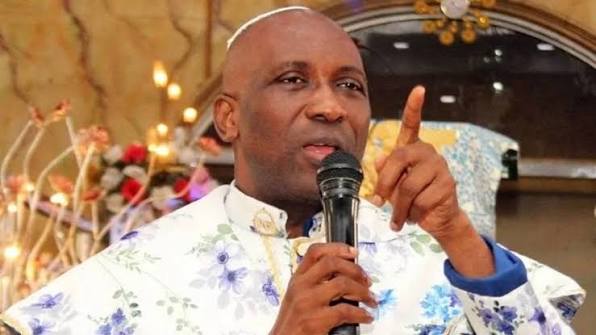
The Leader of INRI Evangelical Spiritual Church, Elijah Ayodele, has called on the Federal Government to release the detained leader of the Indigenous People of Biafra (IPOB), Nnamdi Kanu, arguing that justice and fairness must be applied equally to all individuals regardless of ethnic, religious, or political affiliations.
Ayodele made the appeal while addressing members of his congregation in a video that surfaced online on Saturday. In his remarks, the outspoken cleric questioned what he described as the differing treatment of Kanu and prominent Islamic cleric Ahmad Gumi, insisting that the government must avoid actions that could create perceptions of bias. Speaking passionately to his congregation, Ayodele urged authorities to reconsider Kanu’s continued detention, stressing that national unity and reconciliation would be better served through dialogue and equitable treatment.
“Try and release Nnamdi Kanu,” the cleric said, emphasizing that the government should demonstrate consistency in its handling of sensitive national issues. According to Ayodele, if the authorities believe Kanu should remain in detention, then questions would inevitably arise as to why other influential figures facing public scrutiny are not subjected to similar measures.
He argued that such disparities could fuel public suspicion and deepen existing divisions within the country. The cleric maintained that treating Kanu and Gumi differently could raise concerns about the sincerity of government actions and the commitment of authorities to fairness and justice.
He noted that Nigerians from different regions and backgrounds are closely observing developments surrounding both figures and expect equal standards to be applied. Ayodele’s comments come amid continuing debates over Kanu’s detention and the broader implications of the case for national security, justice, and political stability.
The IPOB leader has remained a controversial figure in Nigeria’s political landscape, attracting both strong support and criticism across different sections of the country. For years, Kanu’s supporters have consistently demanded his release, arguing that dialogue and political engagement would provide a more effective path toward resolving grievances in the South-East.
On the other hand, the Federal Government has maintained that issues surrounding the IPOB leader are being handled through the legal process. Ayodele, however, suggested that prolonging the matter could have unintended consequences, particularly at a time when many Nigerians are expressing frustration over economic challenges and security concerns.
The cleric warned that public protests and demonstrations could intensify if the government fails to address growing concerns among citizens. According to him, there is increasing dissatisfaction across various sectors of society, and authorities must be proactive in responding to issues capable of triggering wider unrest.
He advised the government to pay close attention to the mood of the nation, noting that many citizens are struggling with rising living costs, insecurity, and other socio-economic difficulties. Failure to adequately address these concerns, he said, could lead to heightened public agitation.
Ayodele further called for measures aimed at promoting peace, inclusiveness, and national cohesion, urging political leaders to embrace dialogue rather than actions that may further polarize the country. The cleric’s intervention adds another voice to the ongoing national conversation surrounding Kanu’s detention, a matter that has generated legal, political, and social debates for several years.
His remarks are likely to spark fresh discussions about the balance between national security considerations and calls for reconciliation and inclusiveness. As reactions continue to trail his comments, attention remains focused on the Federal Government’s handling of the Kanu case and the broader challenges of maintaining unity in a nation grappling with complex political, economic, and security issues.
For many observers, Ayodele’s message reflects a growing sentiment among some Nigerians who believe that fairness, consistency, and dialogue are essential ingredients for building trust in public institutions and fostering lasting peace across the country.