By Swill Mavua
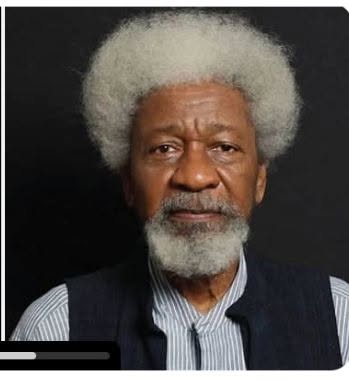
FOR 50 years, Wole Soyinka was untouchable.
Prison under Gowon. Exile under Abacha. Nobel Prize in 1986. The Man Died. The “conscience of the nation.” When Soyinka spoke, Nigeria listened – not because he was Yoruba, but because he was right. He fought military rule, tore into Obasanjo, mocked Jonathan, and called Buhari “lifeless” to his face.
Then 2023 happened. And the masquerade cracked.
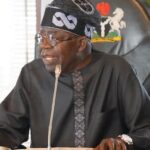
The endorsement that broke the myth. Three men were front-runners in 2023: Atiku, Obi, Tinubu. Soyinka pitched his tent with Tinubu.
To Obidients, it was treason. How could the man who wrote You Must Set Forth at Dawn back a candidate they saw as “crooked in all ramifications?” A man trailed by Chicago drug allegations, certificate questions, bullion-van politics?
Their verdict was swift: “He was always a wolf in sheep’s clothing.” Others went further: “He only hid his tribal bigotry. Tinubu is Yoruba. That’s it.”
Soyinka didn’t help his case. He was reported to have said: “Anybody who dares Tinubu would have me to contend with.” Whether he said it exactly that way or not, Obidients heard a declaration of war. The icon became an enemy combatant.
The silence that became louder than words. After Tinubu was sworn in, Soyinka went mute. For a man who appraised every government from Balewa to Buhari, the silence was deafening. When pressed, he said he’d assess Tinubu “after two years.” Two years passed. Then three. Insecurity metastasised. Naira collapsed. Hunger protests shook States. Soyinka? Deft as dumb.
To his critics, the silence proved the charge: He wasn’t a nationalist. He was a Yoruba nationalist. He could fight Fulani generals and Hausa presidents because they weren’t his. But a Yoruba president? Suddenly the “conscience” took a sabbatical.
His defenders say different: “Soyinka is 91. He’s earned the right to choose his battles. He said two years, and he’ll speak when he wants.” But in Nigeria, two years of hunger is a lifetime. Silence in that window reads as complicity.
The Obi statement that lit the final fire. Then came the 2027 pre-season. Soyinka was reported to have said Peter Obi “should not be allowed to contest.” Reason: the “irrationality” of Obidients.
That broke the dam.
You can’t, critics argue, call yourself a democrat and ask to bar a candidate because you dislike his supporters. You can’t survive Abacha’s gulag only to become what you fought – a gatekeeper. To Obidients, it confirmed everything: – Tinubu made Soyinka reveal himself.
The questions now write themselves:
Has he ever been a true statesman? Yes – if statesman means “critic of power.” He was jailed for Biafra. He risked death under Abacha. He condemned June 12 annulment when many Yoruba elites kept quiet. That’s not tribal. That’s courage.
Is he utterly tribalistic now? The charge sticks because his pattern changed. He called Buhari “clueless” in year one. He’s not called Tinubu anything in year three. He attacked Jonathan’s “corruption” monthly. He’s not attacked Tinubu’s “forgery” allegations once. The selective outrage looks ethnic. And in politics, perception is indictment.
What’s the connection between Tinubu and Soyinka? No one has receipts of money. But they have history. Both NADECO. Both fought Abacha from exile. Both Yoruba, both Lagos. Soyinka once said Tinubu helped him during exile. Loyalty, not tribe, might be the bond. But when loyalty mutes your conscience, the public stops caring about motive. They judge outcome.
The defence Soyinka deserves. To be fair, three facts complicate the “fallen angel” narrative:
– Age and method: At 90 in 2026, Soyinka isn’t leading protests. He writes, he watches. His “two years” promise may be literal. He assessed Buhari after two years too – and called him a failure. He might still eviscerate Tinubu.
– Obidient hostility: Obidients insulted him first – “tribal bigot,” “expired.” He responded by disengaging. You can’t abuse a man and then demand his activism. He told them: “I don’t owe you respect you didn’t give me.”
– He never claimed sainthood: Soyinka always said he’s a writer, not a politician. He backed Awolowo, backed Falae, backed Ribadu. He’s been wrong before. Endorsing Tinubu doesn’t erase 60 years of dissent.
The damage that’s already done. But here’s what 2023 cost him: Moral monopoly. Before, Soyinka could condemn any government and Nigerians would say “Kongi has spoken.” Now, half the country replies: “Speak on Tinubu first.” He lost the power to be heard without a prefix. Every word now runs through a 2023 filter: “Is this the tribal Soyinka or the national Soyinka?”
Tinubu didn’t make Soyinka tribal. 2023 revealed that even icons have ethnic blind spots. Or, worse, that Nigeria’s politics is so toxic it forces even Nobel Laureates to pick village over vision.
Did Tinubu reveal the true Soyinka? Maybe. Or maybe Tinubu revealed the true Nigeria. A country where you’re only a statesman until your kinsman runs. Where “national conscience” expires the day it disagrees with your candidate. Where 90-year-olds are dragged because 30-year-olds are hurting.
Soyinka was never a god. He was a man who chose, for 60 years, to fight power. In 2023 he chose to defend a friend. The tragedy isn’t that he picked Tinubu. It’s that by picking Tinubu, he lost the room. And when the masquerade loses the room, the dance is over.
History will still call him Nobel Laureate. But 2023 will be the footnote that asks: “Conscience of a nation, or conscience of a tribe?” He still has time to answer. The question is whether Nigeria still wants to hear it.