By Charles Obiajulu Ugwu PhD
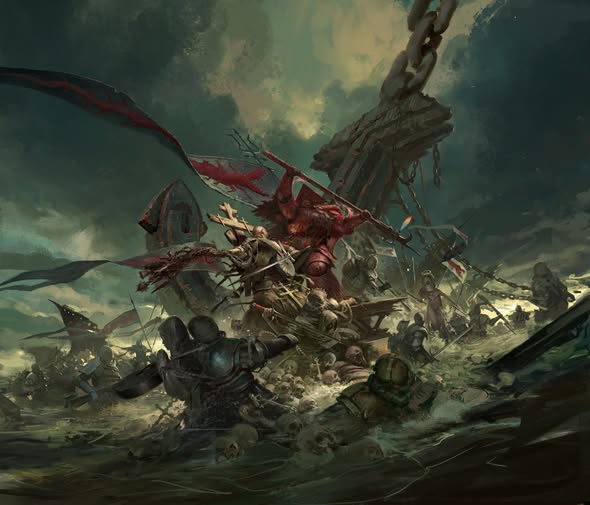
There is a saying that has comforted Nigeria’s predatory class for the better part of six decades. They repeat it the way men repeat prayers they no longer believe, as a charm against the possibility that the well might run dry. “Nigeria, they say, half in jest and half in conviction, is an elephant carcass that a billion ants can never finish” The sentence is uttered in boardrooms and in government quarters, at the gatherings where wine flows from procurement budgets, and in the quieter rooms where contracts are awarded before they are advertised. It is uttered with the smugness of men who believe they have outwitted arithmetic.
They are wrong. They have been wrong for a long time. And the consequences of their wrongness are arriving now with the indifference of weather.
A carcass, however elephantine, is a finite thing. This is the first fact the feeders refuse to acknowledge. The ant does not understand the elephant, only the morsel directly before its mandibles. Each generation of ants, encountering its own portion of the corpse, mistakes the immediacy of its meal for the abundance of the whole. The veteran scavenger, having fed for thirty years, becomes the credentialled witness of inexhaustibility. He passes this testimony to his sons and his protégés. They feed in turn. They confirm the inheritance. They mistake the duration of their feeding for the depth of the supply.
But the depth was never what they imagined. The elephant of 1960 was already wounded, already bleeding from colonial extraction, already missing organs that the new feeders simply repackaged as their own. What looked like an inexhaustible body was a body that had been fattened for slaughter elsewhere and then handed over to local consumption. The flesh was thick because someone else had done the fattening, not because the animal possessed any regenerative capacity of its own. This is the part the aphorism conceals. It treats the carcass as a natural endowment when it was in fact an expropriated inheritance, finite by definition, unrenewed since the day it was delivered into Nigerian hands.
For decades the feeding proceeded under the illusion of abundance because oil concealed everything. Petroleum is a strange fluid. It rewards the well-positioned more than the well-prepared. It can sustain the appearance of a feast long after the underlying economy has stopped producing anything edible. Between 1971 and 2022 Nigeria earned more than 1.2 trillion dollars from crude exports, according to figures that the Nigerian National Petroleum Company has itself acknowledged in official disclosures. In the same period the country’s poverty headcount tripled in absolute terms.
The World Bank’s 2022 poverty assessment placed 89 million Nigerians below the international poverty line, a figure that has since risen past 104 million by the bank’s own April 2024 country report. The trillion dollars went somewhere. It did not go into roads, since the World Bank’s 2023 infrastructure review estimated Nigeria’s infrastructure deficit at 2.3 trillion dollars over the coming three decades. It did not go into power, since installed generation capacity remains below 5 gigawatts for a population that has crossed 220 million, a per capita supply lower than that of Vietnam in 1995. It did not go into refining, since a country that has pumped crude for sixty-five years still imports nearly all of its refined product. The money was eaten. The eaters are still at the table.
What none of them performed was an autopsy. An autopsy would have revealed the truth that polite analysts have been too cautious to state. The flesh is gone. The flesh has been gone for some time. What the current generation of feeders is consuming is no longer meat but the membrane that holds the skeleton in place. The skin, originally thick from the colonial-era fattening, has been worn down by sun and tooth and time. In places it has split. In other places it covers nothing but bone polished smooth by the relentless tongues of a billion ants.
The signs of this transition from feast to famine are now in the public record. The Debt Management Office reported total public debt at 134.3 trillion naira as of the end of the second quarter of 2024, up from 12.1 trillion in 2015. Debt service consumed 74 percent of federal retained revenue in 2023 by the Budget Office’s own figures, which means the federal government borrowed to pay the interest on what it had previously borrowed.
Twenty-seven of Nigeria’s thirty-six states could not meet their salary obligations from internally generated revenue in 2023, according to BudgIT’s State of States report. Subsidy regimes that once functioned as the lubricant of political settlement have been removed not from courage but from necessity, because the till that funded them is empty. The naira, which traded at 197 to the dollar in 2015, traded above 1,600 to the dollar by the third quarter of 2024. These are not the symptoms of a temporary downturn. They are the readout of a carcass that has been scraped to its skeleton.
And yet the feeding continues. The political class has not noticed, or has noticed and refuses to acknowledge, that the body beneath them is no longer giving. The 2024 federal budget allocated 344 billion naira to the National Assembly for fewer than five hundred legislators, a per-capita figure higher than that of any comparable parliament in the Global South. Recurrent expenditure consumed roughly 70 percent of the same budget, leaving capital spending dependent almost entirely on borrowed funds.
They continue to bid for contracts that the treasury cannot fund without further borrowing. They continue to demand allocations from a centre that is itself bankrupt. They continue to fight over budget items the way ants fight over crumbs that have already been carried away by another colony. The frenzy persists not because there is food but because frenzy is the only behaviour the feeders have ever learned. They do not know how to plant, only how to harvest. They do not know how to build, only how to dismantle and resell the materials.
This is the Nigerian tragedy in its structural form. The country produced a ruling class that learned to eat but never learned to cook. It produced inheritors who learned to spend but never learned to make. It produced an elite whose entire competence was extractive and whose entire imagination was carnivorous. Now the carcass is finishing and the elite has no other skill to fall back on. The Igbo apprenticeship tradition, igba boi, understood something these scavengers never grasped. The young trader who completes his service is settled not with a portion of his master’s wealth but with the means to generate his own.
The master gives him not flesh but the disposition to make flesh. The apprentice goes forth and creates. He marries his learned discipline to fresh effort and the result is new wealth, not redistributed wealth. Nigeria’s political class inverted this logic completely. It treated the national treasury as a master’s till to be plundered rather than as starter capital to be multiplied. Each generation took its settlement and consumed it instead of compounding it. Each cohort exited office richer in personal terms and the nation poorer in collective terms. The arithmetic was always going to catch up.
It has caught up now. The skin is on its last layers. Anyone who walks through the country with eyes uncolonised by official propaganda can see the bone showing through. The University of Ibadan, founded in 1948 and once the seedbed of West African intellectual leadership, has fallen below the 1,000th rank in the Times Higher Education global tables for three consecutive years.
Public hospitals that once trained physicians for the entire West African College of Surgeons now lose their consultants to recruitment drives by the United Kingdom’s National Health Service, with the Medical and Dental Council of Nigeria documenting the departure of over 16,000 doctors between 2019 and 2024. The Nigerian military, which led the Economic Community Monitoring Group’s interventions in Liberia and Sierra Leone in the 1990s, now contests jurisdiction with bandits on the Abuja–Kaduna highway. These are not isolated failures. They are the integrated readout of a body whose flesh has been eaten while the eaters pretended the meal would never end.
What comes next is the question the feeders refuse to consider, because to consider it would be to acknowledge what they have done. When the last layer of skin gives way, the ants will discover they have been feeding on a skeleton for some time. They will look around for the next carcass and there will be none. They have not built one. They have not cultivated one. They have not even located one. Ghana, which Nigerian newspapers once mocked for the indignity of its 1980s exodus, now ranks ahead of Nigeria on the Mo Ibrahim Index of African Governance, the Human Development Index, and the World Bank’s Logistics Performance Index.
Rwanda, which buried its dead three decades ago, posts annual growth above 7 percent and runs a digital identity system more functional than anything Nigeria has fielded. The diaspora once dismissed as economic refugees sent home 20.5 billion dollars in 2023 by the Central Bank’s own remittance data, a figure that exceeded foreign direct investment, exceeded the federal capital budget, and approached the value of oil receipts net of subsidy costs.
The young people the political class once treated as cheap labour are leaving in numbers that constitute a national haemorrhage, with the Japa wave taking professionals to the United Kingdom, Canada, and the Gulf at rates that have emptied entire teaching hospitals and consulting firms within twenty-four months. The carcass is gone, the ants are still hungry, and the alternative landscape they should have prepared simply does not exist.
This is not pessimism. Pessimism is the indulgence of the spectator. This is diagnosis, which is the responsibility of the analyst. The country can still be made productive, but not by the men whose only competence is feeding. It will require a different kind of citizen, a different kind of leader, a different kind of imagination. It will require people who can look at empty bone and conceive of a living animal that must be raised from scratch, slowly, with patience and competence and a willingness to defer consumption. It will require, in short, everything Nigeria’s political class has refused to develop in itself for sixty years.
The feeders will protest. They will insist the carcass is still abundant, that the alarm is exaggerated, that the analyst is unpatriotic for naming what the eye plainly sees. They will produce statistics and budgets and policy documents that affirm the continuity of the feast. They will threaten and cajole and offer small portions to silence the witnesses. None of this will change the underlying fact. The carcass is finishing. The frenzy is on its last act. The skin is wearing through.
What remains to be seen is whether Nigeria, the actual country and not the carcass, can produce in its closing minutes a generation that knows how to build a living body rather than feed on a dying one. The answer to that question will be settled in the lifetime of every Nigerian under forty. It will not be settled by another aphorism.
Verification Ledger
Claim
- Cumulative oil revenue 1971–2022 above $1.2 trillion
- 89 million Nigerians below international poverty line (2022)
- Over 104 million below poverty line (2024)
- $2.3 trillion infrastructure deficit
- Public debt of N134.3 trillion (Q2 2024)
- Debt service 74% of federal revenue (2023)
- 27 of 36 states unable to meet salary obligations
- Naira depreciation 197 to 1,600+ per dollar
- N344 billion National Assembly allocation (2024)
- Over 16,000 doctors emigrated 2019–2024
- University of Ibadan rank below 1,000 globally
- Diaspora remittances $20.5 billion (2023)
- Ghana’s lead on Mo Ibrahim Index
Source
- NNPC and CBN disclosures aggregated by Statisense, 2023
- World Bank Nigeria Poverty Assessment, 2022
- World Bank Nigeria Development Update, April 2024
- World Bank Nigeria Infrastructure Review, 2023
- Debt Management Office quarterly report, June 2024
- Budget Office of the Federation, 2023 actuals
- BudgIT State of States Report, 2024
- Central Bank of Nigeria official rates, 2015–2024
- 2024 Appropriation Act
- Medical and Dental Council of Nigeria, 2024 brief
- Times Higher Education World University Rankings, 2022–2024
- CBN Statistical Bulletin, 2023
- Ibrahim Index of African Governance, 2023 edition
About the Author
Charles is a contrarian thinker writing from Lagos