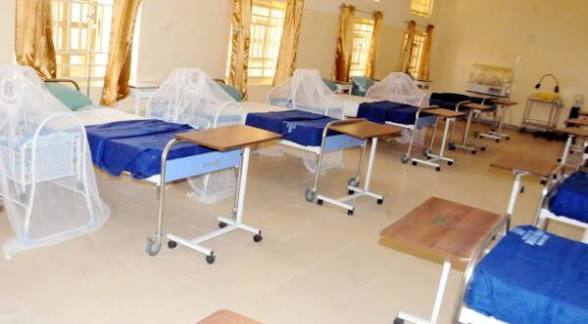
The Bauchi state government has initiated a N20 billion Bauchi Specialist Hospital upgrade project to enhance quality healthcare service delivery.
Gov. Bala Mohammed said this while performing the ground breaking ceremony of the project.
He said the project was part of strategic infrastructure intervention in the health sector aimed at improving access to quality healthcare delivery for the people of the state.
Mohammed said the N19.9 billion project would involve extensive renovation, expansion, and construction of new facilities in the hospital complex.
“The project is a comprehensive effort to modernise healthcare infrastructure across the state. It will ensure that our people, especially those in hard-to-reach areas, have access to affordable, quality medical services,” he said.
The project, which reached advance stage, would featured new consulting clinics, admission wards, laboratories, seminar rooms, operation theatres.
Others included the construction of 130 housing units for clinical and non-clinical staff, solar lighting systems, internet and communication facilities, modern furniture and equipment.
Dr Rilwanu Mohammed, Executive Secretary, Bauchi State Primary Healthcare Development Agency, said the government has approved the solarisation of 20 general hospitals across the state.
He said the project was designed to address power supply challenges and improve healthcare service delivery.
The initiative, he said, aimed at ensuring uninterrupted electricity supply to health institutions to enhance the efficiency of healthcare operations.
“We want to avoid the problem of power supply. The governor directed that all primary healthcare facilities should be provided with permanent and regular power supply,” he said.
Also, Dr Sani Dambam, the state Commissioner for Health, said the government has awarded a contract for the construction of Accidents and Emergency complex at General Hospital Alkaleri.
He reiterated the government’s commitment to improve healthcare infrastructure and enhance access to quality healthcare services in the state.
Some patients at the Ningi General Hospital commended the state government for the upgrade of the facility.
They, however, advocated deployment of watch guards to enhance security at the facility.
Mrs Fatima Inuwa, a patient’s relative, said the existing security personnel were inadequate to manage the large number of visitors and patients accessing the facility daily.
“Health workers are often left with the responsibility of restricting unauthorised movement within the hospital during and after working hours.
“Sometimes, moving to the laboratory at night for tests becomes difficult due to inadequate security presence,” she said.
Another patient, Babayo Garba, whose six-year-old child is receiving treatment at a temporary facility of the Bauchi Specialist Hospital, stressed the need for additional staff to ensure proper hygiene management in the facility.
He noted that the hospital’s growing patient population should be considered when determining the number of personnel required to maintain cleanliness and order.
On her part, Labara Shehu, said the facility was overstretched due to the high number of patients, adding that excessive noise within the hospital environment often causes discomfort to admitted patients.
In Gombe State, the government renovated and equipped five general hospitals as part of its annual healthcare infrastructure improvement programme.
Dr Mohammed Abdulkadir, Executive Secretary, Gombe State Hospital Services Management Board, said the initiative has transformed healthcare delivery through improved infrastructure, modern medical equipment, and better working conditions for health personnel.
He listed the projects to include the reconstruction of the General Hospital Kumo, which was upgraded to the Federal Medical Centre, Kumo.
Abdulkadir said that new Accident and Emergency units, administrative blocks, road networks were constructed at Kaltungo, Gombe, Bajoga and Dukku General Hospitals.
He said the facilities had been equipped with laboratory and radiology equipment, ward furniture, and other essential facilities, leading to improved patient care and service delivery.
The secretary said that arrangements had been concluded to rehabilitate Deba and Billiri General Hospitals under the next phase of the programme.
“The policy of renovating at least one general hospital in a local government area every financial year has enabled the government to gradually modernise healthcare facilities across the state,” he said.
Abdulkadir said the programme has recorded visible results in communities, thus improving access to quality healthcare services for residents.
He highlighted other health-sector reforms introduced by Gov. Inuwa Yahaya’s administration, to strengthen agencies responsible for health insurance, medical supplies, and the distribution of drugs and consumables.
The interventions, he said, complemented infrastructure development and enhance operations of the hospitals.
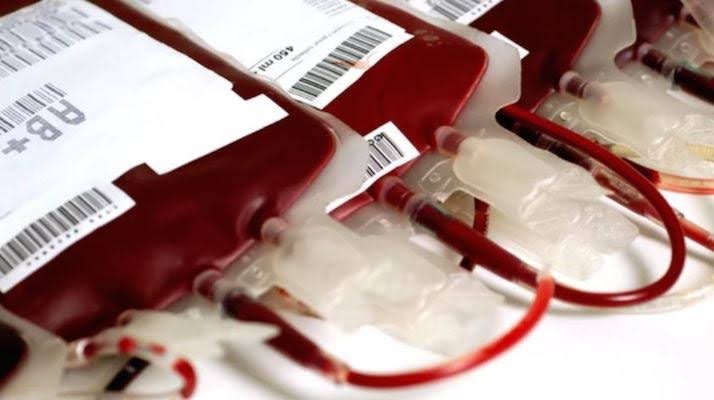
Abdulkadihe said most of the general hospitals were offering blood storage and transfusion services to support emergency cases, maternal healthcare, and other critical medical interventions.
“A conducive hospital environment not only enhances patient confidence but also motivates healthcare workers to deliver better services.
“The transformation witnessed in many of the state’s hospitals significantly improved the overall healthcare experience for both patients and staff,” he said.
On challenges, Abdulkadir identified shortage of healthcare workers, particularly doctors, as one of the major bane militating against effective healthcare service delivery in the state.
He noted that the migration of skilled professionals continues to affect healthcare systems globally, making recruitment and retention increasingly difficult.
The secretary reiterated government’s committed to address the challenges through consultations and priactive measures aimed at strengthening the healthcare workforce.
He also assured government’s readiness to sustain investments in healthcare infrastructure, equipment, and human resources to ensure that residents continue to receive quality and accessible healthcare services across the state.
A cross section of patients at the General Hospital Kaltungo, commended the healthcare intervention programme of the state.
Mrs Hannatu Mela, lauded the establishment the Gombe State Contributory Healthcare Management Agency (GoHealth), that eased access to drugs for residents.
Also, Ayuba Musa said that more patients were currently visiting public hospitals since the upgrade of the facilities.
“Patients only need to arrive early for treatment, as the facility now receives a large number of visitors daily.
“Some of the patients seeking treatment at the hospital are not even from Gombe State, due to the improved healthcare services available at the facility,” he said.
In Jigawa, a check by the News Agency of Nigeria (NAN) at the General Hospital Dutse, indicated ongoing improvement of healthcare delivery via infrastructure upgrades and free maternal healthcare services that reduced patient congestions.
Some of the patients at the facility, said the healthcare revitalisation programme initiated by Gov. Umar Namadi’s administration had eased hardship in accessing quality services.
They also noted that the revitalisation of Primary Healthcare Centres (PHCs) in rural communities further reduced pressure on secondary health facilities in the state.
Mrs Sadiya Hassan, Deputy-in-Charge of the Maternity Clinic, Dutse General Hospital, said that only complicated cases, referrals and patients, who preferred treatment at the facility now accounted for most admissions.
She said the facility has continued to record a high number of deliveries, with adequate personnel to cater for patients.
According to Hassan, delivery-related services and medications are being provided free of charge under the government supported healthcare programmes.
“Everything related to delivery services is free. Women with severe bleeding, convulsions or those who lost their babies, also receive free treatment from admission to discharge, through the state and federal government interventions.
“A new maternity complex, comprising maternity ward, labour room, postnatal section and theatre, is under construction.
“The new complex will bring together all maternity-related services in one location,” she said.
Fatima Abdullahi, a woman in labour, lauded the improved care and case management at the facility.
“I have been here for two days and I didn’t paid for any service, all the services given to me are free,” she said.
At the Paediatric Department, Mr Sulaiman Abdullahi, a Senior Nursing Officer, said severe malaria and Severe Acute Malnutrition (SAM), remained the most common conditions treated in the unit.
He said adequate staffing had enabled prompt management of patients, adding that severe malaria cases were often stabilised within 48 hours.
The medical officer said that between 80 and 85 per cent of medications used in the department were being provided free of charge.
Abdullahi also disclosed that the number of severe paediatric cases had reduced drastically, compared to previous years.
“The reduction may be connected to the increase in healthcare facilities available to people. It is now rare for us to experience congestion or shortages of beds as before,” he said.
He however, appealed for increased supply of F-75 and F-100 therapeutic nutritional products, used in the treatment of malnourished children, noting that demand sometimes exceeded supply.
Another respondent, Mrs Hadiza Safiyanu, whose daughter was receiving treatment for malnutrition, commended the health care provided by the workers.
“They welcomed us warmly and have been attending to my child. The ward is clean and there is regular water and electricity supply,” she said.
Similarly, Mrs Mariya Abdullahi, a nurse at the hospital’s Accident and Emergency (A&E) unit, said the department had sufficient personnel and essential equipment to attend to patients.
“We have equipment such as oxygen concentrators, oxygen cylinders and other supplies needed for emergency care,” she said.
She, however, noted that oxygen shortages occurred occasionally during periods of high patient turnout.
“Admissions usually increased between August and September due to malarial related illnesses,” she said.
NAN also observed that construction work was ongoing on a new A & E unit within the hospital.
Moreso, Hajara Alkasim, whose daughter was admitted at the A&E unit for complications associated with sickle cell disease, acknowledged the prompt response of health workers.
She, however, expressed concern over the cost of some prescribed medications for some ailments.
Alkasim said that she paid N300 for a hospital file, and initially received some medications free of charge, and later required to purchase additional prescribed drugs.
“The doctors attend to my daughter whenever we called them, and the environment is clean with water and electricity available.
“However, apart from the initial medication given free, I had to purchase several prescribed drugs since her admission four days ago..
“Cleanliness, water and electricity are not a problem in this hospital, my concern is the amount I spent on drugs,” she said.