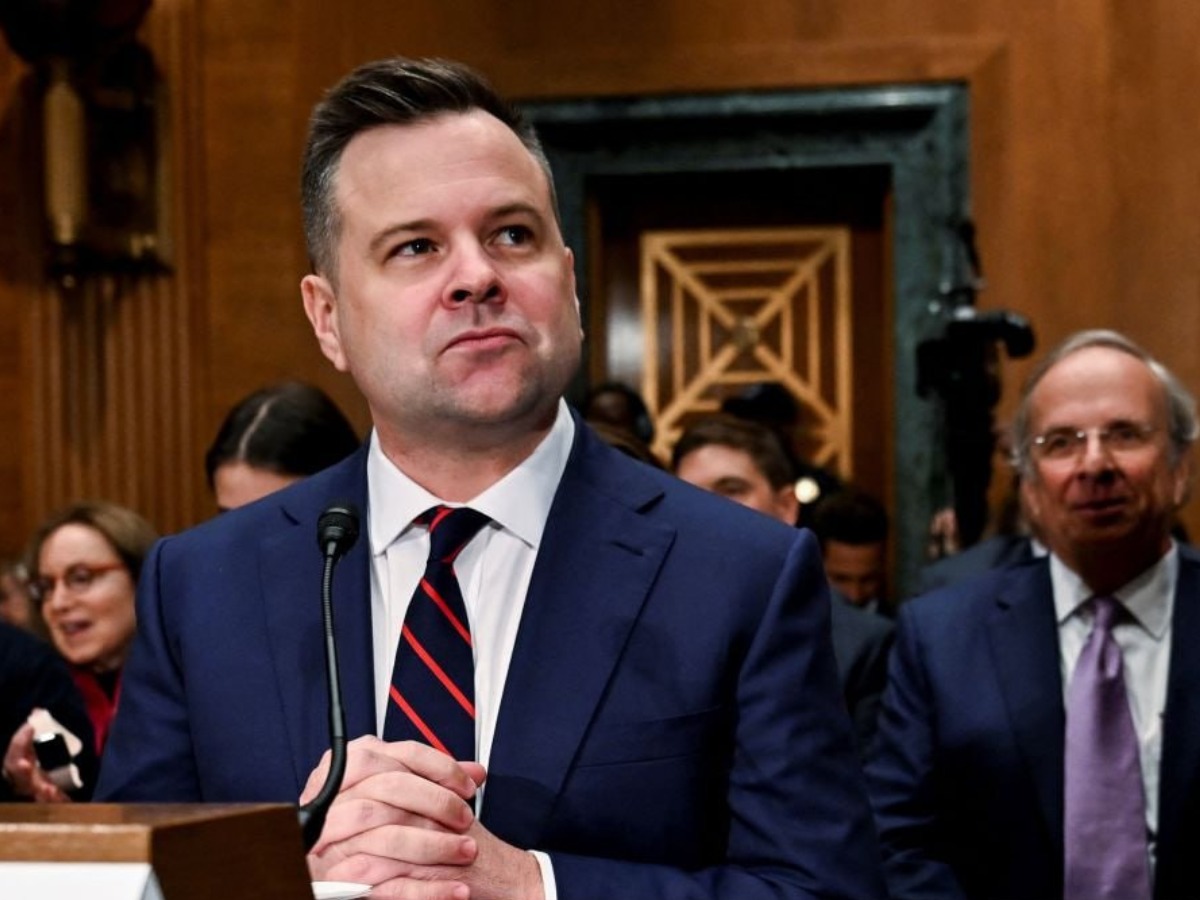
United States President Donald Trump has appointed a close political ally, Bill Pulte, as the acting director of national intelligence, a move that has sparked fresh debate in Washington over the growing politicisation of key national security positions in his administration.
Pulte, who currently heads the Federal Housing Finance Agency and also oversees mortgage giants Fannie Mae and Freddie Mac, was announced on Tuesday as the replacement for Tulsi Gabbard, who resigned from the position in late May.
The appointment immediately drew attention because Pulte has no known background in intelligence or national security operations, despite being handed oversight of America’s intelligence community at a time of heightened geopolitical tensions.
Announcing the decision on his Truth Social platform, Trump praised Pulte’s management abilities and defended the choice by highlighting his experience handling sensitive financial and administrative matters.
“William has deep experience managing the most sensitive matters in America, the safety and soundness of the Markets,” Trump wrote, while confirming that Pulte would simultaneously retain his current responsibilities overseeing federal housing and mortgage policies.
The decision means the 38-year-old businessman and government official will now juggle multiple high-profile roles within the administration, including supervision of agencies central to the US housing finance system while also coordinating intelligence operations involving national security threats, foreign policy assessments and counterterrorism matters.
Political observers described the appointment as another indication of Trump’s preference for loyal allies in strategic government positions, particularly individuals seen as fiercely protective of his political interests.
Pulte has emerged in recent years as one of Trump’s most vocal defenders on social media and in public discourse. Several US media outlets have portrayed him as a political enforcer for the president because of his aggressive criticism of Trump’s opponents and critics.
He has repeatedly targeted leading Democrats, including Senator Adam Schiff and New York Attorney General Letitia James, accusing them of falsifying information on mortgage applications.
Those accusations have intensified political tensions between Republicans and Democrats, especially as Trump and his allies continue to attack officials involved in investigations linked to the former president and his business activities.
The appointment also comes amid controversy surrounding Pulte’s conduct while leading Fannie Mae and Freddie Mac.
According to a report by The Wall Street Journal, an internal complaint at Fannie Mae alleged that Pulte improperly accessed mortgage records connected to Letitia James and other Democratic officials.
The report has fueled concerns among critics who argue that sensitive government-controlled financial information could be used for political purposes.
Neither Pulte nor the White House immediately responded publicly to the allegations contained in the report, but supporters of the administration dismissed the criticism as politically motivated attacks designed to undermine Trump’s appointments.
The departure of Tulsi Gabbard also attracted considerable attention in Washington political circles.
Gabbard, a former Democratic congresswoman who later aligned herself closely with Trump, had been regarded as one of the most unconventional intelligence chiefs in recent US history.
Her tenure reportedly became strained following disagreements with Trump over aspects of US military strategy and foreign policy, particularly regarding Iran.
Sources familiar with internal administration discussions suggested that tensions between Gabbard and some senior White House officials had grown in recent months as debates intensified over America’s posture in the Middle East.
Although Trump did not directly address the reasons behind her resignation, analysts believe her exit reflected deeper divisions within the administration over national security policy and military engagement abroad.
The Office of the Director of National Intelligence plays a critical role in coordinating the activities of multiple US intelligence agencies, including the Central Intelligence Agency, the Federal Bureau of Investigation and the National Security Agency.
The position is responsible for synthesising intelligence assessments, advising the president on national security threats and ensuring coordination among agencies tasked with protecting the country.
Critics of Pulte’s appointment argued that the role traditionally requires extensive experience in intelligence, diplomacy, military affairs or national security policy.
Some former intelligence officials reportedly expressed concern that placing a political loyalist with no security background in such a sensitive office could undermine institutional credibility and morale within the intelligence community.
However, Trump allies defended the move, insisting that leadership, loyalty and administrative competence were equally important qualities for the position.
Supporters also argued that outsiders can bring fresh perspectives to government institutions that they believe have become overly bureaucratic and politically hostile to Trump’s agenda.
The appointment is expected to face intense scrutiny from lawmakers and political commentators in the coming days, especially as questions continue to emerge about the future direction of US intelligence operations under Trump’s administration.
For now, Pulte assumes one of the most sensitive jobs in the American government at a time when the United States faces mounting international challenges, political divisions at home and growing debates over the role of loyalty and expertise in public office.