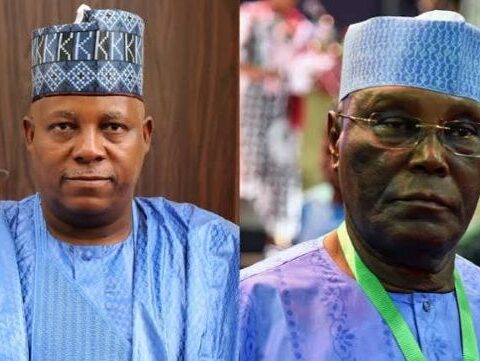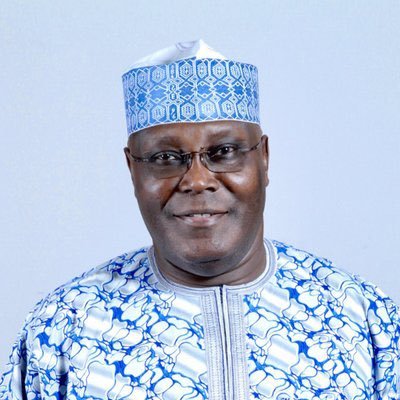
Former Vice President Atiku Abubakar has called for reconciliation and unity within the African Democratic Congress (ADC) after emerging victorious in the party’s presidential primary ahead of the 2027 general elections. Atiku secured a commanding 1,846,370 votes in the keenly contested exercise, positioning himself far ahead of his closest challengers in a race that drew significant national attention and internal party debate.
His victory was formally announced on Wednesday at the Congress Hall of the Transcorp Hilton Abuja, where delegates and party officials gathered for the final collation of results from across Nigeria. The announcement marked the culmination of a rigorous nationwide process that covered all 36 states and the Federal Capital Territory (FCT). According to the official figures released, a total of 2,527,977 votes were cast out of 3,113,599 registered voters, reflecting strong participation across party structures.
Atiku’s closest rival in the contest, former Rivers State Governor Rotimi Amaechi, polled 504,117 votes, while economist and policy expert Mohammed Hayatu-Deen came third with 177,120 votes. In his acceptance remarks following the declaration, Atiku emphasized the need to move beyond internal divisions, urging all aspirants and their supporters to close ranks and focus on the broader political goal of winning the 2027 general elections. Party insiders say his message was aimed at calming tensions that had emerged during the primaries, which, despite being largely peaceful, revealed underlying factional interests and competition among major stakeholders within the ADC.
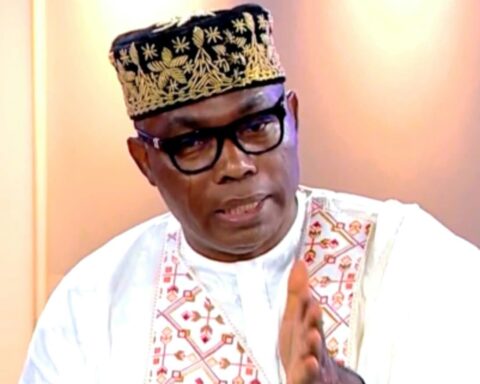
Atiku reportedly stressed that the strength of the party would depend on its ability to consolidate support from across its different blocs, especially those aligned with his opponents in the primaries. The National Chairman of the ADC, David Mark, also addressed the gathering, revealing that he faced significant pressure from various political interests seeking to influence the outcome of the presidential primary. According to him, different quarters attempted to sway the process in favour of preferred aspirants, but the party leadership maintained that it was committed to transparency and internal democracy.
Mark’s remarks were widely interpreted as a defense of the credibility of the exercise and an assertion of the party’s independence from external manipulation. He commended delegates and officials for ensuring that the collation process remained orderly, insisting that the ADC must continue to build institutions that can withstand political pressure as it prepares for the general elections. Political observers say the outcome of the primary represents a significant moment for the ADC as it positions itself for the 2027 electoral cycle.
With Atiku’s emergence as flag bearer, the party now faces the task of consolidating internal unity while expanding its national appeal. Analysts note that the margin of victory suggests a strong endorsement from party delegates, but also highlights the importance of integrating the support bases of other aspirants such as Amaechi and Hayatu-Deen to build a competitive national campaign.
With the primaries concluded, attention is now expected to shift toward campaign strategy, coalition building, and grassroots mobilization across Nigeria’s six geopolitical zones. Party stakeholders believe that the reconciliation move initiated by Atiku will be crucial in determining whether the ADC can present a united front capable of challenging dominant political forces in the next general election.
As the political landscape gradually builds toward 2027, the ADC’s ability to manage internal differences while projecting a cohesive national message may ultimately define its electoral fortunes.