By Okoh Aihe
Concerning DSO, there is fresh excitement, optimism and great expectation, preceding the July launch, and I am happy to share in all the euphoria. After blowing over N60bn on a project that smaller African nations have since concluded but which remains in a convoluted suspense here, you won’t blame anybody for hoping once more.
The word from the seat of government gives us hope, especially from a Minister that has worn humility as a badge, and performance as a deal with destiny; a Minister different from the rest of them all in not being an insouciant ventriloquist to a master but, instead, has chosen to work more for the state.
But let me state here, in writing about DSO, I will need to exercise some caution, otherwise one would be taken as an antediluvian specie or a dodo with outmoded idea of modern television business or one who lacks any understanding of the consumption pattern of modern audiences whose fidelity rests more with changes in technology to determine their programming taste.
Just a little recall here. DSO is the Digital Switch-Over from analogue to digital television which was sanctioned by the International Telecommunications Union (ITU) in 2006. The process was expected to end on June 17, 2015. However, Nigeria would only commence the process on April 30, 2016, in Jos, Plateau State. Needless adding here that the country never met any of the deadlines that was set.
This is why it is salutary that the government has announced that it will launch a new version of DSO on June 17, 2026. The new version comes with fresh and, perhaps breakthrough thinking, that will give Nigerians free access to over a hundred channels with high-end picture quality.
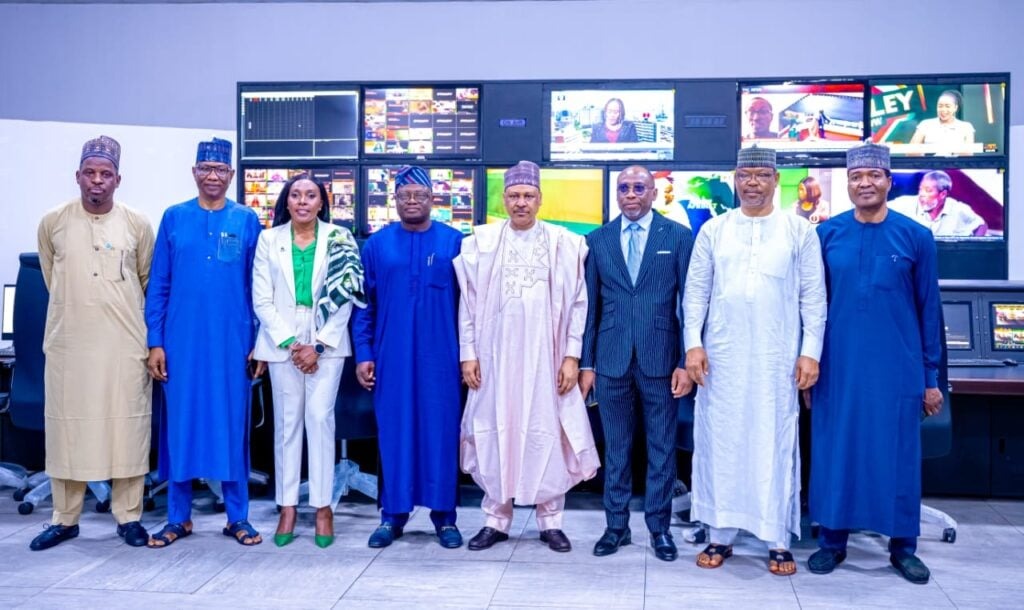
Speaking from the headquarters of the Nigerian Communications Satellite Limited (NigComSat) where he had gone to inspect facilities last Wednesday, Mohammed Idris who is Minister of Information and National Orientation, said all arrangements have been put in place for the DSO project to finally be launched.
“The promise that President Bola Tinubu made is that he is going to reform all sectors. We are seeing this in action in the broadcast industry,” he said.
However, an indsutry aficionado who can equally be described as a broadcast veteran, has raised some fundamental questions concerning the project. In what may seem a critical preview of FreeTV due for launch, Remi Ogunpitan submits that “NBC presents FreeTV as part of Nigeria’s long-delayed digital migration strategy. On paper, its sounds transformative: more channels, wider access, improved digital broadcasting, and no monthly subscription.”
His other observation is that “FreeTV may be free to download, but it is not truly free to use. The platform depends heavily on mobile data and internet access. In a country where data costs remain expensive relative to income, power supply is unstable, and millions still struggle with basic living costs, streaming television becomes another recurring expense.”
Ogunpitan raised more questions. Whether FreeTV is truly a public broadcasting solution or primarily a commercial platform wrapped inside public policy language? Is the structure a commercial ecosystem involving platform operators, advertising, statellite distribution, audience monetisation, and content carriage? Who are the owners?
Ogunpitan’s intervention has drawn an elaborate response from the regulator which has tried to justify some of its recent actions, giving compelling reasons why a satellite-led DSO seems a more preferred and convenient route to take at this time.
Admitting that some of these actions need clarification, NBC explained that “FreeTV is not an internet-only streaming platform masquerading as digital broadcasting. It is a hybrid national broadcasting ecosystem built around multiple distribution layers: Direct-to-Home (DTH), Satellite Delivery, Digital Terrestrial Television (DTT), and Internet Protocol (IP) distribution through the FreeTV application. In other words, the FreeTV App is not “the platform.” It is simply one of the platform’s distribution nodes.”
The regulator further explained that “the backbone of the system remains nationwide broadcast delivery through satellite infrastructure, specifically through NigComSat capacity designed to provide universal national coverage regardless of geography, terrain or terrestrial transmission limitations. This decision is critical because much of the criticism against TV proceeds from the assumption that Nigerians will only access the service through expensive mobile data subscriptions.”
While pointing out that the broadcast industry worldwide has undergone a profound transformation since the ITU Digital Switch-Over was conceived, the regulator submitted that “the media environment is fundamentally different from 2006. Today’s audiences consume television content across multiple devices and platforms simultaneously. Traditional television screens now co-exist with smartphones, tablets, connected televisions and on-demand platforms. Increasingly, viewers no longer distinguish between “broadcast television” and “internet television.” To the modern audience, content is simply content, accessed wherever and whenever convenient.”
The simple conclusion of the regulator’s argument is that technology has over taken the old order of DSO implementation in Nigeria and that time has come to adopt new assumptions that will align current efforts with modern TV practices, consumption pattern and content development. The regulator listed examples from different jurisdictions to buttress its position.
Permit me to align with the regulator. Somebody has to take a bold decision to move the DSO implementation from its prolonged state of confusion to a level where we can begin to see some results despite the shortcomings.
It looks much tidier now to go the way of satellite and Internet Protocol (IP). Morocco built her entire DSO on statellite delivery and the nation was one of the first countries to conclude the process in Africa. Estonia TV backbone rests on IP, and the United Kingdom is projecting 2030 for the entire broadcast sector to go IP although there are controversies and challenges facing the decision. Concerning DSO, there is an evolutionary feeling which has little respect for the past.
Let me also add here that the satellite option will free up more broadcast frequencies which the government can sell at market value to telecom operators. Getting more frequencies from broadcasters for telecommication service provisioning has remained one of the cardinal attractions of DSO. Percentage of monies realised can be ceded to the NBC for DSO implementation. I have made this point without fail and I am happy to remark here that there was such a transaction of about N10bn between NCC and NBC sometime ago.
Having declared my support for the NBC in pushing the fortunes of the DSO, let me also state that there are a number of things the regulator hasn’t done which is casting long shadows on its efforts.
The DSO journey in Nigeria has been long and convoluted. In the old value chain, two major signal carriers – Pinnacle and ITS, were licensed to transmit signals on behalf of Nigerian broadcasters; they were to pay N1.6bn per license but part of the money was amortised for service rollout, this writer can reveal.
Thirteen Set-Top-Box (STB) manufacturers were also licensed to manufacture the small boxes that will convert analogue signals to digital signals. Each licensee paid N50m before other investments were made. The licensees were recognised by President Goodluck Jonathan’s Digiteam that was responsible for DSO implementation; they were also recognised by Lai Mohammed’s Ministerial Committee on DSO under President Mohammadu Buhari.
Until this fresh vista of possibilities, the DSO has not gone well. The licensees have faired even worse. Some borrowed money from the banks to invest. They have manufactured Set-Top-Boxes may now be completely useless. One of them complained that he has lost his collateral to the bank which has also seized his car. For him, life has become unbearable. My friend couldn’t do anything to help him.
An industry source, who is a fanatical supporter of the regulator, told this writer that there were certain things the NBC has not done well. The regulator, the source said, has not been able to mobilise the various stakeholders to share in its vision. For instance, the STB manufacturers, and so are BON members who have registered their complaints.
The NBC will have to make more clarifications. Who are the owners of the FreeTV platform? Who is the broadcast aggregator? It is gladdening that NigComSat has been able to find some usefulness in the arrangement after being a protracted embarrassment to the nation; how much is the organisation earning for its efforts? Is it possible to make the contractual arrangement public?
The DSO is so important that things cannot be done subterraneously. This writer is canvassing for a full disclosure. One, the Broadcast Act does not empower the NBC to be an operator in the same industry it regulates; instead, it should push policy implementation. The other reason is that if we do not know those involved in the value chain, we may not also know the number of broadcast frequencies that may be returned to the government through the National Frequecy Management Council (NFMC) for onward sales to telecom operators by the NCC.
In addition to above concerns, Nigeria shouldn’t be attracting investors to the various sectors of the economy and then push them to the dark alley when things go wrong for no fault of theirs. I want to appeal that the broadcast frequencies be sold and part of the monies be used to defray the cost of the licensees whose products have been rendered useless by the new arrangement.
By the way, there will always be a place for receive equipment in every satellite arrangement. Perhaps some of the licensees can retrofit their factories to produce the new receive equipment for satellite signals. As the regulator takes DSO beyond the bend, it will need friends, not enemies, stakeholders and not stooges of little repute and relevance; and infact the regulator will need to develop an inclusive thinking system which can accommodate all within its fold.