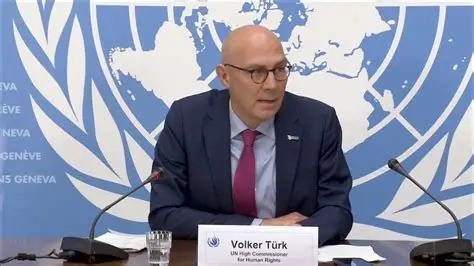
The United Nations High Commissioner for Human Rights, Volker Türk, has called for urgent and independent investigations into reports of deadly airstrikes carried out by Nigerian and Chadian forces that allegedly killed scores of civilians in northeastern Nigeria.
Türk, in a statement released on Wednesday, expressed grave concern over the incidents, which reportedly claimed the lives of traders, fishermen, and other non-combatants in separate attacks linked to ongoing military operations against armed groups operating around the Lake Chad region.
According to the UN rights chief, at least 100 civilians were reportedly killed after Nigerian airstrikes hit a market, while dozens of fishermen allegedly died following Chadian air raids conducted within Nigerian territory.
“It is crucial that both Nigerian and Chadian authorities conduct prompt, thorough, independent and impartial investigations into these disturbing incidents and ensure that those responsible for any violations are held to account, in accordance with international standards,” Türk stated.
The incidents have sparked renewed concerns among international human rights observers over the growing civilian toll of counterinsurgency operations in the Lake Chad Basin, where military forces from several countries have for years battled extremist and criminal groups.
Although details surrounding the airstrikes remain unclear, reports indicate that civilians may have been caught in bombardments targeting suspected insurgent hideouts and militant movements near border communities.
Human rights advocates have repeatedly warned that the use of aerial bombardment in densely populated or poorly monitored areas increases the risk of civilian casualties, especially in conflict zones where local populations depend heavily on open markets, fishing settlements, and farming communities for survival.
The latest allegations have intensified pressure on authorities in both Nigeria and Chad to demonstrate transparency and accountability in their military operations.
The Nigerian military has in recent years faced scrutiny over accidental bombings during anti-terror campaigns in the North-East, particularly in areas affected by insurgency linked to extremist factions operating around the Lake Chad region.
Several previous incidents involving mistaken airstrikes on civilian populations have triggered domestic and international criticism, with rights organizations urging authorities to improve intelligence gathering, target verification, and operational safeguards.
Security analysts say the challenge facing regional forces is complicated by the tactics employed by insurgent groups, which often move within civilian communities and remote settlements difficult to distinguish from militant camps.
Nonetheless, international humanitarian law requires armed forces engaged in conflict to take all possible precautions to protect civilian lives and avoid disproportionate harm during military operations.
Türk stressed that accountability is essential not only for justice but also for maintaining public trust and preventing further cycles of violence and displacement in already vulnerable communities.
He also emphasized the need for authorities to provide assistance and support for affected families, many of whom have reportedly suffered devastating losses.
The Lake Chad Basin has remained one of Africa’s most fragile security zones for more than a decade, with violence from insurgent activities forcing millions from their homes and disrupting livelihoods across Nigeria, Chad, Niger, and Cameroon.
Fishing communities in particular have faced severe hardship due to insecurity, military restrictions, and repeated clashes involving armed groups operating around the waterways and islands of the region.
Residents and humanitarian organizations have frequently raised concerns that civilians living in isolated border communities are often exposed to danger from both insurgent attacks and military responses.
The latest remarks from the UN rights office are expected to increase diplomatic attention on military conduct in the region, especially as governments continue to intensify efforts to eliminate armed groups threatening regional stability.
While neither Nigerian nor Chadian authorities had immediately released detailed findings regarding the reported incidents, observers say the demand for independent investigations could place pressure on both governments to publicly clarify the circumstances surrounding the strikes.
Human rights organizations have continued to insist that counterterrorism operations must remain consistent with international law, warning that civilian casualties can deepen resentment, fuel mistrust, and undermine broader security objectives.
As calls for accountability grow louder, affected communities are now looking to authorities for answers, justice, and assurances that measures will be taken to prevent future tragedies in the conflict-ridden region