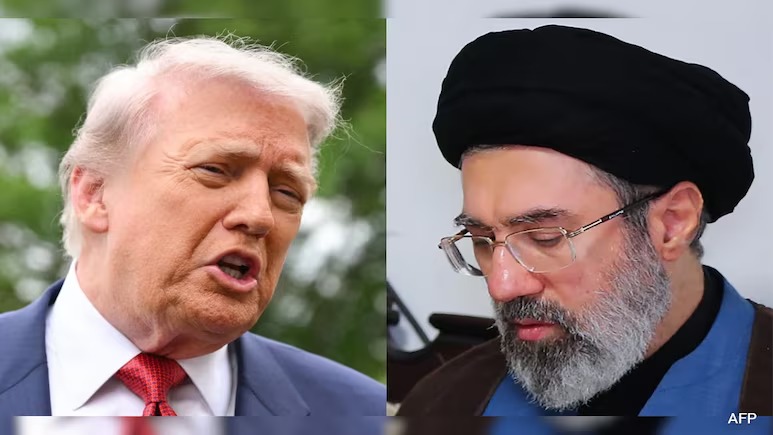
US President Donald Trump has sharply rejected Iran’s latest conditions for ending the ongoing Middle East crisis, describing Tehran’s demands as “totally unacceptable” in remarks that have intensified fears of renewed confrontation in the region.
The strong reaction from Trump rattled global markets and contributed to a sharp rise in oil prices during early Asian trading on Monday, as investors grew increasingly concerned about the possibility of escalating tensions between the United States and Iran.
The latest development followed Iran’s response on Sunday to Washington’s recent peace proposal aimed at easing hostilities and reducing the risk of a wider regional conflict.
Iranian officials had warned that Tehran would not hesitate to retaliate against any new American military strikes and would also oppose the deployment of additional foreign warships in the strategically vital Strait of Hormuz.
The Strait of Hormuz remains one of the world’s most critical oil transit routes, with a significant percentage of global crude exports passing through the narrow waterway daily.
Any threat to shipping activities in the area often triggers immediate reactions in global energy markets due to fears of supply disruptions.
Trump, however, made it clear that the United States was not prepared to accept Iran’s counter-proposal.
In a strongly worded post shared on his Truth Social platform, the American President dismissed Tehran’s response without disclosing the specific contents of the proposal.
“I have just read the response from Iran’s so-called ‘Representatives.’ I don’t like it, TOTALLY UNACCEPTABLE!” Trump wrote.
The statement immediately fueled speculation that diplomatic efforts to de-escalate tensions may be collapsing, raising concerns among international observers about the possibility of fresh military confrontations in the region.
Analysts say the latest exchange reflects the deep mistrust that continues to define relations between Washington and Tehran despite ongoing diplomatic engagements aimed at preventing a broader conflict.
The United States and Iran have remained at odds over several issues, including regional security, military activities, sanctions and freedom of navigation in Gulf waters.
Iran’s warning against increased foreign naval presence in the Strait of Hormuz was interpreted by many observers as a direct message to the United States and its allies, who have maintained significant military deployments in the Gulf in recent years.
Tehran has repeatedly argued that the growing presence of foreign forces in the region contributes to instability and heightens the risk of accidental clashes.
At the same time, Washington has insisted that military deployments are necessary to protect international shipping lanes and deter attacks on commercial vessels and allied interests.
Financial markets reacted swiftly to the renewed uncertainty.
Oil prices surged in Asian markets amid fears that any escalation involving the Strait of Hormuz could disrupt global energy supplies and trigger broader economic consequences.
Energy traders and investors closely monitored developments as tensions between the two countries threatened to undermine fragile stability in the global oil market.
Security experts warned that the breakdown of diplomatic efforts could have far-reaching implications not only for the Middle East but also for the global economy.
The region has remained volatile in recent months following a series of military incidents, retaliatory strikes and heightened political rhetoric involving regional and international powers.
Diplomatic observers say the current situation underscores the challenges facing mediators attempting to broker a sustainable agreement between both countries.
Several nations and international organisations have continued to call for restraint and renewed dialogue to avoid further escalation.
The international community has repeatedly expressed concern that any direct confrontation between the United States and Iran could destabilise the broader Middle East, disrupt trade routes and worsen existing humanitarian and security challenges.
Political analysts noted that Trump’s public rejection of Iran’s terms may increase pressure on negotiators seeking to salvage ongoing peace efforts.
Some experts believe the latest tensions could also influence domestic political calculations in both countries, especially as leaders seek to project strength before their respective supporters and allies.
In Tehran, officials have maintained that Iran would defend its sovereignty and national interests against any perceived aggression.
Iranian authorities also insist that any future agreement must include guarantees against military attacks and external interference.
Meanwhile, Washington continues to demand stronger commitments from Tehran regarding regional security and de-escalation measures.
As uncertainty grows, world leaders are expected to intensify diplomatic contacts in the coming days in an effort to prevent the situation from deteriorating further.
For now, global attention remains fixed on developments in the Gulf region, where any miscalculation could have serious geopolitical and economic consequences far beyond the Middle East.