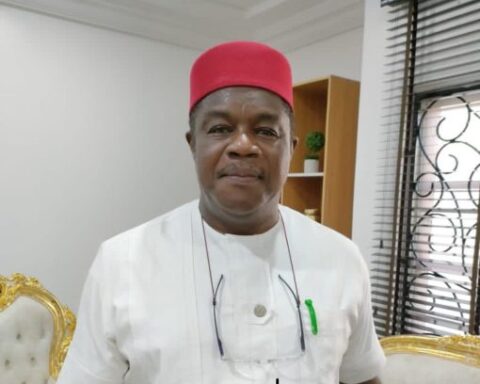
A stalwart of the African Democratic Congress, Anas, has raised concerns over the increasing cost of political participation in Nigeria, warning that the growing commercialisation of the democratic process could worsen voter apathy, political exclusion and weaken public confidence in the nation’s electoral system.
Speaking with journalists in Abuja, Anas called on political parties across the country, particularly the ADC, to embrace more affordable and inclusive nomination processes that would allow ordinary Nigerians to participate actively in politics without being financially overwhelmed. The politician, who served as a governorship running mate in Kano State during the 2023 general elections, said the rising financial demands associated with securing party nomination forms and running for elective office pose a serious threat to democratic development in Nigeria.
According to him, politics should not become an exclusive preserve for the wealthy and politically connected, stressing that democracy can only thrive when citizens from diverse backgrounds have equal opportunities to contest and contribute to governance. Anas explained that his decision to publicly address the issue became necessary because Nigeria’s democratic journey, nearly three decades into the Fourth Republic, should have matured beyond excessive monetisation and barriers that discourage participation by competent and credible individuals.
He noted that while democracy in Nigeria has recorded progress since the return to civilian rule in 1999, significant challenges remain, especially in the area of internal party democracy and accessibility to political office. The ADC chieftain lamented that many young Nigerians and grassroots politicians with genuine ideas and leadership potential are often discouraged from seeking office due to the enormous financial burden attached to nomination forms, campaign logistics and political mobilisation.
He warned that if the trend continues unchecked, the country risks creating a political culture where leadership positions are determined largely by wealth rather than competence, vision and service to the people. According to him, such a situation could further alienate citizens from the political process and deepen public frustration with governance institutions.
Anas, who disclosed that he has been a member of the ADC since 2022, said political parties must deliberately create pathways that encourage inclusion, transparency and fairness. He argued that lowering the cost of nomination forms and reducing financial obstacles for aspirants would strengthen internal democracy and encourage wider participation by youths, women and professionals interested in public service.
The politician also stressed that the future of Nigerian democracy depends on the willingness of political parties to reform their structures and prioritise merit over financial influence. He noted that political parties remain the foundation of democratic governance and therefore carry a major responsibility in shaping the quality of leadership that eventually emerges at state and national levels.
Anas further observed that the increasing perception of politics as a commercial enterprise rather than a platform for public service has contributed significantly to corruption, poor governance and declining trust in elected officials. He maintained that when candidates spend enormous sums to secure party tickets and finance campaigns, there is often pressure to recover such investments once they assume office, thereby undermining accountability and public interest.
The ADC stalwart urged party leaders and electoral stakeholders to initiate conversations around political finance reforms capable of making elections more accessible and less dependent on money. He also appealed to Nigerians not to lose faith in the democratic process despite existing challenges, insisting that sustained advocacy and institutional reforms could gradually improve the system.
According to him, democracy remains the best available system of government, but it must continuously evolve to reflect fairness, participation and equal opportunity. Political analysts say concerns over the cost of politics have become increasingly prominent in Nigeria, where nomination forms for major political offices often run into millions of naira.
Many civil society organisations and governance advocates have repeatedly argued that the trend discourages qualified citizens from contesting elections and strengthens the dominance of wealthy political elites. Observers believe Anas’ remarks reflect broader anxieties within Nigeria’s political space about the future of participatory democracy and the need for reforms ahead of future elections.
His comments also come at a time when several political parties are reassessing their structures and strategies following the 2023 general elections and in preparation for the next electoral cycle. As debates around electoral reforms, party financing and democratic inclusion continue to gain momentum, stakeholders are expected to intensify discussions on how to make Nigeria’s political system more accessible, transparent and representative of the broader population.
For Anas, however, the solution lies in returning politics to ordinary Nigerians and ensuring that ambition, competence and public service are not overshadowed by financial muscle and elite dominance.