The African Democratic Congress (ADC) has acknowledged that the departure of two of Nigeria’s most influential opposition figures, Peter Obi and Rabiu Kwankwaso, represents a significant setback, but firmly insists it is far from a fatal blow to its ambitions for the 2027 general elections.
In what appeared to be both a candid and calculated response, the party’s National Publicity Secretary, Bolaji Abdullahi, addressed the issue during an interview on Arise News’ Prime Time programme on Monday. Speaking with measured confidence, Abdullahi admitted the exits had altered the political landscape but stressed that the ADC remains resilient and focused on its long-term goals.
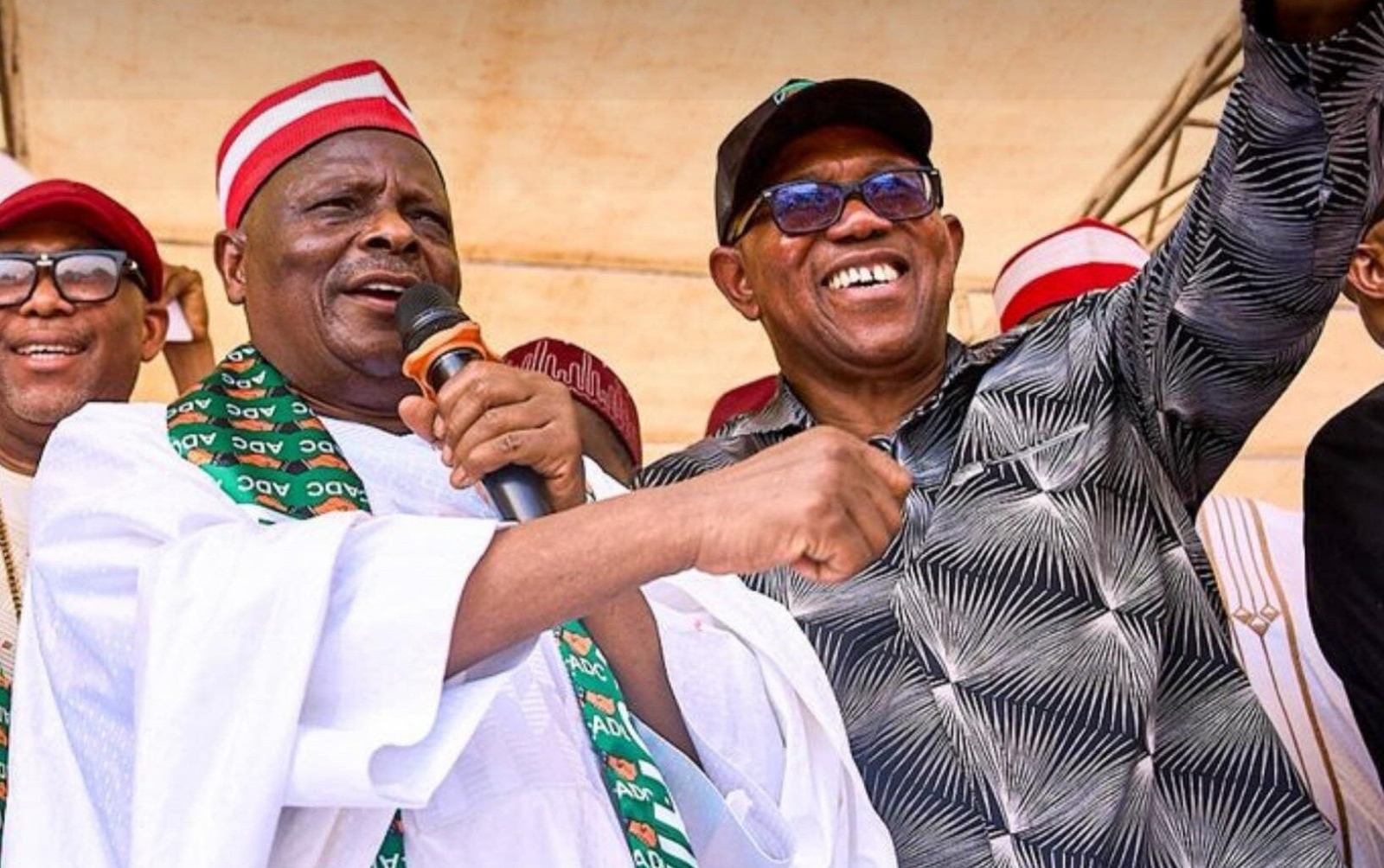
The story of Obi and Kwankwaso’s brief alliance with the ADC had initially sparked optimism among opposition supporters. Both men, formidable in their own rights, Obi as the face of a rising youth-driven movement following his 2023 presidential bid, and Kwankwaso as a seasoned northern powerbroker, had joined forces with the ADC as part of a broader effort to build a united opposition capable of challenging the ruling establishment in 2027.
For a moment, it seemed like the foundation of a formidable coalition had been laid.
But Nigerian politics, as history often shows, is rarely linear.
Their sudden decision to defect to the Nigeria Democratic Congress (NDC) has since shifted the dynamics. The move was accompanied by strong rhetoric, particularly their shared call for an end to what they described as “litigation-driven politics” a phrase widely interpreted as criticism of the growing trend of resolving political disputes through the courts rather than the ballot box.
Insiders suggest that ideological differences, leadership structure disagreements, and strategic calculations ahead of 2027 may have contributed to the breakdown of the alliance. While neither Obi nor Kwankwaso directly attacked the ADC, their exit signaled a desire to chart a new course under a different political banner.
Despite the high-profile nature of the departures, Abdullahi maintained that the ADC is not built around individuals but around a vision.
“Yes, it is a setback,” he admitted during the interview. “But it is not the end of the road for us. Political parties must be able to withstand shocks, adapt, and move forward.”
He went further to argue that the ADC’s strength lies in its structure, ideology, and growing grassroots appeal, not merely in the prominence of individual politicians. According to him, the party is already recalibrating its strategy, strengthening internal cohesion, and expanding its outreach across the country.
Behind the scenes, party stakeholders are said to be engaging in intense consultations aimed at rebuilding momentum. There are also indications that the ADC may court other influential figures disenchanted with their current platforms, potentially turning what seems like a loss into an opportunity for reinvention.
Political analysts are divided on the implications of the development.
Some believe the exit of Obi and Kwankwaso could weaken the ADC’s national appeal, given the massive support bases both men command, particularly among youths and in the northern regions, respectively. Others argue that the fluid nature of Nigerian politics means alliances can shift again before 2027, and no single move should be seen as definitive.
For supporters of the opposition, however, the bigger concern remains unity. The fragmentation of opposition forces has historically benefited incumbents, and the inability to sustain a broad coalition could once again shape the outcome of future elections.
Yet Abdullahi remains optimistic.
He pointed out that political realignments are a normal part of democratic evolution and expressed confidence that the ADC would emerge stronger. “We are not deterred,” he said. “If anything, this moment challenges us to deepen our resolve and refine our strategy.”
Meanwhile, the emergence of the NDC as a new political home for Obi and Kwankwaso adds another layer of intrigue to the unfolding political drama. Whether their new alliance will succeed where previous efforts faltered remains to be seen.
As the countdown to 2027 gradually begins, one thing is certain: the battle lines are being drawn, alliances will continue to shift, and Nigeria’s political stage is set for another intense and unpredictable contest.
For the ADC, the message is clear, while the road ahead may have become steeper, the journey is far from over.