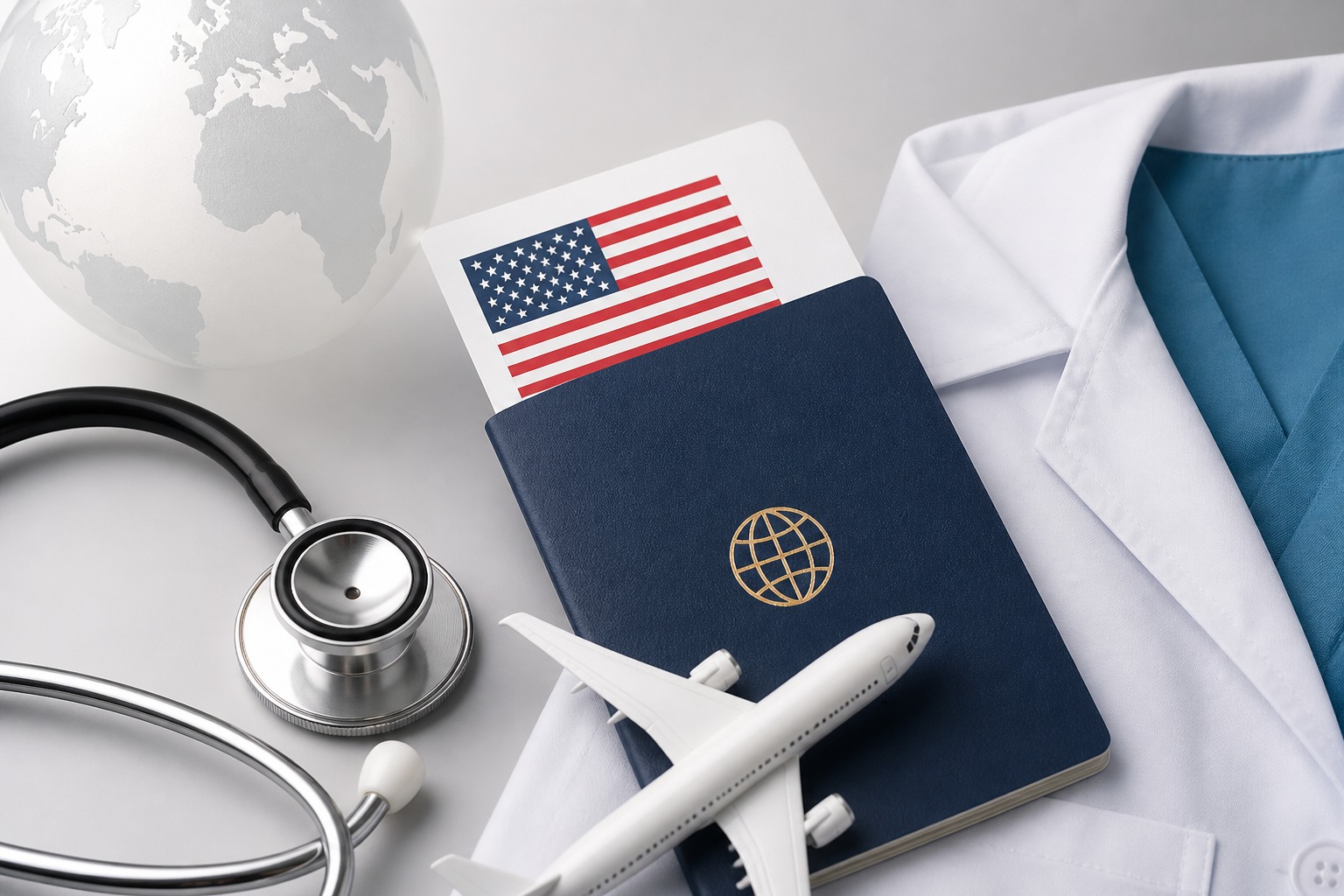
The United States has resumed visa processing for Nigerian and other foreign-trained doctors, marking a significant policy shift after months of uncertainty that left many medical professionals stranded in administrative limbo.
According to a report by The New York Times on Sunday, the reversal follows a quiet update to immigration guidelines that now exempts medical doctors from restrictions previously imposed under a broad travel-related policy introduced earlier this year.
The earlier directive, implemented in January, had effectively frozen decisions on visa extensions, work permits, and green card applications for citizens of about 39 countries. The move impacted a wide range of professionals, but its effect on the healthcare sector was particularly pronounced, as hundreds of foreign-trained physicians, many already working in American hospitals, found themselves unable to renew their status or continue practicing.
Under the updated guidance issued by the US Citizenship and Immigration Services, applications involving medical doctors will now proceed, providing long-awaited relief to affected individuals. A spokesperson for the Department of Homeland Security confirmed the development, stating that “applications associated with medical physicians will continue processing.”
The policy reversal is being interpreted as a pragmatic response to ongoing workforce shortages in the US healthcare system, particularly in underserved and rural communities where foreign-trained doctors often play a critical role. Over the years, Nigerian doctors have formed a significant part of this workforce, contributing expertise across specialties ranging from internal medicine to surgery and primary care.
Healthcare administrators and advocacy groups had raised concerns that the earlier restrictions risked exacerbating staffing shortages in hospitals already stretched by increasing patient demands. Some facilities reportedly struggled to fill positions after foreign physicians were forced into uncertainty, unable to secure visa renewals or continue their employment.
For many Nigerian doctors, the development comes as a welcome relief after months of anxiety. Several had faced the prospect of losing their jobs or being forced to leave the country despite years of service. Others, who had pending applications for permanent residency, saw their plans stalled indefinitely under the previous policy.
Immigration analysts note that while the exemption currently applies to medical doctors, broader uncertainties remain for other skilled professionals affected by the earlier restrictions. Nonetheless, the decision signals a recognition by US authorities of the essential role healthcare workers play in maintaining the country’s public health infrastructure.
The move also underscores the interconnected nature of global healthcare systems, where talent mobility remains a key factor in addressing workforce gaps. Nigerian medical professionals, widely regarded for their training and adaptability, continue to be among the most sought-after in international health systems.
While the US government has not issued a detailed public statement outlining the full scope of the policy adjustment, the confirmation by federal agencies suggests that efforts are underway to balance immigration controls with critical labour needs.
For now, the resumption of visa processing offers renewed hope to many doctors whose careers had been placed on hold. It also reaffirms the enduring demand for skilled healthcare workers and the vital role they play, not just within national borders, but across the global medical landscape.