By Charles Obiajulu Ugwu- PhD
For more than three decades I had nursed a deliberate disinterest. It was not the disinterest of indifference but of self-protection, the slow refusal of a citizen who had read enough of the script to know that the next act would only thicken the rot of the previous one. I watched the soldiers leave to their barracks in 1999 while the world declared a new dawn, and I watched, season after season, what was sold as a republic mature instead into a strange theatrical ritual in which elections functioned as the only governance Nigeria seemed willing to perform. Between cycles, the country drifted. During cycles, the country convulsed. Yet the announcers came on year after year, microphones in hand, telling us we were progressing.
Now, almost against my will, I find myself dragged back to the front row. The frenzy of the unfolding 2027 contest, with its caravan of defections, its midnight realignments, its billboards already polluting the skylines of cities whose drainage systems remain antique, has pulled even the most disciplined cynic out of retirement. One watches the spectacle and wonders, with something between bewilderment and grief, where exactly the optimism is being mined from. Has the country forgotten?
Has it staged for itself a national amnesia so complete that the events of 2023 have been quietly archived, the disenchantment laundered, the wounds papered over with the same campaign posters that produced them? This essay is the reluctant return of a withdrawn citizen to a process that has earned every gram of his disinterest, and that still demands, as all serious public matters do, that he speak.
There is a useful distinction in political theory between democratic process and democratic ritual. Process implies movement: a country adjusting itself, learning, refining, correcting, expanding the reach of accountability. Ritual implies repetition: a ceremonial form that survives long after its substance has fled, performed not to produce a result but to reaffirm the priesthood of those who perform it. What Nigeria has been performing since 1999 is increasingly the second.
The architecture of elections continues. Ballots are printed, polling units mapped, observers deployed, results announced, tribunals convened, judges pronouncing, swearing-in ceremonies following. The form is impeccable. The substance is hollow. Like all rituals stripped of meaning, ours has begun to require ever louder drums to convince its participants that something is happening.
The 2023 general election was the moment the drums grew loudest precisely because the music had stopped. A presidential contest in which only about twenty-five million voters out of more than ninety-three million registered turned out, producing the lowest participation rate of the Fourth Republic at roughly twenty-six per cent, was not a national exercise. It was an audience walkout.
The Independent National Electoral Commission, having promised the country a real-time electronic transmission of results that would finally close the trapdoor through which Nigerian elections traditionally fall, did not deliver. The trapdoor opened. The country fell through it. The Supreme Court stitched the fabric back together with judicial reasoning that satisfied the form of law without restoring the spirit of consent. And life, as ever in Nigeria, was instructed to move on.
It is the instruction to move on that is most corrosive. A country that cannot grieve its democratic injuries cannot heal them. A country that is told, after every contested election, that the matter has been settled by judicial pronouncement and must therefore be released from public memory, is being trained in a particular kind of forgetting. That training is now bearing its bitter fruit.
Amnesia in a polity is rarely accidental. It is built. It is built through the saturation of the public square with new outrages so that the previous outrage cannot finish being processed. It is built through the deliberate cultivation of cynicism, that quiet civic exhaustion which makes a citizen mistake his own surrender for sophistication. It is built through the entertainment industries of politics, the endless commentary, the partisan combat, the social media skirmishes that consume oxygen while consuming nothing of the actual problem. It is built, most efficiently, by the political class itself, whose interest lies precisely in ensuring that today’s electorate cannot quite remember why yesterday’s promises went unfulfilled.
Consider what has happened since the 2023 vote. The opposition that captured the imagination of millions of young Nigerians, that stood for the promise of a politics outside the duopoly, has effectively dissolved itself into the very ecosystem it was meant to disrupt. The Peoples Democratic Party, which exited 2023 with twelve governors, has watched ten of them cross over to the ruling party, leaving by early this year only the governors of Oyo and Bauchi standing under its umbrella.
The Labour Party, which carried six million votes and a generation’s hope, has been depleted by defections to a fragile coalition platform whose unity is contested in court before it has fought a single electoral battle. The New Nigeria Peoples Party has lost its only governor to the ruling party. The arithmetic is brutal. The party that held the presidency in 2023 now controls more than thirty of thirty-six state governorships, and whatever the figure says about the durability of opposition itself in our system, it does not say anything reassuring.
This is not the natural settling of a competitive democracy. It is the calcification of a one-party drift, lubricated by the patronage that flows from federal incumbency and accelerated by the survival instincts of politicians who recognise that proximity to power matters more than fidelity to platform. The Electoral Act of 2022, which prohibits campaigns more than one hundred and fifty days before polling day, lies trampled. Billboards announcing candidacies for an election still over a year away dot the highways of Lagos, Adamawa, Rivers, Oyo. The law sleeps. The lawmakers campaign. The regulator looks elsewhere. The citizens, who should be the enforcers of last resort, are too tired, too hungry, too emigrated, too disillusioned to mount the indignation that the moment requires.
I use the word calcification deliberately. Calcification is not the same as decay. Decay implies decomposition, a return of organic matter to its elemental state. Calcification is the hardening of tissue that should have remained flexible, the conversion of what was meant to be alive into what is now merely structural. A calcified joint still occupies space. It still bears weight. It can no longer move. This is what has happened to the Nigerian democratic process. It still occupies the space marked democracy. It still bears the weight of constitutional reference. It can no longer move toward the purposes for which democracy exists.
There are at least four such calcifications worth naming. The first is the calcification of choice. The doctrine of options in our politics has hardened into the doctrine of zones. Where you may run, who you may run with, what you may say, are predetermined by an unwritten geography of permissible ambition. The 2023 contest broke the cartilage of that arrangement only briefly, when the candidacy of Peter Obi suggested that Nigerians could vote outside the inherited bargains. The system has now restored its skeleton with redoubled rigidity. The same names that defined the political class twenty years ago will define it in 2027. The coalitions are not new visions but the rearrangement of the old furniture.
The second is the calcification of accountability. Between elections, governance recedes into a kind of fog. Budgets are passed without examination, contracts awarded without competition, security failures absorbed without resignation, fuel prices altered without consultation, and the constitutional offices that should function as oversight either collude or hibernate. Accountability has hardened into ritual denunciation, a performance in which opposition figures decry, ruling figures dismiss, and nothing changes. When those same opposition figures cross to the ruling party, the denunciations stop. The fog is mistaken for atmosphere.
The third is the calcification of the citizen. Three decades of disappointment have shaped a political subject who no longer expects governance, only survival. The young Nigerian, who in 2023 briefly believed that her vote could pierce the architecture, has emigrated, or is planning to. The Japa syndrome, which once described an exit motivated by economic ambition, now describes an exit motivated by political despair. To leave is no longer to seek. To leave is to mourn. Those who remain, having watched their children depart, have settled into a defensive minimalism that the political class reads as consent. It is not consent. It is fatigue dressed as agreement.
The fourth is the calcification of memory itself. This is the most dangerous of all because it is the precondition for the other three. A country that cannot remember what was promised cannot demand that it be delivered. A country that cannot remember who failed cannot prevent the failure from recurring. The political class has grown expert at the management of public memory, recycling its own personnel under new party logos, repackaging its own broken promises as new visions, persuading the country that what is happening now is fresh when it is in fact the third or fourth performance of a familiar script. The amnesia is not a side effect. It is the operating system.
Why then the frenzy? Why the noise of an early campaign for an election still over a year away, when so little of governance has been delivered in the years since the last one? The answer is uncomfortable. The frenzy exists because the political class has discovered that endless campaigning is more lucrative, and less risky, than actual governance.
To campaign is to mobilise, to mobilise is to disburse, to disburse is to bind followers to the structure of patronage that sustains the calcification. To govern, by contrast, requires choices that may offend, decisions that may fail, accountability that may bite. Far easier, then, to keep the country in permanent campaign mode, to convert the four-year cycle into a perpetual carnival in which the next election is always the reason this one cannot be examined.
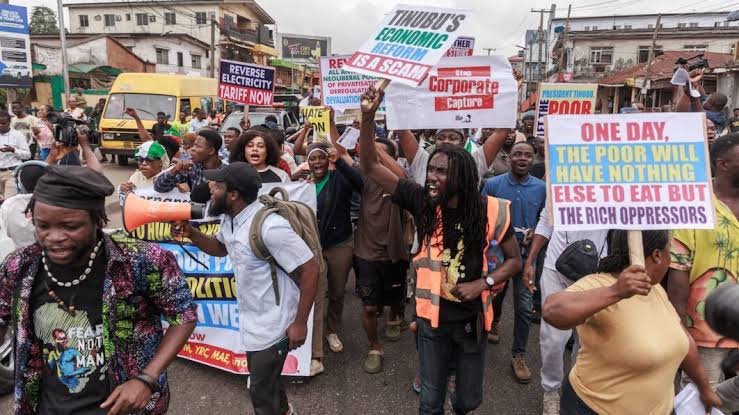
The ordinary Nigerian, meanwhile, is asked to participate in the carnival as both audience and prop. He is invited to rallies where his hunger is briefly addressed by branded rice. He is asked to wear t-shirts of candidates whose names will not appear in the policy papers that affect his electricity, his water, his children’s school. He is told that this election, unlike the last, will be different, and he is told this by the same actors who told him so the last time, and the time before that, and the time before that. The frenzy, in short, is not optimism. It is the manufactured noise that fills the silence where a republic should be functioning.
There are still pockets of authentic hope, and it would be unjust to deny them. Some young Nigerians continue to organise, to register, to insist. Some civil society institutions continue, against great odds, to document, to litigate, to expose. Some voices in journalism continue to risk their freedom for the sake of a record. These are not the frenzy. These are the slender tendons of a possible recovery, and they deserve to be distinguished from the noise. But they are not what the political class is celebrating. The political class is celebrating its own continuity.
What is to be done about a republic that has calcified? The honest answer is that no essay can prescribe the recovery of a body politic that has lost the capacity to feel its own injuries. The first step in any healing is not strategy but acknowledgment. Nigeria must acknowledge that what we have been performing since 1999 is not, in any rich sense of the word, democracy. It is the form of democracy without the substance. It is the architecture without the spirit. Until that acknowledgment is made, publicly and without the consoling decorations that usually accompany our national introspection, no reform will adhere.
The second step is the reconstruction of memory. A country that remembers can hold its leaders to account. The work of memory is slow, deliberate, often unglamorous. It involves the keeping of records, the chronicling of broken promises, the patient archival of who said what and who did what. It involves the refusal of the moving on that the political class so frequently demands. It involves a citizenry that learns to say, calmly and persistently, we have not forgotten.
The third step is the rejection of the carnival. Citizens who refuse to participate in premature campaigns, who refuse to wear the t-shirts, who refuse to attend the rallies, who refuse to be reduced to the audience of a permanent show, deny the political class its most important resource: the appearance of consent. This refusal is not a vote, but it is a kind of voice, and in a republic where votes are increasingly rendered inert, the recovery of voice may be the precondition for the recovery of votes.
The fourth step is the longest. It is the patient construction of institutions, civil and political, that can outlast the personalities currently feeding on the country. This is generational work. It cannot be willed by any single election. It can only be willed by a generation that decides, collectively and with full knowledge of what it is undertaking, that the calcification will not be its inheritance.
I do not know whether such a generation exists in sufficient numbers, whether it can mobilise itself within the lifetime of those of us who have already spent thirty years waiting. I do not know whether the optimism I am asked to feel about 2027 can survive the evidence of what has been done with the trust extended in 2023. I do not know whether the silence into which I had retreated for three decades was easier than this re-engagement, or whether anything in the current spectacle suggests the silence was misplaced.
But silence is also a form of complicity, and the calcified republic survives precisely because so many of those who see it most clearly have decided that seeing is enough. It is not enough. The bones of this country, however calcified, are still our bones. The citizens, however fatigued, are still our compatriots. The memory, however suppressed, is still recoverable. The frenzy will continue, because the frenzy serves the political class. The question is whether, alongside the frenzy, a quieter discipline can be built. A discipline of remembering.
A discipline of refusing. A discipline of insisting, even when the insistence seems to change nothing, that what is being performed in our name is not what was promised in our constitution. The shame of our democratic evolution is real. The disinterest it has earned is justified. The country still belongs, in some residual constitutional sense, to those of us who have watched it fail. We owe it, if not our optimism, at least our witness. The calcification will not yield to applause. It may yet yield to memory.
About the Author
Charles is a Contrarian thinker writing from Lagos