By Sani Idris Abdulrahma
Kaduna State has initiated validation of its extended Open Government Partnership (OGP) State Action Plan III for 2024–2027, aiming to sustain reforms, strengthen accountability, and expand citizen participation in governance processes.
At the one-day validation on Thursday in Kaduna, Mr Mubarak Abdulganiy, the Citizens Co-Chair of OGP, said the extension followed emerging developments and stakeholder engagements requiring continuity beyond the initial leadership cycle that was expected to end in December 2025.
He explained that consultations, including international engagements, underscored the need to protect ongoing reforms and ensure alignment with evolving governance priorities within the state.
Abdulganiy noted that validating the extension would help accommodate new priorities, reinforce progress, and encourage stakeholders to develop more ambitious and resilient reform commitments.
He added that expanded engagements with communities and citizens had highlighted the need to deepen inclusion and participation across all levels of governance.
According to him, the upcoming OGP Global Week in May would provide an avenue to amplify advocacy, engage the media, and increase awareness of citizen involvement in governance.
He said the state had recorded significant achievements over the past two years, particularly in strengthening citizen participation and advancing key reforms across sectors.
Abdulganiy explained that even informal engagements, including those with public health experts, had influenced policy direction and could lead to improved regulation of private health facilities.
Mr Tara Jeremiah, Kaduna OGP Point of Contact (PoC), emphasised the importance of clearly defined milestones, noting that they represent measurable results designed to drive societal change.
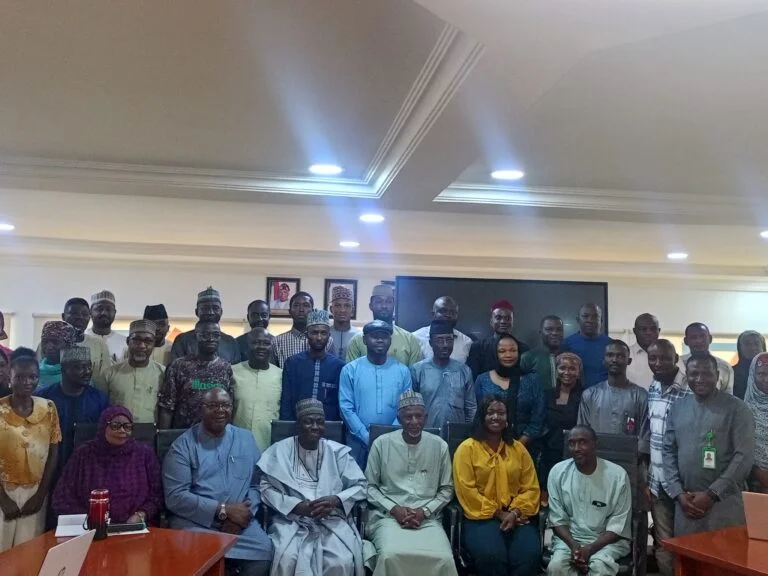
He said the validation process involved collaboration among government, citizens, media, and civil society to ensure inclusivity and transparency in developing the action plan.
Jeremiah highlighted the participation of Kaduna South Local Government as the only council among the state’s 23 local governments currently enrolled in the OGP framework.
He stressed the need to align action plan milestones with the broader government agenda to ensure coherence between policy direction and reform commitments.
According to him, the process must meet co-creation standards, ensuring that the action plan is jointly developed, reviewed, and adopted with inputs from diverse stakeholders.
He added that emphasis would be placed on measurable outcomes rather than activities, linking outputs to long-term impact and improved governance.
Mr Ben Kure, the Managing Director of Kaduna State Media Corporation (KSMC), underscored the importance of accountability, service delivery, and adherence to global governance standards.
He commended the state government’s leadership for positioning Kaduna as a model of performance and reform at both national and international levels.
Kure noted that engagements like the validation meeting provided opportunities to assess progress, reinforce commitment, and distinguish between actions that are merely good and those that are truly right.
He urged stakeholders to remain committed, open, and focused in advancing reforms that promote transparency, accountability, and sustainable development.
The Government Co-Chair of the OGP, Mukthar Ahmed, said extension of the action plan was a deliberate decision to sustain reforms and align SAP III with the administration of Governor Uba Sani and its sustain agenda.
Ahmed, is the Commissioner of Kaduna State Planning and Budget Commission, who doubles as the State Steering Committee Chairman of the OGP.
He noted that the decision, guided by the OGP local handbook, was aimed at ensuring continuity ahnd strengthening the effectiveness of ongoing reform initiatives.
He commended civil society organisations, government ministries, departments and agencies, and Technical Working Groups for their efforts in reviewing commitments and proposing new milestones.
According to him, the technical teams had developed realistic and impactful milestones across five commitment areas, reflecting both government priorities and citizen contributions.
He explained that the validation meeting was convened to review the proposed milestones, ensure alignment with state priorities, and formally adopt the action plan in line with co-creation principles.
Ahmed stressed that Kaduna’s OGP process is built on collaboration, where government and citizens jointly design reforms rather than merely endorsing pre-developed plans.
He urged participants to engage openly, identify gaps, and refine any weak or unclear proposals to ensure the final document is practical and results-driven.
The commissioner emphasised the need for active and constructive participation to produce measurable milestones capable of delivering tangible governance outcomes.