The Presidency on Monday firmly pushed back against what it described as misleading narratives suggesting that President Bola Tinubu has neglected Nigeria’s North West region, insisting that the administration has made substantial investments in infrastructure, healthcare, and transportation across the zone.
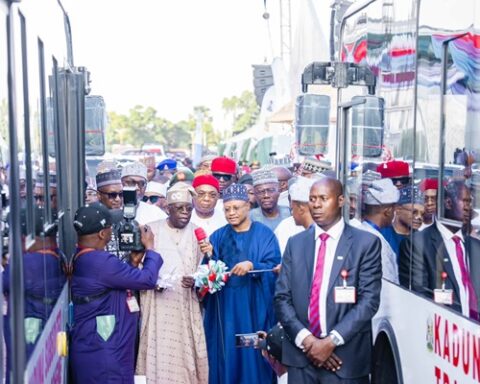
The clarification came during a pre-tour media briefing held in Abuja, convened by the Renewed Hope Ambassadors ahead of a nationwide project showcase tour. The initiative is set to begin in Kaduna and extend to other states within the North West, with the aim of presenting ongoing and completed government projects to the public.
Speaking at the briefing, the Senior Special Assistant to the President on Media and Special Duties, Tunde Rahman, who also serves as the Director of Media and Publicity for the Renewed Hope Ambassadors, said the tour was deliberately designed to address what he called a growing perception gap between government efforts and public awareness.
According to Rahman, claims that the Tinubu administration has sidelined the North West are not only inaccurate but also ignore the scale of ongoing federal interventions in the region. He stressed that the government remains committed to equitable development across all geopolitical zones.
“At a time when significant projects are being executed, it is important to correct the narrative,” Rahman said. “The North West is not being neglected. In fact, it is benefiting from some of the most ambitious infrastructure initiatives under this administration.”
Central to the government’s defence is the $2 billion standard gauge rail project linking Kano to Maradi in Niger. The Presidency disclosed that the cross-border railway, which is expected to enhance trade, mobility, and regional integration, is already about 60 per cent complete.
Officials say the rail line will significantly reduce transportation costs, facilitate the movement of goods and people, and strengthen economic ties between Nigeria and its northern neighbour. It is also projected to open up new economic corridors, particularly for agricultural and commercial activities in the North West.
Beyond rail infrastructure, the Presidency highlighted a range of interventions in the health sector, including the upgrade of medical facilities and the expansion of access to quality healthcare services in rural and urban communities. While specific projects were not exhaustively listed at the briefing, Rahman emphasized that the administration’s efforts are visible across multiple sectors.
The forthcoming project showcase tour, he explained, will provide journalists, civil society groups, and community leaders with firsthand access to these developments. By physically visiting project sites, the organisers hope to bridge the information gap and allow Nigerians to assess progress independently.
“This is about transparency and accountability,” Rahman noted. “We want Nigerians to see the projects for themselves, to engage with stakeholders on the ground, and to understand the scope of what is being done.”
Political observers say the move reflects a broader strategy by the administration to consolidate public support and counter criticism as the political climate gradually shifts toward the 2027 general elections. The North West, being one of Nigeria’s most populous regions, remains a critical political bloc whose support could prove decisive in future contests.
In recent months, some critics and opposition figures have accused the federal government of uneven development, arguing that certain regions have received more attention than others. The Presidency’s latest response appears aimed at directly confronting such claims with evidence of ongoing projects.
Residents in parts of the North West have expressed mixed reactions. While some acknowledge visible improvements in infrastructure and services, others maintain that more needs to be done, particularly in addressing security challenges and unemployment.
Analysts suggest that the success of the planned tour will depend largely on how effectively it communicates tangible outcomes to the public. They also note that beyond showcasing projects, sustained engagement and measurable impact will be key to shaping public perception.
As preparations for the tour gather momentum, the Presidency remains confident that the initiative will reinforce its message of inclusive development under the Renewed Hope Agenda.
For now, the debate over regional development continues, but the government’s stance is clear: far from neglecting the North West, it insists it is laying down critical foundations for long-term growth and integration, projects it believes will ultimately speak louder than any narrative.