The World Health Organisation (WHO) has concluded Exercise Polaris II, a two-day simulation of a fictional bacterial outbreak spreading globally.
The organisation disclosed this on its website on Monday.
26 countries, 600 emergency experts and over 25 partners participated on April 22 and April 23.
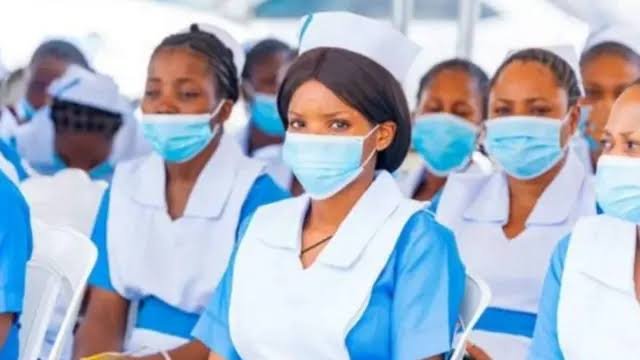
The exercise enabled countries to test pandemic preparedness, including activating emergency workforce structures, improving information flow and coordinating responses with partners and WHO.
Building on Polaris I in April 2025, which focused on a fictional virus, participants operated under real-life conditions to share information and align policies.
WHO Director-General, Tedros Ghebreyesus, said the exercise demonstrated the power of collective action.
Ghebreyesus said: “It showed that global cooperation is not optional – it is essential.
“This is the purpose of the Global Health Emergency Corps: coordination, trust-building, stronger connections, and working as one across borders.”
He said the simulation applied the Global Health Emergency Corps (GHEC) and the National Health Emergency Alert and Response frameworks.
Ghebreyesus noted that AI-enabled tools were also tested to support workforce organisation and planning.
He said the GHEC framework, published in June 2025, guides countries to strengthen emergency health workforce based on sovereignty, equity and solidarity.
“It enhances collaboration by improving information exchange and enabling rapid deployment of global emergency personnel when required,” he said.
He added that the national alert and response framework outlines coordination systems and actions needed for effective responses at all levels.
Mr Edenilo Filho, Director of the Public Health Emergencies Department, Ministry of Health, Brazil, said simulating a dangerous pathogen under real conditions helped translate plans into action.
“It is not enough to have plans on paper – what matters is how they perform in practice,” Filho said.
He said the exercise strengthened coordinated technical support from more than 25 national, regional and global health organisations.
“They include Africa Centres for Disease Control and Prevention, International Federation of Red Cross and Red Crescent Societies, Médecins Sans Frontières, Robert Koch Institute, UK-Med and UNICEF.
“Others include emergency networks such as the Global Outbreak Alert and Response Network and the Emergency Medical Teams initiative,” he added.
Dr Chikwe Ihekweazu, Executive Director of WHO’s Health Emergencies Programme, said the exercise reflected preparedness and coordinated action among countries.
“It reflects a trained, organised and connected emergency workforce ready to respond wherever and whenever needed,” Ihekweazu said.
He said more countries joined the second edition, collaborating through new networks, including regional health emergency leadership platforms.
According to him, Exercise Polaris II forms part of HorizonX, WHO’s multi-year simulation programme.
“It provides a platform to practise emergency frameworks, ensuring readiness remains a continuous investment in global health security,” he said.