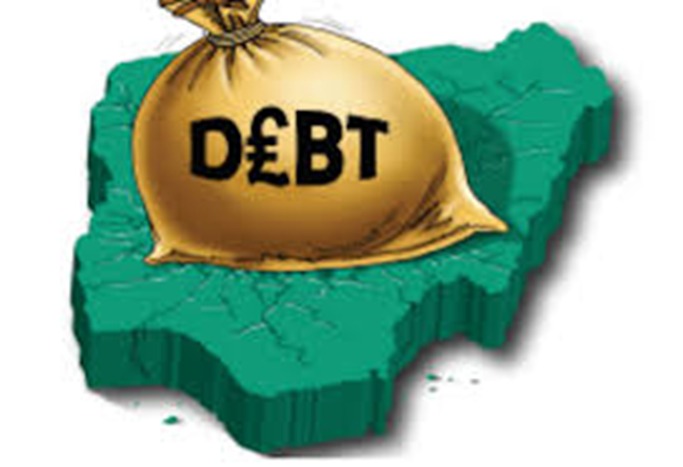
In politics, grand claims are often dismissed as harmless rhetoric.
In public finance, they matter. So when President Bola Tinubu said in September 2025, “Nigeria is not borrowing.
We have met our revenue target for the year, and we met it in August.” He made a sweeping statement about the country’s finances.
Three months later, Finance Minister Wale Edun told lawmakers something very different: that the government would likely miss its 2025 revenue target by about ₦30 trillion and had already borrowed roughly ₦14.1 trillion to cover the gap.
Both statements were reported. The issue is whether both can be true in the way ordinary Nigerians would understand them.
Edun’s statement fits the broader fiscal record. He told lawmakers in December 2025 that federal revenue was likely to close at about ₦10.7 trillion, far below the projected ₦40.8 trillion, and that borrowing had already risen sharply to fill the hole.
That was not campaign language. It was a formal fiscal presentation.
Tinubu’s claim, by contrast, was broad and emphatic. He did not say Nigeria had met only a non-oil revenue target.
He did not say the government had only reduced borrowing from local banks. He said Nigeria was not borrowing and had already met its revenue target. Taken at face value, that was a clear and general claim.
The difficulty is that the Presidency later tried to narrow it. The State House said the President had been quoted out of context and explained that he was referring to strong non-oil revenue mobilisation and to the Federal Government no longer borrowing from local banks. But that clarification actually weakened the original statement.
“We are doing well on non-oil revenue” is not the same as “we met our revenue target.” “We are not borrowing from local banks” is not the same as “Nigeria is not borrowing.”
The wider record makes that distinction unavoidable. During 2025, borrowing approvals continued, including external borrowing plans and fresh domestic borrowing to cover budget shortfalls. That alone makes the blanket claim that “Nigeria is not borrowing” impossible to sustain.
So who misled Nigerians?
On the evidence, Wale Edun’s December statement is the more accurate description of Nigeria’s overall 2025 fiscal position.
Tinubu’s September claim was, at best, selective and poorly framed. At worst, it was misleading in the ordinary meaning of the words used.
This is the heart of the matter: in public finance, precision matters. Once a government says the country is not borrowing, while still financing deficits with new debt, the issue is no longer political flair. It is credibility.