Nigeria’s quiet crisis of succession and the generations trapped between waiting and taking
There is a particular kind of insult that does not need volume to wound.
It does not arrive as an argument. It comes as habit. It slips so easily into everyday political speech that people stop hearing the violence inside it.
“Those children.”
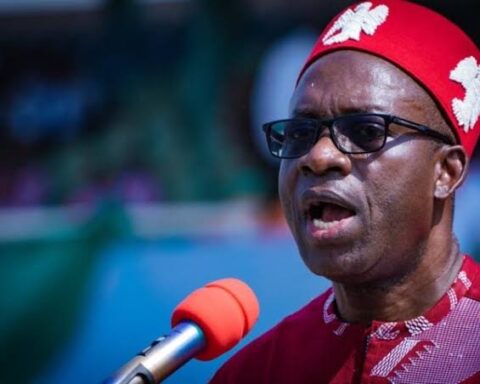
This is now the language used in Nigeria to describe men and women in their late thirties and forties who have spent the better part of their adult lives inside politics, not as observers, but as workers in its long and punishing machinery of mobilisation, loyalty, persuasion, survival, and service.
These are not children in any meaningful sense. They are people raising families, supporting ageing parents, carrying financial burdens, and navigating the exhausting corridors of public life. They have lived enough to know the difference between how politics is performed in public and how it truly operates behind closed doors.
Yet in the hierarchy of power, they are still spoken of as though they are waiting to become adults.
That, perhaps, is the deeper tragedy. The phrase no longer sounds strange. It has settled into the political imagination so completely that it now feels natural. And once language becomes natural, it begins to harden into structure. In time, structure starts to masquerade as truth.
Nigeria has long comforted itself with a certain story about leadership. It is the story that says experience must always come before authority, that age is the guarantor of wisdom, and that patience is the final proof of readiness. It is an appealing story because it promises order. It suggests that time itself is a credential and that ambition must spend years in the waiting room before it can be allowed into the chamber where decisions are made.
History, however, does not entirely support this mythology.
There was a time when the country entrusted some of its most fragile moments to young hands.
Yakubu Gowon became Head of State at thirty-one, inheriting a nation already under the strain of fracture and holding it through one of the most defining crises in its history. Murtala Muhammed rose to power at thirty-seven and governed with such concentrated force that even his brief tenure still reverberates through Nigeria’s political memory. Olusegun Obasanjo first led the country before turning forty, stepping into power at a time when urgency often outranked hesitation.
These were not biological accidents. They were products of a political culture that, at certain moments, allowed necessity to move faster than fear.
Somewhere along the line, that changed.
Not dramatically. Not all at once. But slowly, almost politely, until Nigeria arrived at a political order where youth is celebrated in speeches and neutralised in practice, where participation is encouraged in rhetoric and contained in reality, and where generations are welcomed close enough to serve but rarely close enough to decide.
The result is a system that has perfected the language of inclusion while quietly mastering the architecture of exclusion.
Nowhere is this contradiction more visible than in the way political memory is arranged in places like Benue, where leadership across the decades once appeared to follow an almost rhythmic generational relay.
Aper Aku, born in the 1930s, belongs to an era in which leadership was inseparable from the work of defining the very shape of governance. Moses Adasu, born in the 1940s, emerged in a different climate shaped by transition and consolidation. George Akume, born in the 1950s, and Gabriel Suswam, born in the 1960s, extended that continuity into a recognisably modern democratic order.
For a while, it seemed almost orderly, as though each decade would naturally produce its custodians of power.
Then the rhythm broke.
What followed was not succession, but interruption.
The 1970s, a generation that should have moved naturally into sequence, became politically dispersed, absorbed into structures that did not fully translate into visible continuity of leadership. Its ambitions surfaced only in fragments, in moments, in partial openings that never quite became a stable handover. Even when figures such as Terhemen Tarzoor emerged as expressions of that generation’s political will, the larger sense remained that something expected had not fully completed its passage.
But Benue is not the subject here.
Benue is the mirror.
What it reflects is not a local anomaly, but a national condition. Across Nigeria, power no longer seems to move in rhythm. It is increasingly negotiated through cycles of delay, retention, and carefully managed succession.
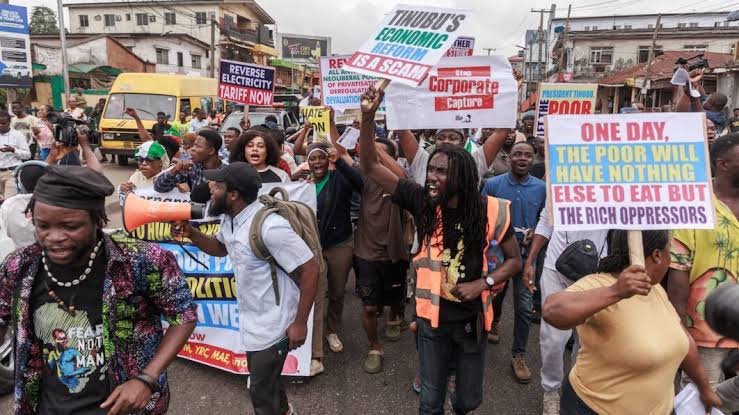
The pattern repeats itself in different accents and different geographies. Younger politicians are welcomed into offices, campaigns, advisory structures, and communication teams, yet that proximity rarely converts into real authority. They become permanent assistants in an ecosystem that produces very few principals. They are trusted enough to defend decisions, but seldom trusted enough to make them. They are visible enough to energise the system, but absent when that energy is converted into office.
And so a generation grows inside politics without ever fully entering power.
The deeper consequence is not simply frustration. It is distortion.
A political system that delays succession for too long does not preserve stability. It accumulates pressure. And pressure in politics behaves the way it does everywhere else. It moves. It searches for release. Eventually, it finds expression in ways no longer fully controlled by the structures that created it.
This is why the question of generational transition is no longer abstract. It has become a matter of time.
By 2031, those born in the early 1980s will be approaching fifty, the very age at which Nigerian political culture often begins to concede that a person is mature enough for serious consideration. But if that moment is deferred once more, the next realistic opening may not come for nearly another decade.
By then, Millennials will be nearing sixty.
And those who come after them, Gen Z, will already be in their late forties.
At that point, the assumption that succession naturally follows age begins to collapse under the weight of its own contradictions. Generations are no longer shaped under the same political conditions. Earlier cultures of politics were built on hierarchy, gradual ascent, visible ladders of loyalty, and the discipline of waiting. The emerging political consciousness is shaped instead by immediacy, global visibility, constant comparison, and a far less deferential understanding of authority.
The widening gap between institutional patience and generational temperament cannot remain theoretical forever.
It accumulates quietly until it becomes rupture.
This is why the real question is no longer whether younger politicians are ambitious. Ambition has never been the problem.
The question is whether the system itself is still capable of succession without interpreting it as disruption.
Because once succession is delayed long enough, it stops being a process and becomes a pressure.
And pressure, once unresolved, never disappears.
It moves.
It reorganises itself.
It eventually finds another route.
What Benue offers, then, is not merely a grievance or a provincial story. It is a structural warning about what happens when generational rhythm is interrupted long enough to become habit.
A democracy that loses the discipline of succession does not remain stable.
It bends under the weight of everything it refuses to release.
And when it finally gives way, it will not do so politely.
It will do so in the language of collision.
Not because the younger generation is impatient.
But because the system mistook delay for permanence.