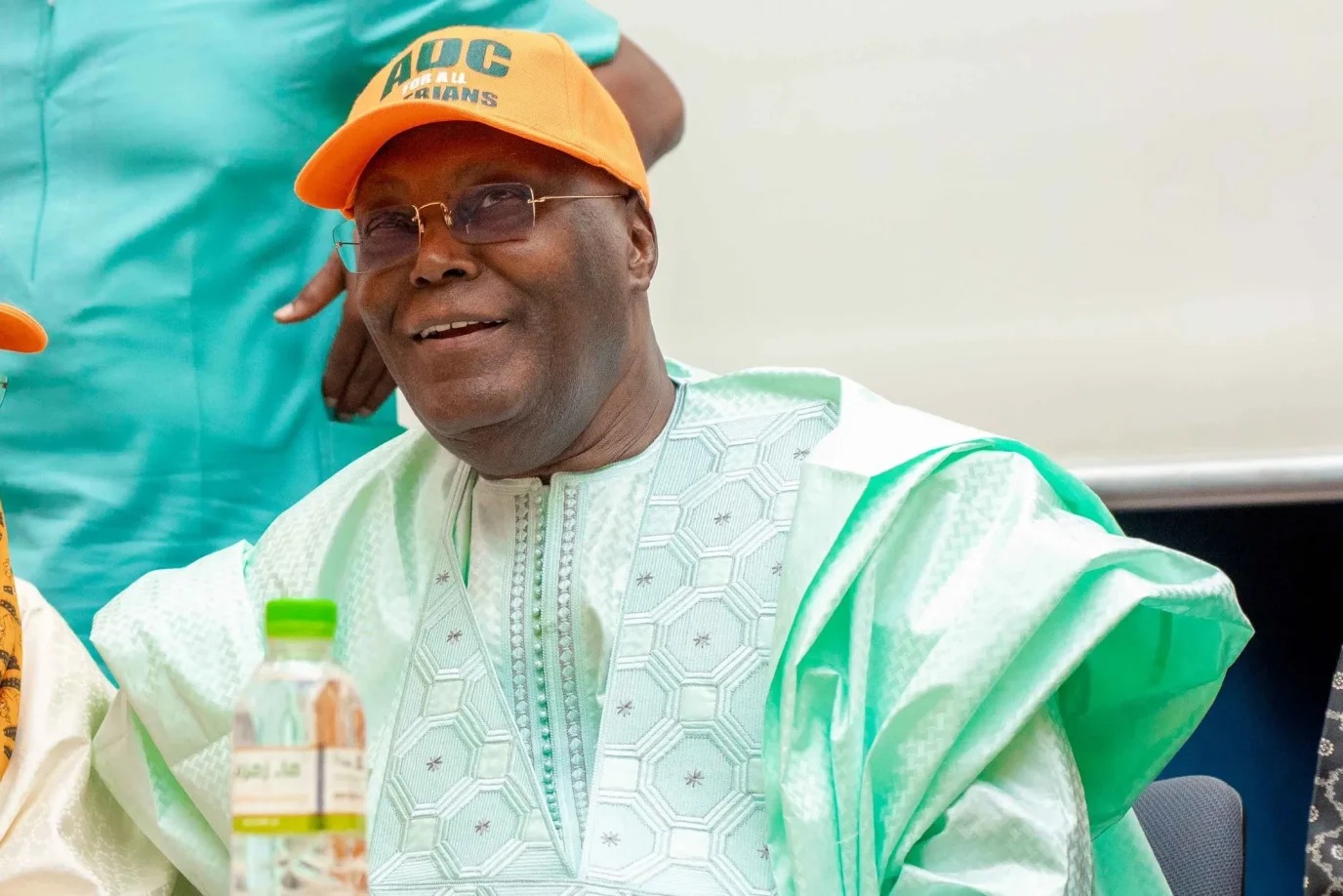
A fresh political storm is brewing ahead of the 2027 general elections as the camp of former Vice President, Atiku Abubakar, has openly faulted recent remarks made by presidential spokesman, Bayo Onanuga, regarding the contentious issue of North-South power rotation.
The disagreement, which has quickly gained traction across political circles, underscores the growing tension between the ruling establishment and opposition voices over the future direction of Nigeria’s democratic process.
On Thursday, Onanuga had asserted that President Bola Tinubu must be allowed to complete two full terms in office. According to him, it was only fair and consistent with Nigeria’s informal zoning arrangement that the South should retain power until 2031, following the eight-year tenure of former President Muhammadu Buhari, who governed from the North.
His comments, however, did not sit well with opposition figures, who described the stance as not only premature but also unconstitutional. Critics argue that Nigeria’s democracy allows citizens—not political conventions or spokespersons—to determine leadership through free and fair elections.
Reacting sharply, Atiku’s Senior Special Assistant on Public Communication, Phrank Shaibu, took to his X (formerly Twitter) handle to condemn what he described as a dangerous narrative being pushed by the Presidency. In a strongly worded statement, Shaibu accused the administration of attempting to stifle democratic choice and pre-determine the outcome of the 2027 elections.
He argued that while zoning and power rotation may serve as political agreements within parties, they are not enshrined in the Nigerian Constitution and therefore cannot override the will of the electorate. According to him, any attempt to present zoning as binding on the entire nation undermines the very foundation of democracy.
Shaibu further alleged that such statements were part of a broader strategy to silence opposition voices and discourage political participation from other regions, particularly the North. He warned that Nigeria’s unity could be threatened if political actors continue to elevate sectional arrangements above national interest.
“The Presidency must understand that democracy thrives on competition, not coronation,” Shaibu wrote. “Nigerians will decide who leads them in 2027—not a spokesman’s interpretation of zoning.”
The controversy has reignited long-standing debates about the role of power rotation in Nigeria’s political system.
While the arrangement has often been used informally to maintain a balance of power between the North and South, it has no legal backing, leaving room for differing interpretations.
Political analysts say the latest exchange signals the early stages of what could become a fiercely contested electoral cycle. With major parties already positioning themselves, the issue of zoning is expected to dominate political discourse in the coming months.
For many Nigerians, the core concern remains whether the focus on regional power sharing will overshadow pressing national issues such as economic recovery, security, and governance.
As the rhetoric intensifies, observers are urging restraint from political actors, warning that divisive narratives could deepen existing fault lines in the country.
Whether this clash will reshape alliances or simply mark the beginning of a prolonged political battle remains to be seen. One thing, however, is clear: the road to 2027 has already begun, and it promises to be anything but quiet.