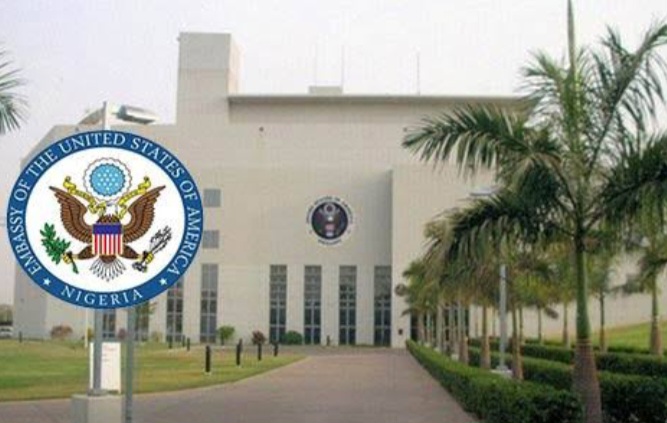
At a time when Nigerians were expecting positive outcome following recent US-Nigeria security partnership parley, it is worrisome that over the past week, the US government issued evacuation order for its non emergency embassy staff members to leave Abuja, Nigeria’s Federal Capital Territory.
Albeit, Washington did not disclose the rationale for its action beyond worsening insecurity, observers believe that the US, which has details about Nigeria, must have intelligence which the Nigerian government might not have.
The US, form experience, does not issue frivolous evacuation orders without valid reason; that is to say, the onus is on the Nigerian government to reassure citizens and douse the tension the evacuation order has created.
Beyond closing its embassy, America also updated its travel advisory from Level 3 category, which implies ‘’Reconsider Travel’’ to Level 4 category, ‘’Do not Travel,’ ’while adding 23 states to its list of no-go-areas in the country.
Of course, given the escalating insecurity and bare-faced killings in Plateau and Benue, the recent invasion of military formations in Borno State and the killing of an army general and 17 soldiers by suspected members of Islamic State of West Africa Province (ISWAP), and bandits displacing 21 villages in Sokoto State, there is reason to question the much-talked about partnership and its gains in the light of the worsening insecurity, as more Nigerians are being killed every day.
As earlier mentioned, the US does not order the evacuation of its staff from any country for fun. Usually, such evacuation is ordered in war situation or high level insecurity cum violence, as it is the current situation in Nigeria.
Historically, the US has issued similar advisories and evacuations in response to security concerns in Nigeria. While specific dates are not readily available, it is clear that Nigeria’s security situation has been a recurring concern for the US government, which explains why Nigeria is a country of focus.
The US Department of State authorized the voluntary departure of non-emergency US government employees and family members from the embassy on April 8, 2026.The decision was made in response to the increasing security concerns, including terrorism, kidnapping, and civil unrest in various parts of Nigeira.
However, the embassy will remain open but with limited ability to provide emergency services to US citizens in Nigeria. The US government also issued travel advisory, urging Americans to reconsider travel to Nigeria, with23 states under a ‘’Do Not Travel’’ warning.
As expected, the Nigerian government has debunked the advisory, stating that the security situation is not dire as portrayed and that the country remains safe for business and tourism.
The US evacuating staff and issuing a travel advisory means they are taking precautions due to safety concerns in Nigeria. The US government must have assessed that there is significant risk to Americans in Nigeria, possibly due to terrorism, kidnapping and civil unrest.
With fewer staff, the embassy’s ability to provide emergency services, like issuing visas or assisting stranded citizens, might be limited. The advisory advises Americans against traveling to Nigeria, which can impact tourism, business and travel plans,
The reduced travel and business could hurt the economy, especially if other countries issue similar advisories. Besides, the advisory might create tension between the US and Nigerian government. As seen in its reation.
The security concerns in Nigeria are driven by several factors including terrorism. Boko Haram and its offshoot, ISWAP, continue to carry out attacks, kidnapping and bombings, particularly in the northeast.
Armed banditry, often linked to terrorist groups, are responsible for mass kidnappings, especially in the northeast. Clashes between farmers and herders over land and land resources have escalated, leading to violence and displacements.
Organized crimes perpetrated by gangs involved in kidnappings, armed robberies, and other crimes, often with links to corrupt officials. These factors are interconnected and exacerbate each other, contributing to Nigeria’s complex security challenges.
The US embassy’s evacuation and travel advisory could be seen as a red flag for Nigeria’s security situation. It signals that a major global player like the US has significant concerns about safety and stability in the country. This can impact investor confidence. Foreign investors might hesitate to invest or expand in Nigeriadue to security risks.
Tourism and economy are affected. Fewer tourists and business travelers could hurt the economy. International relations is affected. The advisory might strain Nigeria’s relations with other countries.
Whereas the Nigerian government might be countering the narrative by highlighting efforts it is making to improve security, reversing the perception will require tangible progress on security and economic fronts.
As it were, Nigeria has taken several steps to address security concerns, particularly in tackling terrorism and banditry. The government has reportedly established the National Counter Terrorism Centre (NCTC). The centre coordinates efforts to combat terrorism and violent extremism, working closely with law enforcement agencies, financial institutions and international partners.
Prosecuting terrorism cases. Over 300 terrorism suspects have reportedly been convicted in mass trials, with sentences ranging from five years to life imprisonment, and plans for rehabilitation and de-radicalization programs.
Deploying military operations: Troops have reportedly been deployed to combat armed bandits and terrorists, with successes in neutralizing threats and rescuing kidnapped victims.
Enhanced international cooperation: Nigeria has reportedly strengthened partnerships with countries like the UK and organizations like the UN to combat terrorism and address security challenges.
The government has also acknowledged the need for a multi-faceted approach, combining military efforts with socio-economic initiatives to address the root causes of radicalization.
At this juncture, what Nigeria should do to correct to negative perception include showcasing security progress. Highlight successes in combating terrorism, banditry, and kidnapping through strategic media campaigns.
Improve transparency. Provide regular updates on security efforts and economic initiatives to build trust with international partners and investors. Diversify economy. Accelerate efforts to diversify beyond showcasing growth in sectors like tech, agriculture, and manufacturing.
Finally engage globally by strengthening diplomatic ties, participating in international forums, and attracting foreign investment through targeted outreach.
Dr. Onyekakeyah, a former member of The Guardian Editorial Boars, is a public affairs commentator and Daily Query columnist.