Governor Sheriff Oborevwori of Delta State has expressed strong dissatisfaction over the slow pace of work on the reconstruction of the Warri City Stadium, warning that contractors must strictly adhere to agreed timelines or face consequences.
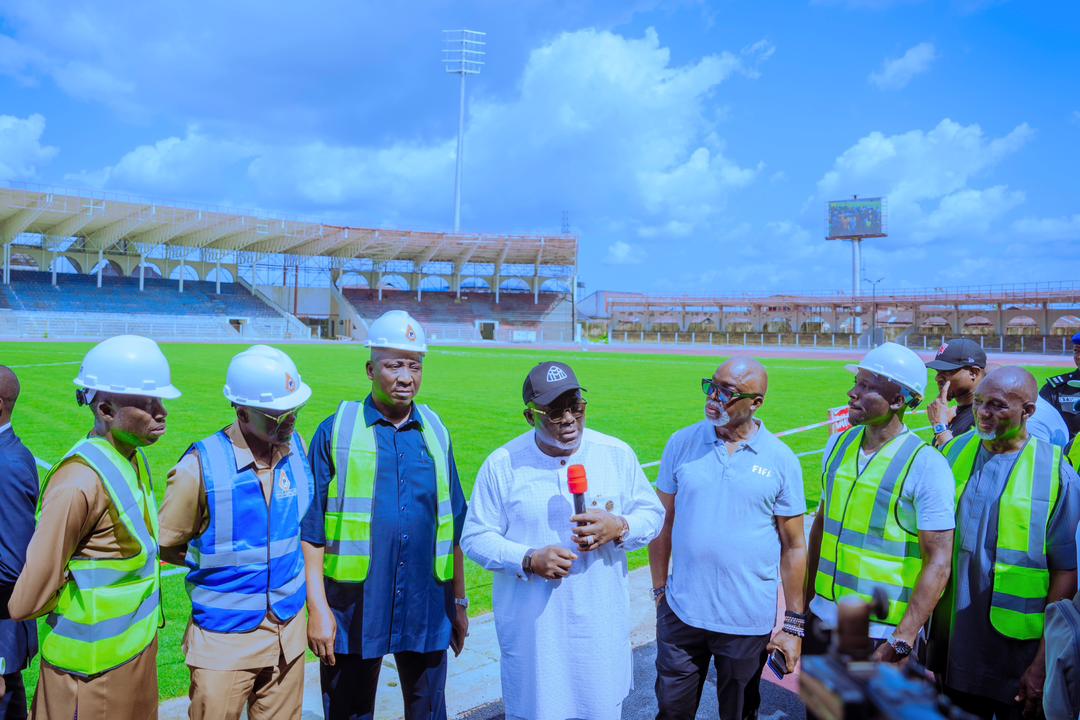
The governor made his displeasure known on Tuesday during an inspection tour of the facility, a project widely seen as a key component of the state’s efforts to revive sports infrastructure and promote youth development. What was expected to be a routine visit quickly turned into a moment of accountability, as Oborevwori confronted the reality that the project had fallen behind schedule.
Standing at the site, surrounded by construction equipment and partially completed structures, the governor did not hide his frustration. He reminded those present that there was a clear agreement with the contractor for the project’s completion by December. With April already underway, the delay, he said, was unacceptable.
“I wasn’t smiling because we have an agreement with the contractor,” the governor stated firmly. “The agreement is for the contractor to finish in December, and now we are in April.”
His words carried a tone of urgency and resolve, reflecting an administration determined to ensure that public projects are delivered not only to standard but also on time. For Oborevwori, the issue goes beyond a single project—it speaks to a broader principle of governance anchored on discipline, accountability, and respect for contractual obligations.
The Warri City Stadium reconstruction is part of a larger vision to reposition Delta State as a hub for sports and recreational excellence. Once completed, the stadium is expected to host local and national sporting events, nurture emerging talents, and serve as a source of pride for residents of Warri and beyond.
However, the current pace of work threatens to undermine these expectations. Observers at the site noted that while some progress had been made, several critical sections of the stadium were far from completion, raising concerns about whether the project could meet any revised timeline.
During the tour, the governor interacted with engineers and project supervisors, seeking explanations for the delay. While technical challenges and logistical issues were cited, Oborevwori remained firm in his stance that such factors should have been anticipated and managed within the project framework.
“Timelines must be respected,” he emphasized, underscoring a zero-tolerance approach to delays in government projects. According to him, contractors engaged by the state must understand that agreements are binding and that failure to deliver as promised will not be overlooked.
The governor also reiterated his administration’s commitment to quality delivery, noting that speed should not come at the expense of standards. He stressed that the state government expects a balance between timely execution and adherence to high construction quality, ensuring that the final outcome meets both functional and aesthetic expectations.
Residents of Warri, many of whom have been eagerly anticipating the completion of the stadium, have expressed mixed reactions. While some are encouraged by the governor’s hands-on approach and insistence on accountability, others remain concerned about the prolonged delay and its impact on the community.
For sports enthusiasts, the stadium represents more than just a facility, it is a symbol of opportunity. Local athletes, coaches, and youth groups have long looked forward to a modern venue where talent can be discovered and nurtured. The delay, therefore, is not just a construction issue but a setback for aspirations tied to sports development.
Political analysts view the governor’s reaction as part of a broader governance style that prioritizes results and visible impact. By publicly addressing the delay, Oborevwori sends a clear message to contractors and stakeholders that his administration is closely monitoring projects and will not hesitate to demand accountability.
As the inspection concluded, there was a renewed sense of urgency at the site. Workers moved with increased activity, and discussions among project managers hinted at possible adjustments to accelerate progress. Whether these efforts will be enough to recover lost time remains to be seen.
For now, the spotlight remains on the contractor and the commitment made months ago. In the eyes of the governor, and indeed the people of Delta State, the expectation is simple: deliver as agreed.
In a state striving to redefine its development trajectory, the Warri City Stadium project stands as a test case, one that will ultimately reveal whether promises can be translated into timely and tangible results.