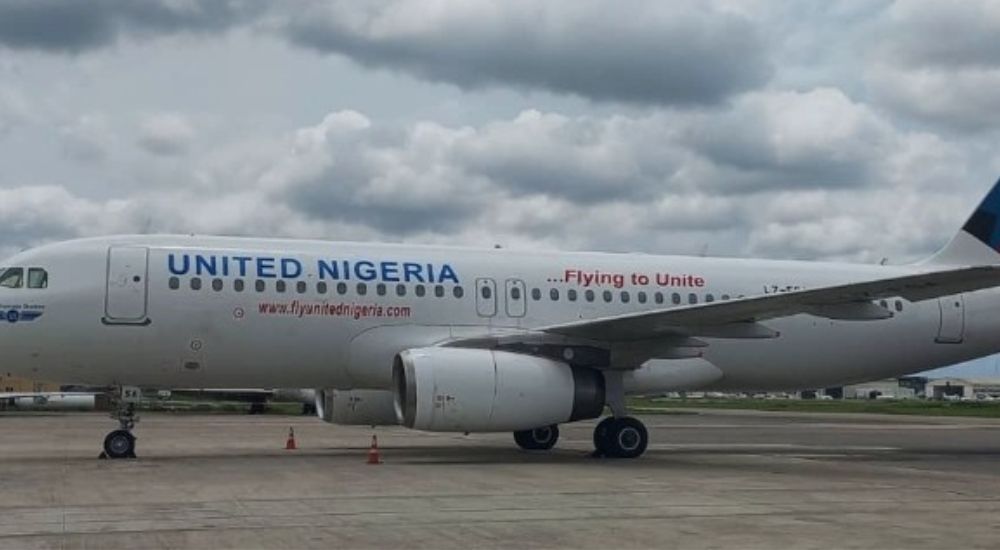
Operations of United Nigeria Airlines have once again been thrown into uncertainty following another bird strike incident, marking the fifth occurrence for the airline in 2026 and raising fresh concerns about aviation safety and operational stability.
The latest disruption involved a CRJ-900 aircraft operating Flight UN0579 from Kano to Abuja. According to a statement issued by the airline’s spokesperson, Chibuike Uloka, the aircraft encountered a bird strike while landing in Abuja, forcing it to be grounded for immediate safety inspections and maintenance.
The flight had taken off from Mallam Aminu Kano International Airport en route to Nnamdi Azikiwe International Airport when the incident occurred. Though the aircraft landed safely and no injuries were reported among passengers or crew, the impact of the strike was significant enough to warrant taking the aircraft out of service.
For passengers aboard the flight, the experience was unsettling, even if it ended without harm. Some described hearing an unusual thud moments before landing, followed by a tense silence as the aircraft taxied to a stop. While cabin crew maintained calm professionalism, the reality of the situation became clearer after disembarkation, when announcements confirmed the bird strike.
In the statement, Uloka reassured the public that safety remains the airline’s top priority. He emphasized that the aircraft would undergo thorough technical checks in line with aviation safety standards before being cleared to return to service. “We adhere strictly to all safety protocols,” he said, noting that such incidents, while unfortunate, are handled with the utmost seriousness.
However, this latest occurrence adds to a growing list of similar incidents affecting the airline this year. Five bird strikes within a few months have begun to draw attention not only to the airline’s operations but also to broader environmental and safety challenges facing Nigeria’s aviation sector.
Bird strikes, which occur when birds collide with aircraft, are a known hazard in aviation worldwide. They are particularly common during takeoff and landing phases when aircraft operate at lower altitudes. While many strikes cause minimal damage, others can have serious consequences, especially if engines or critical components are affected.
Industry observers note that repeated incidents of this nature could lead to operational delays, increased maintenance costs, and potential schedule disruptions for airlines. For United Nigeria Airlines, the grounding of the CRJ-900 means adjustments to flight schedules and possible inconvenience for passengers relying on its services.
At both departure and arrival airports, questions are being raised about wildlife hazard management systems. Airports are typically equipped with measures to deter birds, including habitat control, use of sound devices, and regular monitoring of bird activity. The recurrence of such incidents suggests that more robust strategies may be needed to mitigate the risks.
Passengers affected by the disruption expressed mixed reactions. While many commended the safe handling of the situation, others voiced frustration over delays and rescheduling challenges. For frequent flyers, the pattern of repeated bird strikes has become a source of concern, prompting calls for stronger preventive measures.
Aviation experts stress that while airlines are responsible for aircraft maintenance and crew training, airport authorities also play a crucial role in minimizing bird strike risks. Effective coordination between airlines, regulators, and airport management is essential to address the issue comprehensively.
Despite the challenges, United Nigeria Airlines has maintained that it remains committed to providing safe and reliable service. The airline assured customers that all necessary steps are being taken to restore normal operations as quickly as possible.
As investigations and inspections continue, the incident serves as a reminder of the unpredictable nature of aviation and the importance of vigilance at every stage of flight operations. For now, the focus remains on ensuring that safety is never compromised, even in the face of repeated disruptions.
In Nigeria’s busy airspace, where connectivity between cities like Kano and Abuja is vital, every incident carries lessons. And as the industry grapples with these challenges, the hope is that improved measures will reduce such occurrences, keeping both passengers and crew safe in the skies.