By Jude Ogechi Eze
In a small riverside community, there is a story often told of a young boatman who inherited a vessel already battered by years of neglect. The elders warned him: “This river is not kind to the unprepared.” But what they did not tell him was that the real danger lay not in the river’s turbulence, but in the constant voices from the shore; critics shouting conflicting directions, skeptics predicting failure, and rivals hoping the current would consume him.
The young man, however, chose a different path. He listened, but he did not waver. With steady hands and quiet resolve, he navigated the storm, and, in time, the same voices that once doubted him fell silent as the boat glided into calmer waters.
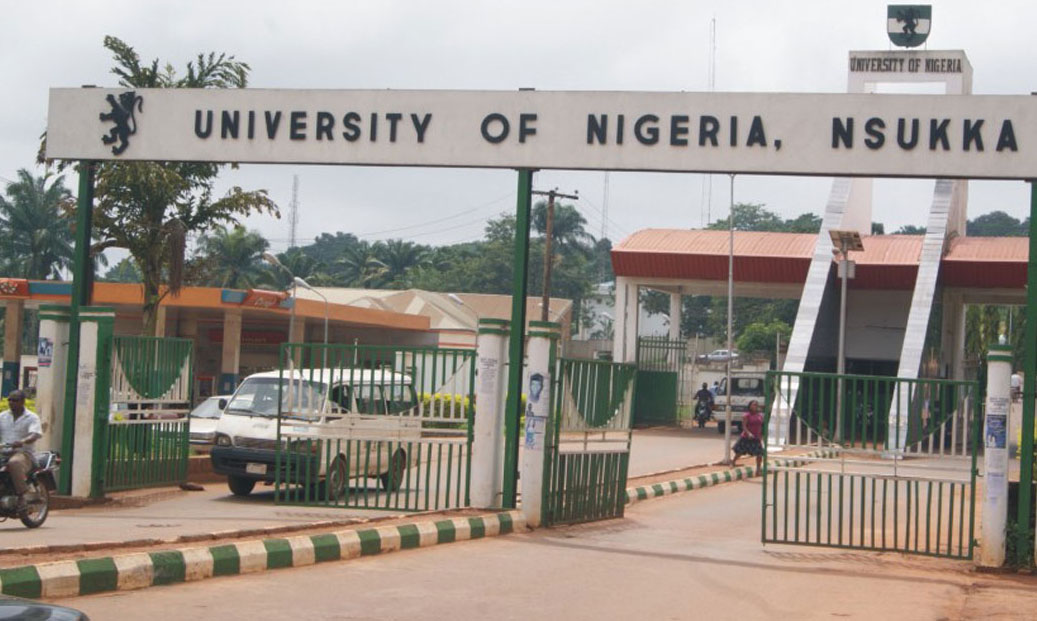
That story, in many ways, mirrors the unfolding leadership journey at the University of Nigeria, over the past eight months.
Around July of last year, tension quietly gripped the academic corridors of the institution. The tenure of the Acting Vice Chancellor was drawing to a close, and as August approached, the contest for succession intensified. What might ordinarily have been a routine administrative transition soon evolved into a deeply polarized contest of ideas and identity.
At the heart of the contest were two distinct blocs. On one side stood a group of indigenous Nsukka Professors who advanced a historical and emotional argument: “that no son of the soil had ever led a University built on their ancestral land.” For them, it was not merely a question of qualification but of symbolic justice, a moment they believed had long been denied, despite their possession of the requisite credentials.
On the other side were equally qualified contenders and their supporters, who insisted that leadership of such a critical institution must rest solely on competence, experience, and vision, irrespective of town of origin. They framed their argument as a defense of meritocracy in a system too often swayed by sentiment.
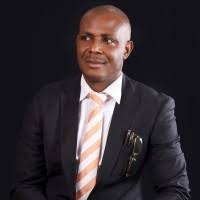
Amid this divide, one name gradually emerged as a bridge between both positions; Prof. Simon Uchenna Ortuanya. His candidacy struck a rare chord at the intersection of equity and meritocracy, across the fault lines. To some, he represented equity; to others, competence. Ultimately, his emergence as the 16th Vice Chancellor struck what many initially perceived as a delicate balance between justice and merit.
Yet, as is often the case in high-stakes leadership contests, victory did not immediately translate into unity.
The early days of his administration were marked by subtle resistance and, at times, overt opposition. Elements within the same constituency that had advocated for indigenous leadership became divided, particularly among those whose personal ambitions had been thwarted. Allegedly, some members of the Nsukka league of professors who had lost out ignited a campaign of whispers and anonymous petitions. What followed was less a formal opposition and more a sustained undercurrent of skepticism, manifesting in policy resistance, internal friction, and the spread of unverified narratives.
But Ortuanya remained calm. Spartan tranquility ruled his heart as the conflagration raged. Like the famous Country music legend, Kenny Rogers advised in “The Gambler,” he knew when to hold, when to fold, when to walk away, and when to run. And so, like flint (Isaiah 50:7), he set his face forward.
This quality was why our Director, Onyekachi C. Ugwu, on the morning of Ortuanya’s inauguration, authored a feature article titled: “Nehemiah’s Charge and Ortuanya’s Call to Action” (published on theconcourse.com.ng). We published it to amplify the first foot forward by UNN’s 16th Vice Chancellor.
Since then, we at Echo Dei Media Consult have kept our searchlight on him. Not out of hero worship, but because he became an endangered species in a landscape of wolves in sheep’s clothing. UNN became our pet project in development journalism.
Leadership, however, is often defined not by the absence of adversity, but by the response to it.
In navigating these early storms, Ortuanya adopted a posture that could best be described as restrained resolve. He neither engaged in public confrontation nor succumbed to the pressures of internal dissent.
Those familiar with his prior role as Secretary to the State Government noted a similar pattern of measured decision-making, strategic patience, and a capacity to distinguish between noise and necessity.
Beyond the politics, the more substantive challenge lay in the state of the institution itself.
Independent inquiries and internal assessments suggested that the University he inherited was grappling with systemic inefficiencies: fragmented faculty coordination, entrenched administrative bottlenecks, aging infrastructure, and financial leakages. One striking example often cited is the University’s electricity expenditure prior to his assumption of office, running into over ₦200 million monthly at the Nsukka campus alone, with additional substantial costs at the Enugu and Ituku-Ozalla campuses.
Within a relatively short period, administrative reviews and targeted interventions reportedly led to a significant reduction in these costs, an outcome that, while not widely publicized, signaled an early commitment to fiscal discipline.
Interestingly, this reluctance to amplify achievements has become a defining feature of the current administration. In this our generation where public office is frequently accompanied by aggressive media visibility, Ortuanya has maintained a noticeably low profile, once remarking that his office “is not a political position.” It is a stance that both distinguishes and, in some quarters, limits broader public awareness of ongoing reforms in the School.
He has consistently avoided media showmanship. That is precisely why Echo Dei Media Consult volunteered to help highlight some of his efforts in our weekly editorials, not for his glory, but for the public record.
We produced a news commentary on his first 100 days in office, highlighting unprecedented achievements. And as the first quarter of this year dusk, we published a comprehensive report titled: “From Decay to Direction: The Future of UNN Is Being Rewritten.” That piece went viral across reputable online newspapers, including Reuben Abati’s platform and Nigerian NewsLeader. It chronicled his achievements and ongoing massive projects across all three campuses.
Nevertheless, independent observers, including media and policy analysts, have begun to document incremental changes within the institution, ranging from administrative restructuring to infrastructure renewal and improved operational efficiency.
Recent institutional rankings which placed the University among Nigeria’s leading academic institutions in 2026, have further reinforced the perception of gradual progress. What is perhaps more notable is that these gains are being recorded at a stage when, by the administration’s own projections, many of its core policy frameworks are yet to be fully implemented.
There is, within this trajectory, a broader lesson about leadership in complex environments.
It is easy to lead when consensus exists; it is far more demanding to lead amid division. It is easy to implement reforms in stable systems; it is far more consequential to do so within structures burdened by legacy challenges. And perhaps most importantly, it is easy to react to opposition; it is far more effective to outgrow it, like the VC did.
Analysts who drew comparison to the 16th US President, Abraham Lincoln, often regarded as one of the most consequential leaders in American history, and Ortuanya the 16th VC of UNN, may appear ambitious. Yet, the underlying principle of that analogy is less about equivalence and more about pattern, which includes: the capacity to endure criticism, navigate division, and remain anchored to a larger vision.
Today, as the University gradually stabilizes and redefines its institutional direction, it is becoming evident that the early turbulence did not derail its course. If anything, it tested the resilience of its leadership and clarified its priorities.
The river, it seems, is calmer now. But more importantly, the boat is still moving, steadily, deliberately, and with a clearer sense of destination.
And in that quiet, consistent motion lies the real story.
May daylight spare us!
…Jude Ogechi Eze is of Echo Dei Media Consult. He is also a Laboratory Scientist.