Former Governor of Ekiti State, Ayodele Fayose, has reignited political controversy in Oyo State after restating his allegation that the state governor, Seyi Makinde, is plotting to dethrone the Olubadan of Ibadanland, Oba Rashidi Adewolu Ladoja.
Fayose’s renewed claim, shared via his X (formerly Twitter) handle on Tuesday, has stirred fresh debate across political and traditional circles, despite earlier denials from all parties involved. The outspoken politician insisted that recent developments in Oyo State appear to support his initial assertion, urging the public not to dismiss his warning.
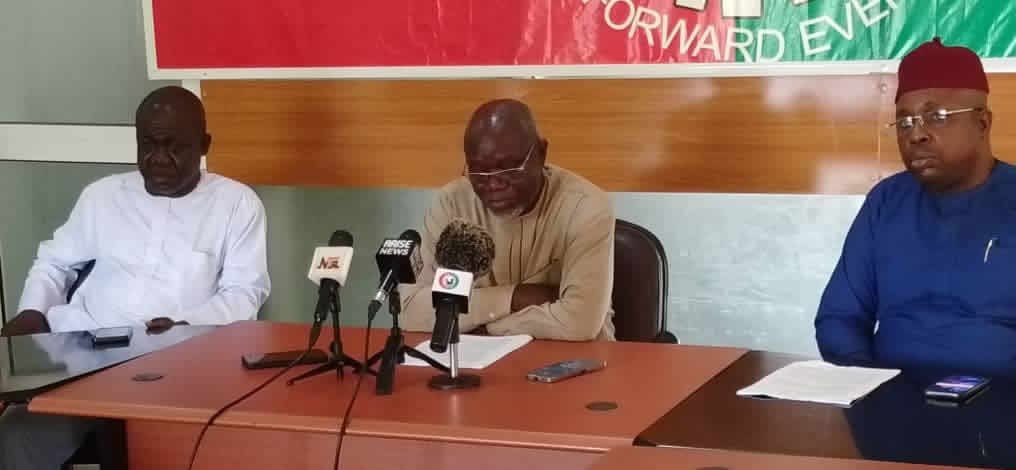
The allegation had previously been rejected by Governor Makinde, the Olubadan, and the Central Council of Ibadan Indigenes, all of whom described it as unfounded and baseless. They maintained that there was no plan or intention to interfere with the traditional institution or the occupant of the revered throne.
However, Fayose’s latest statement suggests he remains unconvinced. Known for his blunt and often controversial political commentary, the former governor argued that unfolding events within the state’s traditional and political landscape lend credibility to his claims.
“I have said it before, and I will say it again time will reveal the truth,” Fayose reportedly stated in his post, hinting at undisclosed developments that, in his view, validate his concerns.
The controversy touches on the highly sensitive issue of traditional leadership in Ibadanland, where the Olubadan stool is regarded as one of the most respected in Yorubaland. Any suggestion of interference in the institution is often met with strong reactions from indigenes and stakeholders who see the monarchy as a symbol of cultural heritage and stability.
Political observers note that the renewed allegation could further heighten tensions between key actors in the South-West political space. While Fayose is not a direct stakeholder in Oyo State politics, his influence and history of vocal interventions have ensured that his comments attract widespread attention.
Supporters of Governor Makinde have dismissed the latest claim as a continuation of baseless accusations, reiterating that the administration remains committed to respecting traditional institutions and upholding due process. They argue that the governor has demonstrated consistent support for cultural and traditional authorities since assuming office.
Similarly, voices within Ibadanland have called for caution, urging political figures to avoid statements that could incite unnecessary tension or undermine public confidence in established institutions. Members of the Central Council of Ibadan Indigenes have reiterated their earlier stance, emphasizing that there is no credible evidence to support the allegation.
Despite these reassurances, Fayose’s insistence has kept the issue alive in public discourse, with many awaiting further clarification or developments that might shed more light on the matter.
Analysts say the situation underscores the complex interplay between politics and traditional authority in Nigeria, where both spheres often intersect in ways that can generate controversy. They warn that unverified claims, particularly on sensitive matters, have the potential to create divisions if not carefully managed.
As reactions continue to trail Fayose’s statement, stakeholders are calling for restraint and a focus on preserving harmony within the state. For now, the claim remains a subject of contention firmly denied by those at the center of it, yet persistently echoed by the former Ekiti governor.
Whether the issue will escalate further or fade with time remains to be seen, but it has once again highlighted the enduring influence of political voices in shaping narratives around traditional institutions in Nigeria.