By Agbeze Ireke Kalu Onuma, AI-KO
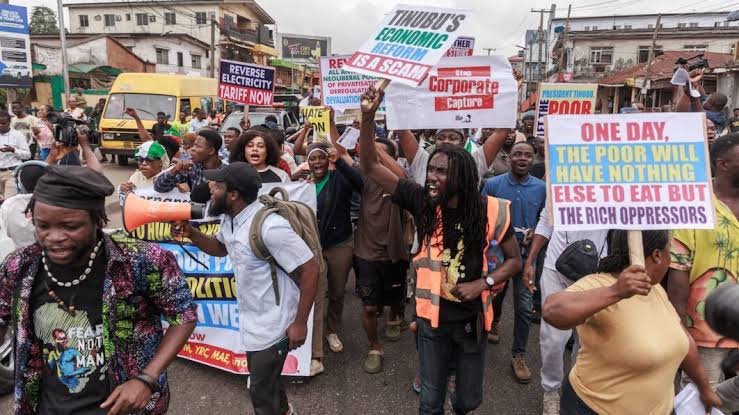
Do you often catch yourself. thinking about Nigeria? About life in Nigeria? I do. And watching the just concluded APC convention just drove me deeper into these thoughts. Let me start by telling you what it feels like to be a Nigerian in the last week of March 2026. Wherever you are, you probably woke up to the sound of generators, that familiar grumble that has become the soundtrack of our existence. You probably calculated or are still calculating how much you had or have left in your account, wondering if the price of bread had gone up again overnight, and tried to remember the last time you had a full night’s sleep without worrying about the next day.
Irrespective of your location, you might be thinking about the neighbourhood Hausa trader, or the faceless women who supply your neighborhood with tomatoes and other stuff; or maybe the one particular supplier who hasn’t been seen around in months because the roads are no longer safe. So wherever you are, you probably heard another story about a colleague whose brother was kidnapped on his way back from work, and how the family had to sell everything to raise the ransom. This is what March 2026 looks like for most of us.
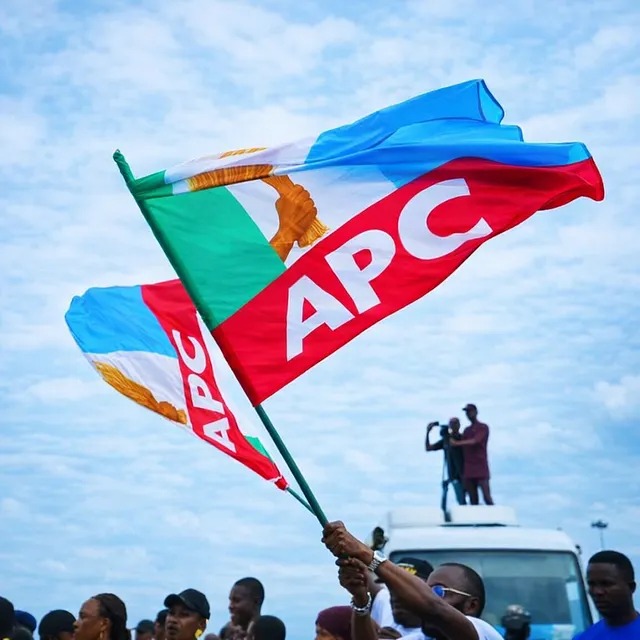
But in Abuja, something else was happening. The All Progressives Congress (APC) national convention was held on the 27th and 28th of March 2026 at Eagle Square, and the capital city was bathed in a different kind of light. Not the dim, flickering light that most Nigerians have learned to live with, but a dazzling, artificial, almost blinding light of political pageantry. Eagle Square was transformed into a fortress of celebration, drowning in a sea of brooms and banners and smiling faces that looked like they had been arranged there by someone who had drawn up a blueprint months in advance.
The convention was billed as a celebration of internal democracy, a moment of unity, and a strategic alignment ahead of 2027. That is what the press releases said. That is what the party spokespeople repeated on television. That is what the banners declared in bold, hopeful letters. But for those watching closely, especially from the margins of power, it felt like something else entirely. It felt more like a coronation than a contest. A ritual, not a reckoning. A performance, not a process.
There is a strange quiet that descends on a country when democracy begins to suffocate, and it is not the quiet of peace or the quiet of rest. It is the quiet that comes when people realize that their voices no longer matter, that the decisions that shape their lives are being made in rooms they will never enter, by people they will never meet. This quiet does not arrive with a bang or a crash or a dramatic coup broadcast on national television. It arrives with a smile, a handshake, and a convention that looks so smooth, so organized, so perfectly choreographed that you almost forget to ask the most important question: who decided all of this, and when did they decide it, and why was I not invited to the conversation?
Here we are, standing at the tail end of March 2026, watching the theater of the absurd unfold once again in the nation’s capital. The theater of the absurd is a term that originally came from literature, from plays where nothing made sense and characters spoke in circles and the world felt like a nightmare dressed up as normal life. That is what Nigeria has become for many of us. We go about our days, we pay our bills, we send our children to school, we try to run our businesses, we attempt to survive, and all the while, in the background, there is this ongoing performance of politics that seems to have less and less to do with the reality of our lives. The convention was supposed to be about choosing leaders, about debate and deliberation, about the clash of ideas that makes democracy different from dictatorship. But what we got was something that looked like democracy but felt like its opposite. It was democracy with the blood drained out of it, leaving only the shell, the shape, the empty form.
While the streets of big cities like Lagos, Kano, and Port Harcourt hum with the weary, synchronized growl of generators and citizens calculate the impossible arithmetic of survival, Abuja was bathed in the dazzling, artificial light of this political gathering. There is a word in Nigerian English that captures this divide perfectly: “them” and “us.” There is the Nigeria of “them,” the political class, the people who move in convoys with sirens, who fly private jets, who have never had to calculate how much kerosene they have left before the next salary comes. And then there is the Nigeria of “us,” the rest of us, the people who wake up every morning trying to figure out how to make it through another day.
The convention was a gathering of “them,” a celebration of “them,” a reaffirmation that “them” are in charge and “us” are expected to watch, applaud, and accept. Eagle Square was transformed into a fortress of pageantry, and a fortress is exactly what it was. You could not get in unless you had the right accreditation, the right connections, the right face. The security was heavy, the barriers were high, and the message was clear: this is not your space, this is not your event, your role is to observe from a distance.
There is something unsettling about a gathering that calls itself democratic but feels rehearsed, choreographed, and sealed long before the first delegate arrives. It is unsettling because it makes you question your own senses. You look at the smiling faces, the waving hands, the enthusiastic chants, and you think, maybe this is democracy. Maybe I am the one who does not understand. But then you look closer. You look past the choreographed dancing and the rehearsed smiles of the delegates, and you see that everyone is moving in the same direction, saying the same things, clapping at the same moments. There is no argument, no debate, no moment when someone stands up and says, “I disagree, and here is why.” That is not how real people behave. Real people argue. Real people disagree. Real people have different opinions, different ambitions, different visions for the future. The absence of disagreement is not a sign of unity; it is a sign of control. What you are witnessing is not a political convention in the way that political conventions were originally understood. It is a funeral service for Nigerian multiplicity. It is the brazen, televised undemocratization of our democracy.
To call what happened at Eagle Square a democratic process is to do a profound violence to the English language. Words mean things. Democracy means something specific. It means rule by the people, or at least rule with the consent and participation of the people. It means competition, choice, the possibility of change. A convention, by its very definition, implies a convening of ideas, a clash of visions, and a competitive crucible where leadership is forged through the mandate of the majority. When the founders of modern democracy thought about political parties, they imagined them as arenas where citizens could come together, debate the issues of the day, and choose the representatives who would best advance their interests. The convention was supposed to be the high point of this process, the moment when the party showed the nation that it was capable of self-governance, that it had internal mechanisms for resolving disputes, that it respected the principle that power comes from the people.
Democracy, at its core, thrives on uncertainty. This is a hard truth that many people do not like to admit. We want certainty. We want to know what will happen, who will win, what the future will look like. But democracy is built on the idea that we do not know, that the outcome is not predetermined, that the people will decide and their decision will shape what comes next. It breathes through competition, disagreement, and the unpredictable energy of free choice. Think about it this way: if you already know who is going to win an election before the election happens, then the election is not really an election. It is a ceremony. The same applies to a convention. A convention should be a marketplace of ideas, a contest of visions, a moment where voices – many, clashing, imperfect – shape the direction of a party and, by extension, a nation. Strip it of these elements, and what remains is something hollow. Ceremonial at best, deceptive at worst.
Yet what unfolded at the APC convention bore the unmistakable scent of preordination. There were no debates, no genuine friction of ambition, and no free choices. Instead, what we saw was the absolute strangulation of free voices, buried under the heavy, autocratic blanket of a word that has become dangerous in Nigerian political discourse: “consensus.” In the lexicon of our current political reality, consensus is no longer a tool for unity; it is a weapon of coercion. Let me explain what I mean. Consensus, in its proper sense, is something beautiful. It is what happens when a group of people talk to each other, listen to each other, argue with each other, and eventually arrive at an agreement that everyone can live with. It takes time. It takes patience. It takes a willingness to be persuaded and a willingness to persuade others. But that is not what happened at the convention. What happened was something much darker.
Consensus, as practiced by our political class, is the dark art of forcing dissenters into backrooms, threatening their political survival, and then parading them under the floodlights to publicly endorse the very candidates they privately despise. You see, there is a difference between agreeing and complying. When you agree, you have been convinced. When you comply, you have been compelled. And what we witnessed was compliance dressed up as agreement. Aspirants who had spent months building campaigns, reaching out to delegates, making promises to supporters, suddenly stepped aside.
They gave speeches about unity and party loyalty and the greater good. But those of us who have been watching Nigerian politics for a long time know what those speeches mean. They mean that someone was called into a room, shown a document, reminded of something that could be used against them, offered something that would be taken away if they refused, and then escorted to the podium to smile for the cameras. This convention did not merely sidestep uncertainty; it extinguished it. Aspirants stepped aside not in the spirit of unity, but under the heavy gravity of inevitability. Consensus became a polite word for compliance. And in that moment, the line between party cohesion and democratic erosion blurred into near invisibility.
The “consensus” model, that euphemism for political coercion, was deployed not as a tool of unity but as a cudgel to crush dissent. Any whisper of a parallel candidate, any flicker of alternative ambition, was extinguished not through persuasion, but through the heavy hand of state security and the even heavier hand of executive fiat. The outcomes were predetermined. The delegates were ornamental. The people were absent. What we witnessed was not democracy. It was the undemocratization of democracy – a process where the forms remain but the substance is drained.
This is a pattern we have seen before in other countries, in other times. Political scientists call it “democratic backsliding,” a term that sounds academic and distant but describes something very real and very close. It is when a country continues to hold elections, continues to have parties, continues to call itself a democracy, but the quality of that democracy erodes, year by year, election by election, until one day you wake up and realize that you no longer live in a democracy at all. You live in something that looks like democracy from the outside, but functions like something else entirely.
Let us take a moment to look at the names, because names matter. These are the people who will, for the next four years, manage the machinery of Nigeria’s ruling party. After what was described as “hours of high‑stakes deliberations,” the All Progressives Congress concluded its 8th National Convention at Eagle Square in Abuja, presenting the nation with a newly elected National Working Committee (NWC) that reads less like a group of elected officials and more like a list carefully curated in a backroom long before the first delegate arrived. The Convention Election Committee announced the outcome, and at the top of that list is Prof. Nentawe Yilwatda, returning as national chairman.
He is joined by Ali Bukar Dalori as Deputy National Chairman (North) and Dr. Benjamin Obi Nwoye as Deputy National Chairman (South). The position of National Secretary, a critical role that controls the party’s administrative soul, went to Senator Surajudeen Ajibola Basiru. The rest of the lineup follows a familiar pattern: Felix Morka retains his post as National Publicity Secretary, and Dayo Israel stays on as National Youth Leader. Dr. Mary A. Idele takes on the role of National Women Leader, while Aare Durotolu Oyebode Bankole assumes the newly designated position of National Leader for Persons with Disabilities.
The full slate includes deputy national officers – names like Hammam Adamu Ali Kumo (Deputy National Financial Secretary), Barr. Emeka Okafor (Deputy National Organising Secretary), and Hon. Meseko Durosimi Josiah (Deputy National Publicity Secretary) – as well as six national ex‑officio members representing each geopolitical zone. In his acceptance speech, Yilwatda called his return “a call to serve” and promised that the NWC would not “fail, falter” in their assignment. “We are ready to serve, ready to lead, and we are ready to build the party, together with the nation, with you,” he told the gathering. But the question that lingered beneath the applause was this: serve whom? Lead how? And build what, exactly, when the very process that produced them was stripped of the competition that gives leadership its democratic legitimacy?
What is perhaps most striking about this list is not just how it was produced, but what it represents – and who was present to witness it. The convention at Eagle Square was a stage set with all the trappings of political theatre. Over eight thousand delegates were bused in, their role reduced to ratifying a consensus arrangement that had already been sealed. The dignitaries in attendance read like a roll call of the ruling class: President Bola Tinubu, Vice President Kashim Shettima, leaders and members of the National Assembly, and a phalanx of APC governors. They sat in places of honor as the script unfolded.
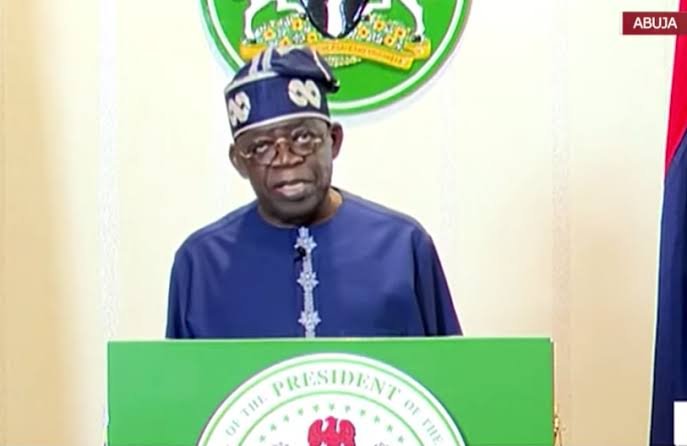
Tinubu took the podium to declare that Nigeria was “on the right track,” that the reforms of his administration, though “rough,” were necessary steps to realign the nation’s road to progress. “We knew rebuilding Nigeria would require courage, patience, and difficult decisions. But we also knew that no nation rises by hiding from the truth,” he said, before offering a litany of claimed achievements: improved investor confidence, a rebounding oil and gas sector, a Eurobond issuance oversubscribed by 400%, and Nigeria’s exit from the financial “grey list.” He assured a country plagued by blackouts that electricity would get better, that the government was paying attention.
Beside him, the chairman of the Progressive Governors’ Forum, Hope Uzodimma, praised the reforms as the laying of a foundation for a prosperous economy. “The direction is clearer, the reform logic is stronger, and the prospects for long-term growth and development are brighter,” Uzodimma said. Finance Minister Wale Edun added his voice, citing a growth rate that had reportedly doubled to 4% per annum, even as he conceded that “it is still not enough.” And Bello Masari, the convention planning committee chairman, boasted that the APC remained the party to beat, “whatever the permutations,” and that it was “very ready” for 2027. Yet for those watching not with the eyes of a dignitary but with the eyes of a citizen, this grand stage told a different story.
When you look at the composition of this NWC, you see the consolidation of power in the hands of a few strategic blocs. The northern bloc, through positions like the National Chairman and the Deputy National Chairman (North), retains a firm grip on the party’s machinery. The South is represented, but the representation is calibrated, managed. Within the list, you see the familiar pattern of tokenism – positions like National Youth Leader, National Women Leader, and the slot for Persons with Disabilities are filled, but these are often positions that operate on the periphery of real power. The real decisions will be made by the Chairman, the Secretary, the Organising Secretary, and the Legal Adviser, all of whom are seasoned political operatives known for their loyalty to the central leadership rather than for any independent political base.
This is the architecture of a captured party. It is an architecture designed not to generate ideas or to represent the diverse interests of the party’s rank and file, but to execute the directives of a few powerful men in the Villa and the Governors’ Forum. The speeches, the dignitaries, the banners – they were all part of a carefully constructed spectacle meant to convey the impression of a party united and a nation on the mend. But the spectacle could not hide the underlying reality: a leadership that owes its positions not to a democratic mandate from the grassroots, but to a selection process that valued compliance over competition. And in a political system where leaders are not accountable to the people they supposedly represent, the people are left with no one to hold responsible when things go wrong. This is the reality that the new NWC represents, no matter how many times the president assures us that we are on the right track.
Now, let us take a closer look at the words that came from the podium that day. President Bola Ahmed Tinubu, in his address to the convention, spoke of gratitude, pride, and hope. He spoke of unity as the foundation of progress, of a party built on vision and discipline, of a nation on the right track despite the roughness of the road. His speech was a masterful composition of political rhetoric, carefully crafted to inspire the delegates and project an image of a government in control, a party united, and a future bright.
He invoked the memory of the party’s founding fathers, asked for moments of silence for departed leaders, and called on the delegates to conduct themselves with integrity. He assured Nigerians that the path of reform, however painful, was the only path to prosperity. He spoke of infrastructure development, of superhighways and concrete roads, of modernized seaports and airports. He cited economic indicators: a booming stock market, eight consecutive months of declining inflation, trade surpluses, and a GDP growing at 4% per annum. He celebrated Nigeria’s exit from the financial “grey list” and a Eurobond issuance oversubscribed by 400%. He addressed the electricity problem directly, announcing the Grid Asset Management Company as a solution.
He spoke to the youth, calling them the nation’s greatest asset. He spoke to women, promising wider spaces for their leadership. And he made a point, almost as an aside, to declare that the APC did not seek a one-party state, that he believed in a credible opposition, that democracy thrived on competition. On the surface, it was a speech designed to soothe, to reassure, to project competence. But if you listened closely, if you held those words against the backdrop of the preceding three years, the speech revealed itself for what it truly was: a collection of empty phrases, carefully arranged to obscure a reality they could not, and did not, intend to address.
Let us take the president’s words apart and examine what they mean and what they tell us. I will start with his words about unity and discipline. He warned that parties fail when ego overrides ideology, when ambition replaces discipline, when individual interests threaten the collective good. He urged the convention to send a message that the APC was strong, united, focused, and ready for the future. But what does unity mean when it is enforced through the silencing of dissent? What does discipline mean when it is imposed through the backroom threats that characterized the “consensus” process? The unity the president celebrated was not the organic unity of a party that had debated, argued, and arrived at a shared vision.
It was the brittle unity of a party where all divergent voices had been crushed, where aspirants had stepped aside not because they were convinced, but because they were compelled. The discipline he praised was not the discipline of committed partisans who subordinate personal ambition to collective goals. It was the discipline of fear, the discipline of those who know that stepping out of line means political death. When a leader warns against ego and ambition while presiding over a convention where every outcome was predetermined, where the only ambition that survived was the ambition that had been pre-approved, his words become not a guide to virtue but a justification for control. The unity of Eagle Square was the unity of a mausoleum – quiet, orderly, and lifeless. And the president’s speech, in celebrating that unity, revealed that he either did not see the difference or did not care to acknowledge it.
Then there was his curious assertion that the APC did not seek a one-party state. “Democracy thrives on vibrant and healthy competition,” he said. “As a statesman and political leader, I believe in a credible opposition.” These words, delivered at a convention where over thirty governors were now huddled under the APC umbrella, where opposition parties had been hollowed out by defections, where the security apparatus had been used to harass opposition strongholds, and where the electoral commission had been turned into a subsidiary of the party headquarters, rang hollow. They were the words of a man who wanted to claim the mantle of democrat while building the machinery of autocrat.
You cannot, in the same breath, celebrate the absorption of the entire political landscape into a single party and then claim to believe in opposition. You cannot preside over the systematic dismantling of the architecture of a plural state and then assure the nation that democracy is thriving. The president’s statement on one-party state was not a reflection of reality; it was a preemptive defense against the obvious charge that his party was constructing exactly that. It was the kind of denial that becomes necessary when the evidence of your actions contradicts the words coming out of your mouth. And Nigerians, who have watched over three years as opposition voices grew fainter and the space for dissent narrowed, knew exactly what to make of it.
But perhaps the most revealing part of the speech was the section where the president listed his administration’s achievements. He spoke of infrastructure: superhighways, concrete roads, modernized seaports and airports. He spoke of economic indicators: a booming stock market, declining inflation, trade surpluses, GDP growth. He spoke of investor confidence and foreign investment in the oil and gas sector. He spoke of the oversubscribed Eurobond and the exit from the grey list. And then, almost as an afterthought, he acknowledged the “legacy issues” of electricity supply, debts to generating companies, and antiquated transmission infrastructure. Let us hold these claims against the lived reality of the Nigerian people over the past three years. The roads the president celebrated: how many Nigerians can drive on them without fear of kidnapping?
The stock market that is booming: what does that mean for the family whose savings have been wiped out by inflation and devaluation? The GDP growth at 4%: does that growth show up in the pockets of the unemployed graduate or the underpaid worker? The investor confidence: where are the jobs that should follow that confidence? And the electricity problem, dismissed as a “legacy issue” to be solved by a new company called GAMCO: how many Nigerians have sat in darkness while paying for “Band A” tariffs they never received? The president’s speech offered a picture of Nigeria that bore almost no resemblance to the Nigeria most people inhabit. It was a picture painted with statistics that sounded impressive but did not translate into tangible improvements in daily life. And that, more than anything, is the hallmark of governance that has lost touch with the governed: the ability to speak of progress while the people experience regress.
Let us also consider the president’s words to the youth. He called them not only the future of Nigeria but “our hope for a more glorious and assured future.” He praised their creativity, innovation, digital fluency, enterprising spirit, and courage. He promised that the party would open more doors for youth participation, not as props but as decision-makers. He called for a generation of young progressives who are intellectually grounded, morally disciplined, and nationally committed. These were beautiful words, and they were delivered with the sincerity that comes easily to a politician who does not have to account for the gap between promise and delivery. But the young people of Nigeria, the ones who filled the streets in 2020 demanding an end to police brutality, the ones who have been leaving the country in droves in search of opportunities abroad, the ones who watch as their peers are unemployed, underemployed, or forced into the informal economy where survival is a daily struggle – these young people have heard such words before.
They have heard promises of inclusion that never materialize, of doors that will be opened but never are. Palliatives have replaced policy. Loyalty has replaced leadership. And now, at a convention where the outcomes were predetermined by a handful of older men, the president tells the youth that they are the future. The tragedy is that the future the president describes is one where young people continue to wait for the doors to open, continue to be told that their time is coming, while the present is stolen from them by a political class that has perfected the art of promising tomorrow while hoarding today.
And what of the women? The president promised to open wider spaces for women to lead, to influence policy, to shape democracy. He said that a party that excludes women weakens itself. These are words that would be powerful if they were backed by action. But the reality of the convention told a different story. The National Women Leader, Dr. Mary A. Idele, was appointed, not elected in a contest where women delegates could choose their representative. The deputy women leader, Zainab Abubakar Ibrahim, was similarly selected.
The spaces that were opened for women were the spaces that the men decided to give them, not spaces that women fought for and won. And that is not empowerment; it is managed inclusion, the kind that allows a party to claim diversity while ensuring that real power remains in male hands. The president’s words to women were a promise that cost him nothing, because the structure of the convention had already demonstrated that the party’s commitment to women’s leadership extended only as far as the positions the men were willing to cede.
Now, let us judge the president’s three years from the vantage point of this speech. The speech was delivered on March 27, 2026, at the height of a convention that was meant to showcase the party’s strength. It was an opportunity for the president to reflect honestly on what his administration had achieved and what it had failed to achieve. Instead, he offered a selective accounting that highlighted the favorable statistics and downplayed the human cost of his policies. He spoke of reforms as necessary sacrifices, but he did not acknowledge that the sacrifices were being made disproportionately by the poor and the vulnerable.
He spoke of economic growth, but he did not explain why that growth was not translating into jobs or improved living standards. He spoke of infrastructure, but he did not mention that many Nigerians could not safely travel on those roads. He spoke of investor confidence, but he did not address the fact that Nigerian businesses were closing or relocating abroad because of the harsh operating environment. The speech was not an honest assessment of three years of governance; it was a campaign speech delivered before the next election, designed to create the impression of progress where progress was partial at best, and illusory at worst.
What lessons can we extract from this speech? The first lesson is that words are cheap. A leader can stand before a gathering of eight thousand delegates, with the cameras rolling and the banners waving, and say all the right things. He can speak of unity, discipline, democracy, inclusion, and hope. But if the structure of the event contradicts those words – if unity means silencing dissent, if discipline means enforcing conformity, if democracy means pre-selected outcomes, if inclusion means token appointments, if hope means waiting for a tomorrow that never comes – then the words are not a promise. They are a performance. The second lesson is that we must learn to read between the lines. When a leader at a convention like this claims he does not seek a one-party state, it is because the evidence suggests otherwise.
When he speaks of the sacrifices of reform, it is because he knows the sacrifices have been painful and he needs to justify them. When he acknowledges the electricity problem as a “legacy issue,” it is because he knows that Nigerians are suffering from it and he needs to show he is paying attention. The speech tells us as much by what it does not say as by what it says. It does not mention the security crisis that has made travel dangerous. It does not mention the young people who have left the country. It does not mention the families whose savings have been destroyed by inflation. It does not mention the hospitals without drugs, the schools without teachers, the local governments without funding. These are the realities that the president’s words were designed to obscure.
The third lesson is that we must hold our leaders accountable not to their words but to their deeds. A speech is not a report card. A convention is not an achievement. The real measure of governance is what happens in the lives of ordinary people. Are they safe? Can they eat? Can they educate their children? Can they access healthcare? Can they travel without fear? Can they plan for the future? The president’s speech, for all its rhetorical flourishes, did not answer these questions. It could not answer them, because the answers would have been uncomfortable. And so the speech became a form of political theater, a ritual that the ruling class performs to reassure itself and to manage the perceptions of the public. But theater, no matter how well staged, does not build roads. It does not generate electricity. It does not create jobs. It does not secure the nation. And when the curtain falls and the delegates go home, the reality of Nigerian life remains, unchanged and unaddressed.
The president ended his speech with a prayer: “May God bless our great party. May God bless the Federal Republic of Nigeria.” It was a fitting conclusion to a speech that asked God to do what the government would not or could not do. But Nigerians have learned, over three years of this administration, that they cannot rely on prayers alone. They cannot rely on speeches. They cannot rely on conventions that are really coronations. They cannot rely on a political class that has insulated itself from the consequences of its failures. If there is to be change, it will not come from the leaders who have perfected the art of speaking without meaning, of promising without delivering, of governing without accountability.
It will come from the people who refuse to be fooled by the theater, who insist on measuring governance by its impact on their lives, who demand that the gap between word and deed be closed. The president’s speech was a masterclass in political rhetoric. But rhetoric, no matter how masterful, cannot build a nation. Only accountability can do that. And accountability begins when we stop accepting the performance as real, when we start judging our leaders by what they do, not by what they say. That is the lesson of the convention. That is the lesson of the speech. And that is the lesson we must carry with us as we look toward the future.
When we juxtapose this sterile, pre-arranged coronation with the APC convention that birthed this administration just a few years ago, the contrast is chilling. It was not always this way – or at least, not so starkly so. Think back to the turbulent primaries of 2022. For all its flaws, its monetization, and its chaos, there was at least the illusion of a battle. There was the dramatic “Emi lokan” declaration in Abeokuta, that moment when a presidential aspirant stood before his supporters and declared that it was his turn, his time, his destiny.
There were tense midnight negotiations, the kind that keep journalists awake and political analysts guessing. There was the actual casting of ballots, with delegates going into voting booths, marking their choices, and emerging to see the results tallied on boards. Political heavyweights fought for their survival. Some won. Some lost. The losers did not disappear; they regrouped, they planned, they waited for another day. There were fractures, there were disagreements, there were visible struggles for influence. It was messy, even chaotic, but within that mess lived the essence of democratic practice.
Let me tell you why that mess mattered. Democracy is not a clean process. It is not neat. It is not orderly in the way that a military parade is orderly. Democracy is people. And people are messy. They have competing interests, different backgrounds, varying levels of ambition. A democracy that looks too clean, too organized, too predictable is probably not a democracy at all. It is a carefully managed production.
The 2022 convention was a coalition of strange bedfellows, yes, but it was a convention where the outcome was genuinely uncertain, where power was contested, where horse-trading happened in the open, and where the air crackled with the possibility of something new. It was a merger of antagonists who agreed only on one thing: the need to dislodge a ruling party that had grown too comfortable with its own omnipotence. Delegates mattered. Votes carried weight. Outcomes were not entirely foregone conclusions. One could argue, debate, and even dissent without the overwhelming sense that the script had already been written.
Fast forward to 2026, and the contrast is stark. The convention was smooth, silent, and suffocating. Smooth, because everything went according to plan. Silent, because no one dared to speak out of turn. Suffocating, because you could feel the absence of genuine choice pressing down on everyone present. Today, that chaotic vitality has been surgically removed. The word “surgically” is important here because it suggests precision, intention, and a steady hand. Someone decided that the party could not afford the chaos of 2022. Someone decided that the uncertainty of open competition was too risky.
Someone decided that it was better to have a convention where the outcomes were known in advance, where the only surprises were the ones that had been scripted into the program. In nearly three years of this government, the ruling party has learned that it is far easier to dictate than to debate. Debate is slow. Debate requires listening. Debate means that you might lose. Dictation is fast. Dictation requires only that you have enough power to make your decision stick. The current convention is a masterclass in autocratic sanitization, where delegates are not voters, but mere props in a play scripted by a handful of men in the Villa.
Today, that script feels rigid, almost immovable. The party that once positioned itself as a coalition – a convergence of tendencies, ideologies, and ambitions – now appears increasingly monolithic. What was sold as unity has, over time, hardened into uniformity. And uniformity, in politics, is rarely organic; it is often enforced. There is a difference between a party that unites around a common vision and a party that eliminates all visions except one. The party that rode to power on the mantra of “Change” has now institutionalized the very stagnation it once protested. This is not a new story.
Political parties throughout history have made this journey. They start as movements, as coalitions of outsiders who want to change the system. They win power. Then, slowly, they become the system. The energy that drove them fades. The openness that defined them closes. The diversity that was their strength becomes, in their eyes, a threat. And so they begin to purge, to silence, to consolidate. The APC is not the first party to take this journey, but that does not make it any less tragic for those of us who once hoped it would be different.
But the tragedy of this convention extends far beyond the perimeter of Eagle Square; it is a terrifying microcosm of what Nigeria has become over the last three years. A microcosm is a small thing that reflects a larger thing, like a single drop of water that contains the whole ocean. The convention, with its controlled outcomes, its silenced voices, its predetermined results, is a small picture of the larger political reality that Nigerians now face. The APC, once a coalition of diverse interests and ideologies, has become a monolith. A one-party state in everything but name. Opposition is not crushed; it is absorbed, neutralized, or ignored. Multiplicity is sabotaged. Dissent is rebranded as disloyalty.
The party’s internal machinery, dominated by governors and power brokers, ensures that only approved voices rise. The rest are silenced – not by force, but by structure. This is an important distinction. In some countries, opposition is silenced by arrest, by violence, by outright repression. In Nigeria today, it is often silenced by structure. The structure of the party, the structure of access to resources, the structure of who gets nominated and who does not. You do not need to put someone in prison to silence them. You just need to make sure they never get on the ballot.
We have watched in paralyzed horror as this administration systematically dismantled the architecture of a plural state. The architecture of a plural state is the framework that allows different voices to be heard, different interests to be represented, different parties to compete. It includes independent institutions like the electoral commission, the judiciary, the anti-corruption agencies. It includes a vibrant civil society, a free press, an opposition that can hold the government accountable. Piece by piece, over the past three years, that architecture has been weakened, compromised, or captured. The opposition has been hollowed out, bought off, or intimidated into silence. Some opposition figures have defected to the ruling party, not because they suddenly changed their minds about everything, but because the cost of staying in opposition became too high. Others have been tied up in legal battles that drain their resources and energy. Others have simply given up, recognizing that the system is stacked against them.
With over thirty governors now huddled under the APC umbrella, we have transitioned from a vibrant, albeit flawed, multi-party democracy into a de facto one-party state. Let me explain what “de facto” means. It means “in fact” as opposed to “in law.” In law, Nigeria is still a multi-party democracy. There are many registered parties. There are opposition candidates. There are elections. But in fact, in reality, in the actual functioning of the political system, the ruling party dominates to such an extent that the distinction between party and state has almost disappeared. When the governor of a state is from the ruling party, the federal government, which is also from the ruling party, controls the resources that flow to that state. When the local government chairmen are from the ruling party, the state government, which is also from the ruling party, determines their budgets and priorities. When the traditional rulers, the business leaders, the religious authorities all align with the ruling party because that is where access and opportunity lie, then the opposition is not just outnumbered; it is outmaneuvered at every level.
The ruling class has sabotaged multiplicity, creating a monolithic echo chamber where the only voices allowed are those singing the praises of the Emperor. This is the phrase that comes to mind: an echo chamber. An echo chamber is a space where you only hear your own voice reflected back at you. You say something, and it bounces off the walls and returns to your ears, confirming what you already believe. There is no new information, no challenge, no correction. The APC convention was an echo chamber.
The delegates said what they were expected to say. The aspirants praised what they were expected to praise. The media reported what they were permitted to report. And the leaders left convinced that everyone supported them, that the party was united, that the future was secure. But an echo chamber is not a sign of strength; it is a sign of isolation. When you only hear echoes, you lose touch with the world outside. And the world outside the echo chamber is the Nigeria where generators hum, where bread prices rise, where kidnappers operate on highways, where young people leave in search of better lives elsewhere.
When a ruling party cannot even tolerate democratic dissent within its own ranks, how can we possibly expect it to tolerate opposition from the streets or the ballot box in 2027? This is the question that hangs over everything. If a party silences its own members, if it crushes dissent among its own governors and ministers and legislators, then what chance does an ordinary citizen have? What chance does a civil society group have? What chance does an opposition party have? The answer is clear. The same machinery that was used to enforce consensus at the convention will be used to manage the general election. The same tools of coercion, the same manipulation of institutions, the same control over resources will be deployed on a larger scale. And the result will be an election that is not really an election, a choice that is not really a choice, a democracy that is not really a democracy.
Three years into this administration, the broader national picture mirrors this internal transformation. Nigeria, long characterized by its pluralism – ethnic, political, ideological – now edges toward a troubling concentration of power. Pluralism has been one of Nigeria’s defining features. We have over 250 ethnic groups. We have multiple religions. We have a federal system designed to accommodate regional differences. Our history has been shaped by the struggle to manage this diversity, to create a country where different groups can coexist, compete, and cooperate.
But over the past three years, that pluralism has been under pressure. Ethnic minorities find their voices marginalized. Religious groups that are not aligned with the political establishment face increasing scrutiny. Regions that are not represented at the highest levels of power struggle to get attention and resources. The concentration of power in the center, in the presidency, in a small group of political actors, has created a system where diversity is not celebrated but managed, and where management often means suppression.
Opposition voices grow faint, not necessarily because they lack ideas, but because the space for their expression narrows. There is a concept in political science called “political space.” It is the room that exists for different groups to organize, to speak, to compete. When political space shrinks, it becomes harder to form new parties, harder to hold rallies, harder to criticize the government without facing consequences. Over the past three years, Nigeria’s political space has been shrinking. Institutions that should act as buffers against dominance seem either weakened or absorbed.
The Economic and Financial Crimes Commission (EFCC), which was created to fight corruption, has been accused of selective prosecution, targeting opponents of the government while leaving allies untouched. The Independent National Electoral Commission (INEC), which is supposed to be impartial, has seen its credibility eroded by a series of questionable decisions. The judiciary, which should be the last line of defense for the rule of law, has been subjected to pressure and manipulation. The National Assembly, which should provide oversight of the executive, has become increasingly compliant, with legislators more focused on their own survival than on holding the government accountable.
The language of democracy remains, but its practice feels increasingly constrained. This is how democracies die in the 21st century. Not through coups, but through conventions. Not through tanks, but through consensus. The coup d’état of the past was dramatic: soldiers in uniform, tanks in the streets, a television announcement that the government had been overthrown. Today, the erosion of democracy is much quieter, much more subtle. It happens through the gradual weakening of institutions, the gradual concentration of power, the gradual normalization of practices that would have seemed unacceptable just a few years ago. The APC convention was a masterclass in controlled politics.
The National Working Committee was reconstituted with familiar faces. Zoning arrangements were manipulated to favor entrenched interests. Aspirants were screened, not for competence, but for compliance. The body language of the president was enough to determine outcomes. The governors, ever loyal to the center, mobilized delegates like pawns. The result? A party that speaks with one voice – not because it is united, but because it has silenced all others.
We are sliding into a soft totalitarianism where elections are merely rituals of endorsement, where the only choice offered to the electorate is between the incumbent and the shadow of the incumbent. Soft totalitarianism is a term that describes a system where there are no concentration camps, no secret police dragging people from their homes in the middle of the night, but where the space for independent thought and action has been so thoroughly closed off that freedom becomes an illusion. You can vote, but the choices are limited. You can speak, but the audience is small. You can organize, but the barriers are high. The system does not need to use overt violence to maintain control; it uses the structures of everyday life, the distribution of resources, the management of access. And at the center of it all is the convention, the moment when the ruling party demonstrates its control, not through force, but through the smooth, silent, suffocating orchestration of consensus.
This brings us to the bitter calculus of unkept promises. The APC was not merely a political party; it was a vessel of hope for a citizenry tired of the People’s Democratic Party (PDP)’s unbroken reign. For sixteen years, the PDP had been in power. For sixteen years, Nigerians had watched corruption flourish, infrastructure decay, and the gap between the rich and the poor widen. When the APC came together in 2013, it promised something different. It promised a structural reset. It promised a war against corruption that would be blind to status. It promised a diversification of the economy away from the oil curse that had made the country vulnerable to fluctuations in global prices. It promised security for the farmer and the trader, an end to the insurgency that had devastated the Northeast, a containment of the banditry that was spreading across the Northwest. It promised a new federation where states would thrive, where resources would be shared more equitably, where the center would no longer be the only source of power and patronage.
These are the same men who stood before us three years ago promising renewed hope, economic revitalization, and a secure nation. They spoke of a “Renewed Hope” agenda, a phrase that captured the longing of a people who had been disappointed too many times before. Promises were made, as they always are. Promises of renewal, of inclusivity, of a system that would expand opportunity rather than consolidate control. Yet the lived reality tells a different story. Economic anxieties deepen, social fractures widen, and the political landscape contracts. The expectation was progress; the experience, for many, has been stagnation or regression. And in the absence of accountability, those promises dissolve into rhetoric – repeated, recycled, and ultimately unfulfilled. There is a word for this in Nigerian English: “rhetoric.” We use it to describe the gap between what politicians say and what they do. And the gap has become a chasm.
Three years into this administration – and now extending into the machinery of the next election – what do we have? Let me give you a detailed picture, because the details matter. We have a government that perfected the art of “stomach infrastructure” while the real infrastructure crumbled. Stomach infrastructure is a phrase that entered Nigerian political discourse a few years ago. It refers to the practice of giving people small amounts of money or food to buy their loyalty, to distract them from the fact that the roads are not being built, the hospitals are not being equipped, the schools are not being funded. It is a cynical approach to governance that treats citizens as stomachs to be filled rather than minds to be engaged or futures to be secured. Under this administration, stomach infrastructure has been elevated to an art form. Paliatives have been distributed during crises, not as a long-term solution, but as a way to buy time, to quiet discontent, to create the appearance of responsiveness while the underlying problems remain unaddressed.
We have seen the weaponization of anti-corruption agencies to settle personal scores against perceived enemies of the throne, while systemic corruption metastasized into a cancer that now eats at the foundations of the state. The EFCC and other agencies were created to fight corruption, but in recent years they have been used selectively. A political opponent is investigated, his accounts frozen, his allies arrested. Meanwhile, officials who are loyal to the government enjoy impunity, no matter how much they steal. This selective justice does not just undermine the fight against corruption; it corrupts the anti-corruption agencies themselves. They cease to be institutions of accountability and become instruments of political control. Systemic corruption, the kind that permeates every level of government, continues unabated. Contracts are inflated, budgets are padded, procurement processes are manipulated. The foundations of the state are eaten away, not by some external enemy, but by the people who have been entrusted with its care.
We have seen the exchange rate become a playground for arbitrageurs close to power. The Nigerian naira has been pulverized. If you are a salaried worker, your income has lost most of its value. If you are a business owner, your costs have skyrocketed. If you are trying to save for the future, your savings have evaporated. Meanwhile, those with access to foreign exchange at official rates have made fortunes by selling it at black market rates. The difference between the official rate and the parallel market rate is not just an economic phenomenon; it is a form of redistribution from the many to the few. The few who have access to the official window get cheap dollars, which they sell for a profit. The many who need dollars for school fees, medical treatment, or business inputs pay the inflated price. The exchange rate has become a playground for those close to power, a place where they can enrich themselves while the rest of the country struggles.
We have watched security deteriorate to the point where banditry has become a parallel economy, and kidnapping a lucrative industry. In the Northwest, bandits have taken over large areas, imposing their own taxes, controlling movement, and kidnapping for ransom. In the Northeast, the insurgency that was supposed to have been defeated continues to claim lives. In the Southeast, separatist tensions have led to violence and the shutdown of economic activity on certain days. On the highways across the country, kidnappers lie in wait, turning travel into a gamble. The security forces, underfunded and demoralized, have struggled to respond. And the government’s response has often been more rhetorical than effective, more focused on managing perceptions than on restoring safety. Yet, they gather to congratulate themselves in a country where the Naira has been pulverized, where foreign companies are fleeing the harsh business climate, and where citizens living in many places are extorted for “Band A” electricity tariffs while sleeping in total darkness.
Let me talk about electricity again for a few more moments, because it is one of the most tangible ways that Nigerians experience the failure of governance. President Tinubu promised upon becoming President, that if he did not give us steady light, we shouldn’t vote for him if he comes asking for a second term. Will Nigerians oblige him? The electricity sector was privatized years ago with the promise of improved service. But what Nigerians got was a system where they pay more and get less. The “Band A” tariff was introduced to designate customers who would receive a minimum number of hours of electricity per day.
In theory, these customers pay a higher rate but get more reliable power. In practice, many of them pay the higher rate and still spend hours in darkness. The electricity companies blame the national grid, the government blames the distribution companies, and the citizens sit in the dark, wondering where the money has gone. Foreign companies are fleeing the harsh business climate. Manufacturing has been devastated by the combination of high energy costs, poor infrastructure, and an unstable policy environment. Investors who once saw Nigeria as a frontier market with immense potential have reconsidered. Some have left. Others are waiting, watching, wondering if the conditions will improve.
They celebrate their political invincibility while terrorists carve out fiefdoms in the North and kidnappers turn the expressways of the capital into hunting grounds. The convention is the ultimate manifestation of the Dunning-Kruger effect we have come to know so well. The Dunning-Kruger effect is a psychological phenomenon where people who are incompetent at something overestimate their competence. They do not know what they do not know, so they believe they are doing well. In governance, the Dunning-Kruger effect looks like a government that celebrates its achievements while the country burns around it. It looks like a convention where leaders congratulate each other on unity while the nation fractures. It is a spectacular display of supreme confidence by a political class that has utterly failed at the basic mechanics of governance. And yet, at the convention, there was no accountability. There was no debate on these failures. There was only the anointing.
And what of the promises made in 2022? The pledges of reform, steady electricity, inclusion, and youth empowerment? They have evaporated. The City Boy Movement, once touted as a youth-driven engine of change, has become a branding exercise. There was a moment, not so long ago, when young Nigerians believed that their voices could make a difference. They organized, they protested, they voted. They supported candidates who spoke to their aspirations. But the movement that was supposed to channel their energy has been co-opted, commercialized, turned into merchandise and slogans without substance.
Palliatives have replaced policy. Instead of structural reforms that would create jobs, we get small handouts. Instead of investments in education and healthcare, we get temporary relief that runs out before the next crisis. Loyalty has replaced leadership. What matters now is not what you can do, but who you know, who you support, who you are loyal to. The streets of Lagos, Kano, and Port Harcourt are filled with young people who believed, who hoped, and who now watch from the sidelines as power consolidates without them.
This is the sabotage of multiplicity. A healthy democracy is not a solo; it is a symphony of discordant voices that somehow find a way to harmonize on policy. A symphony is not a single instrument playing alone. It is many instruments, each with its own sound, its own part to play. Sometimes they play together. Sometimes they play against each other. But the result, when it works, is something richer and more beautiful than any single instrument could produce. A healthy democracy is like that.
It has many voices: the ruling party, the opposition, civil society, the media, the citizens. They do not always agree. They do not always get along. But their interaction, their competition, their negotiation produces better outcomes than any single voice could produce alone. What we are witnessing is the systematic elimination of that discord. By rigging the internal mechanisms of the ruling party – ensuring that only a single narrative, a single succession plan, a single set of loyalists emerges – the APC is deliberately collapsing the space for opposition, not just from the outside, but from within.
Nigeria, in these three years, has moved from being a plural state to the precipice of a one-party state. This is not an accusation; it is an observation of mechanics. Let me be clear about what I mean. A plural state is one where multiple centers of power exist, where different groups can organize and compete, where the government is constrained by institutions, the opposition, and civil society. A one-party state is the opposite: all power flows from a single source, all decisions are made by a single group, and there is no meaningful competition. Nigeria is not yet a one-party state in the formal sense.
There are still opposition parties, still critical voices, still spaces where dissent can be expressed. But the trajectory is clear. When the ruling party absorbs the governors of the opposition through a revolving door of defections, when it uses the security apparatus to harass and destabilize opposition strongholds, when it turns the electoral commission into a subsidiary of its party headquarters, the label on the tin ceases to matter. Whether we call it APC or something else, the result is the same: the end of competitive authoritarianism.
In three years of APC rule under President Tinubu, Nigeria has moved from a plural state to a one-party state. The opposition is fragmented. Civil society is fatigued. The media is cautious. The judiciary is compromised. The legislature is compliant. The executive is expansive. The party is the state. And the state is the party. This is not democracy. It is a simulation. A simulation is a copy of something that looks like the real thing but is not. A flight simulator looks like a cockpit, feels like a cockpit, but it is not actually flying. A democratic simulation looks like democracy: there are elections, there are parties, there are debates. But it is not actually democracy, because the outcomes are predetermined, the choices are limited, and the citizens have no real power. The APC convention was a simulation of a convention. It had all the elements: delegates, speeches, voting. But the delegates had no real choice, the speeches were scripted, and the voting was a formality. The result was a convention that looked democratic but functioned autocratically.
What, then, is there for us? What future awaits a citizen in a state where the political elite has insulated itself so completely from the consequences of its own failure? The questions arising from this convention are existential. They go to the very heart of what it means to be a citizen in Nigeria today. If there is no contestation within the party that rules, how can there be contestation in the nation? If the delegates are reduced to clapping seals, what future awaits the citizen who is told that his vote is his power?
We must ask: What is the purpose of a constitution if the party’s internal constitution is a dead letter? What is the purpose of an Independent National Electoral Commission (INEC) if it stands idly by while a ruling party conducts a primary that is indistinguishable from a coronation? If our elections are reduced to militarized rituals and our political parties are nothing more than cults of personality, then the ballot box ceases to be a tool for change and becomes a trap for validation. We are staring down the barrel of a future where our silence is mandated, our poverty is weaponized, and our resilience is continuously exploited to maintain the luxury of our oppressors.
So, I ask again, what is there for us? What future awaits us? These are not rhetorical questions. They are existential ones. If conventions are no longer spaces for debate, if parties are no longer platforms for choice, if elections are no longer instruments of change – then what remains? What is the citizen’s role in a system that no longer listens? What is the voter’s power in a process that no longer counts? Let me try to answer these questions by looking at the different groups that make up Nigerian society, because the answers are different for different people. For the youth, there is the future of the area boy – survival by instinct, preyed upon by security forces that have become more efficient at quelling protest than at quelling crime.
The young Nigerian who should be entering the workforce, starting a business, building a future, instead finds himself navigating a landscape of unemployment, police harassment, and informal economies where survival depends on cunning and luck. For the middle class, there is the steady erosion of value, watching savings evaporate while the political class buys new private jets. The professional who worked hard, built a career, saved for retirement now sees that savings eaten away by inflation, devaluation, and economic instability. The goalposts keep moving, the ladder keeps getting pulled up, and the middle class that was supposed to be the backbone of democracy finds itself squeezed from all sides.
For the ethnic minorities, there is the growing realization that the “national unity” touted by this government is merely a euphemism for the centralization of power in the hands of a select few. National unity, as it is practiced today, often means that the voices of smaller groups are subsumed under the voices of larger ones, that regional concerns are dismissed as parochial, that the rich diversity of Nigerian culture is reduced to a few symbols and slogans. We are looking at a future where the line between the state and the party vanishes entirely.
We are looking at a 2027 election that may not be an election at all, but a mere formality – a ritualized handover from one faction of the same ruling elite to another. We are looking at the normalization of mediocrity, where loyalty to the leader is valued infinitely more than competence in service. The person who knows how to fix the roads, manage the economy, or reform the education system is passed over for the person who knows how to show up at rallies, chant the right slogans, and never question authority. Competence becomes a threat. Mediocrity becomes a qualification.
This convention is a terrifying omen. It tells us that the ruling class is not preparing to govern us better; they are preparing to govern us forever. There is a phrase in political science called “the iron law of oligarchy.” It was proposed by a German sociologist named Robert Michels, who argued that all organizations, even democratic ones, tend to become dominated by a small group of leaders who concentrate power and resist challenges. Michels believed that this was almost inevitable, that democracy in large organizations was always threatened by the rise of an oligarchy.
The APC convention is a case study in the iron law of oligarchy. The party that began as a coalition, a movement, a vehicle for change, has been captured by a small group of leaders who have learned to manage, control, and silence the rest. They have perfected the art of acquiring power without the burden of delivering value. Value would require listening, responding, solving problems. But if you can acquire power without delivering value, why would you bother with the hard work of governance? Why would you invest in infrastructure, education, or healthcare when you can just distribute patronage, manage perceptions, and keep the machinery of political control running?
For the Nigerian people, the message from Eagle Square is loud and unambiguous: the state has been captured, the doors of democratic multiplicity have been welded shut, and no savior is coming from within the political establishment. This is perhaps the hardest truth to accept. Many Nigerians have been waiting for a savior. They have been waiting for a leader who will come from within the system, rise through the ranks, and use the machinery of power to transform the country. They have been waiting for a politician who will be different, who will put the nation’s interests above personal ambition. But the convention showed us that the system does not produce saviors. It produces conformists. It rewards compliance, punishes dissent, and grinds down anyone who tries to be different. If there is to be any future for us, if we are to ever reclaim the light from this engineered darkness, it will not begin at a party convention. It must begin with our own collective, uncompromising refusal to accept this coronation of silence.
And so, we are left with the haunting questions that arise from this convention. The APC convention was not just a political event; it was a philosophical statement. It stated, loudly and clearly, that democracy is too messy, too unpredictable, too dangerous to be left to the people. It stated that the only function of the citizenry is to cheer, to pay taxes, and to accept the choice that has been curated for them. This is the philosophy of authoritarianism dressed in democratic clothing. It is the belief that the masses are not capable of governing themselves, that they need to be guided, managed, and protected from their own impulses.
It is a philosophy that has been articulated by many rulers throughout history, from ancient empires to modern dictatorships. And it is a philosophy that has always been wrong. Because the people, for all their messiness and unpredictability, have a wisdom that cannot be replicated by any small group of leaders. They know when they are hungry. They know when they are unsafe. They know when their children are not getting the education they deserve. They know when something is wrong, even if they cannot always articulate it in the language of policy and governance.
But history teaches us that empires built on the stifling of voices are built on sand. You can silence the opposition in a convention hall; you can use federal might to intimidate governors; you can replace the ballots with acclamation. But you cannot strangle the collective consciousness of over two hundred million Nigerians forever. The silence in that stadium was not peace; it was the quiet before the storm. There is a long history of regimes that thought they had consolidated power, that believed they had silenced all opposition, that were confident in their control. And then the storm came. It came in Iran in 1979, when the Shah, who thought he had absolute control, was swept away by a revolution no one had predicted. It came in the Philippines in 1986, when Ferdinand Marcos, who had ruled for two decades, was forced out by a movement of ordinary people. It came in Eastern Europe in 1989, when the Berlin Wall fell and one authoritarian regime after another collapsed, often in a matter of weeks. The political scientist Larry Diamond once noted, “The democratic spirit is not easily extinguished; it may be suppressed, but it will re-emerge, often in the most unexpected places.” This is a truth that every authoritarian regime eventually learns, usually too late.
The undemocratization of democracy is a project destined to fail. It fails because governance without legitimacy is merely occupation. When people do not believe that their government has the right to rule, when they feel that power has been taken rather than given, the government becomes an occupying force. It may have the guns, the money, the institutions, but it does not have the hearts and minds of the people. And an occupation, no matter how powerful, cannot last forever. It fails because a nation as diverse as Nigeria cannot be governed by a single voice. We are a multiplicity. We are a collection of hundreds of ethnicities, creeds, and aspirations. To try to force us into the straightjacket of a one-party state is not just a political error; it is an existential folly. It is to deny the very essence of who we are as a people. The diversity that some see as a problem to be managed is actually our greatest strength. It is the source of our creativity, our resilience, our ability to adapt and survive. A system that silences that diversity does not become stronger; it becomes brittle. And brittle systems, when they break, break suddenly and completely.
And yet, even in this darkness, there is a flicker of hope. History teaches us that monoliths crack. That consensus collapses. That silence breeds resistance. The very smoothness of the APC convention may be its undoing. Because beneath the surface, Nigerians are watching. They are remembering. They are waiting. The political philosopher Hannah Arendt observed that the most dangerous enemy of totalitarianism is not the revolutionary, but the ordinary person who refuses to be swept along.
Arendt wrote about the rise of totalitarianism in Europe in the twentieth century, about how ordinary people were drawn into systems of unimaginable evil. She concluded that the most important quality for resisting such systems was what she called “the ability to think for oneself,” to refuse to go along, to maintain one’s own judgment even when everyone around you is marching in the same direction. In Nigeria today, that ability is more important than ever. To refuse to be swept along by the chorus of approval, to maintain one’s own judgment about what is happening, to remember that the silence in Eagle Square is not unity but suppression – this is the beginning of resistance.
This too shall pass away. Not because time heals all wounds, but because power, when unchecked, always overreaches. There is a pattern in history that repeats itself again and again. Those who accumulate power eventually become overconfident. They begin to believe their own propaganda. They think that their control is permanent, that the people have accepted their rule, that the future is secure. And then, in a moment of overreach, they do something that breaks the spell.
They push too hard, they demand too much, they reveal too clearly the nature of their power. And the people, who have been watching and waiting, suddenly see that the emperor has no clothes. The question is not whether the APC’s grip will loosen. The question is whether we, the people, will be ready when it does. Will we have maintained our capacity for judgment? Will we have preserved our networks of solidarity? Will we have kept alive the memory of what democracy is supposed to be? The convention is over. The anointed have emerged. But the questions remain, simmering beneath the surface. And as we look toward the future, we must hold onto the truth that while democracy can be delayed, it cannot be permanently entombed – not even by those who claim to be its custodians.
The convention forces us to confront the reality that democracy in Nigeria is being strangled – not by enemies of the state, but by the state itself. This is a hard thing to say, but it must be said. The enemies of democracy are not always external. Sometimes they are the very people who hold office, who run the institutions, who speak the language of democracy while hollowing out its substance. It challenges us to rethink our relationship with power, with parties, with politics. For too long, many Nigerians have approached politics as spectators. We watch the conventions on television, we read about the elections in the newspapers, we discuss the politicians at family gatherings. But we have not always seen ourselves as participants, as people who have the power to shape the political system. The convention demands that we ask: if this is democracy, then what is dictatorship? And if this is not democracy, then what are we going to do about it?
In the end, the answers will not come from conventions or communiqués. They will emerge from the choices Nigerians make – individually and collectively – about what kind of democracy they are willing to accept, and what kind they are prepared to demand. There is a famous quote from the American civil rights leader Martin Luther King Jr. that comes to mind. He said, “The arc of the moral universe is long, but it bends toward justice.” King was speaking about the long struggle for civil rights, about the patient work of building a movement, about the certainty that justice, no matter how delayed, will eventually come. The same can be said about democracy. The arc of democratic struggle is long. There will be setbacks. There will be conventions that look like coronations. There will be leaders who consolidate power and silence dissent. But the arc bends. It bends because people refuse to accept silence. It bends because ordinary citizens, in their daily lives, maintain the capacity for judgment and resistance. It bends because the memory of what democracy is supposed to be cannot be erased.
The future is not yet written, and the final chapter of this story will be determined not by the choreographed applause at Eagle Square, but by the quiet, stubborn refusal of a people to let their voices be silenced forever. This is the message that we must carry with us as we leave the convention behind and return to our daily lives. The choreographed applause will fade. The banners will be taken down. The delegates will go back to their states. But the reality of what happened at Eagle Square will remain. It will remain as a warning and as a challenge. A warning about where we are headed if we do nothing.
A challenge to do something, to be something, to refuse to accept that this is the only way politics can be. The quiet, stubborn refusal to be silent is not a dramatic act. It does not require a revolution or a coup. It requires only that we continue to think, to speak, to remember, to refuse to be swept along. It requires that we hold onto the belief that another Nigeria is possible, a Nigeria where democracy is not a simulation but a reality, where conventions are not coronations but contests, where multiplicity is celebrated rather than suppressed. That Nigeria is not yet lost. But it will only be built by those who refuse to accept its loss.