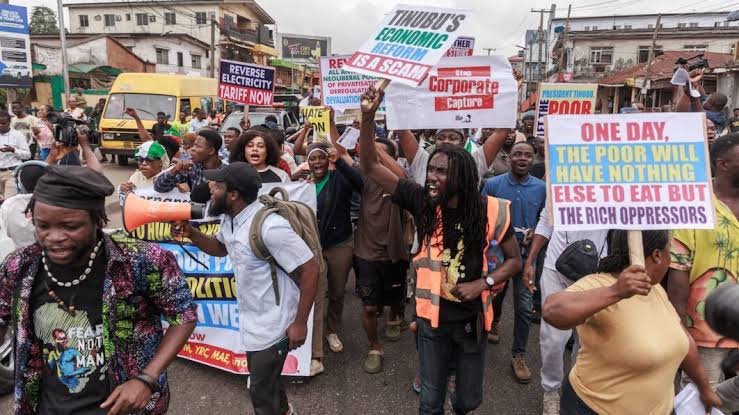
Nigeria may be inching toward a defining test of its democracy. The crisis around the African Democratic Congress is no longer just about party leadership or legal procedure. It has come to symbolise a deeper national anxiety, that the political space is tightening and that 2027 may begin to feel less like an election and more like the managed confirmation of a preferred outcome.
The concern is not merely about ADC, nor is it limited to the immediate questions surrounding party executives, judicial orders, or INEC’s decisions. The wider fear is that the political space for meaningful opposition is narrowing in a manner that should worry every Nigerian, regardless of party affiliation. Democracies do not always collapse in dramatic ruptures or through obvious acts of authoritarianism. More often, they are weakened incrementally.
Institutional decisions, opposition disarray, regulatory interpretations, and a shrinking sense of fair play combine to erode public confidence in genuine competition.
That is why this moment must be approached with sobriety and historical memory. Nigeria has travelled this road before, and the ghosts of darker political eras do not always return in military uniforms or under explicit decrees.
Sometimes they re-emerge through weakened opposition structures, through a perception of institutional partiality, and through the gradual normalisation of a system in which one party’s dominance begins to feel less like popular strength and more like the shrinking of democratic alternatives.
INEC’s handling of the ADC leadership crisis has therefore assumed significance beyond the internal affairs of a political platform. Once the electoral umpire becomes central to a dispute that may affect whether a major opposition vehicle remains stable ahead of 2027, the matter inevitably transcends party politics and enters the larger territory of democratic legitimacy. The legal arguments may be hashed out in courtrooms. The affected actors may defend their respective positions in press statements. But ordinary citizens are left with a far simpler question. Will the 2027 election still feel like a real choice?
That question matters because the most dangerous elections are not necessarily those visibly manipulated on polling day. They are the ones in which the psychological outcome appears settled long before campaigns properly begin. Once citizens begin to suspect that opposition parties are too fractured to survive, that institutions may not remain convincingly neutral, or that the ruling party’s dominance is becoming structurally unassailable, democracy starts to lose something far more valuable than procedure. It loses belief.
To be fair, the opposition must also confront its own failures with honesty. No viable democratic coalition can be built on unstable foundations, hurried alliances, or the desperation of political actors who converge without resolving the contradictions they bring into a shared platform. The crisis within ADC did not emerge in a vacuum. It reflects the risks inherent in elite improvisation, where too many ambitions arrive at once, too many calculations are made with 2027 already in mind, and too little attention is paid to the internal legitimacy required to sustain a credible political alternative.
This is the painful lesson embedded in the present turmoil. Those who seek equity must first do equity. An opposition that wishes to defend pluralism must itself be disciplined enough to respect process, legitimacy, and internal constitutional order. Where those principles are compromised at the point of coalition-building, today’s instability becomes less surprising and more the inevitable harvest of earlier carelessness.
Yet even after acknowledging the opposition’s errors, the larger democratic danger remains impossible to ignore.
Nigeria must never drift into a situation where elections begin to resemble APC versus APC. Opposition parties must not be reduced to decorative presences on a ballot whose real contest has already been institutionally narrowed. The burden on INEC, the judiciary, and all democratic actors is therefore not simply procedural. It is psychological and moral. Their conduct must preserve public faith that every major political tendency still has a fair opportunity to organize, compete, and challenge incumbency through the ballot.
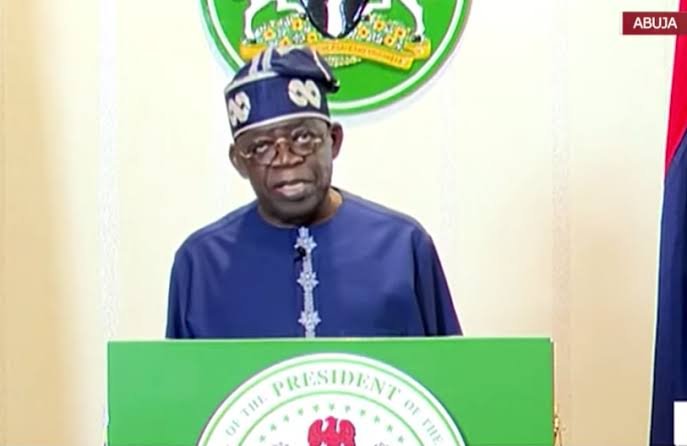
President Bola Ahmed Tinubu’s reputation as one of Nigeria’s most formidable political strategists is widely acknowledged, even by many of his critics. His mastery of coalition management, elite negotiation, and institutional timing has few parallels in the country’s contemporary political history. However, democratic greatness cannot be measured solely by a leader’s ability to manoeuvre rivals. It must also be measured by the health of the system within which those rivals are allowed to exist and compete. A republic is strongest not when power appears invincible, but when the possibility of credible challenge remains alive and believable.
The real danger is not simply that one party may become dominant, but that citizens may gradually surrender to the feeling that such dominance is destiny. Democracies are not broken only when ballots are manipulated. They are broken when the public imagination is so narrowed that people stop believing an alternative is even possible. The death of opposition in the mind of the voter is often the first funeral rite of the republic, because the collapse of democratic faith begins long before the collapse of democratic institutions.
That is why 2027 must remain a contest and must never acquire the aura of a coronation. The moment citizens begin to feel that only one outcome is structurally possible is the moment democracy starts to lose its soul. Nations rarely collapse because one party wins repeatedly. They become vulnerable when people lose confidence that alternation of power is still realistically possible through fair competition.
What is at stake, therefore, is not only the fate of ADC or the tactical brilliance of APC, but the long-term health of Nigeria’s democratic culture. Posterity is rarely kind to those who undermine democracy in one dramatic stroke, but it is even harsher toward those who weaken it gradually while insisting that everything remains normal. The sacrifices that restored democratic rule in 1999 must not be trivialised by a political atmosphere that makes opposition appear impossible and competition seem ceremonial.
Nigeria’s future stability depends on preserving not just elections, but the public faith that elections still matter. Once that faith erodes, even the loudest victory songs cannot conceal the silence beneath them, because what the nation would be losing is not merely an electoral contest, but confidence in democracy itself.
Shaakaa can be reached on: shaakaastephanie@yahoo.com