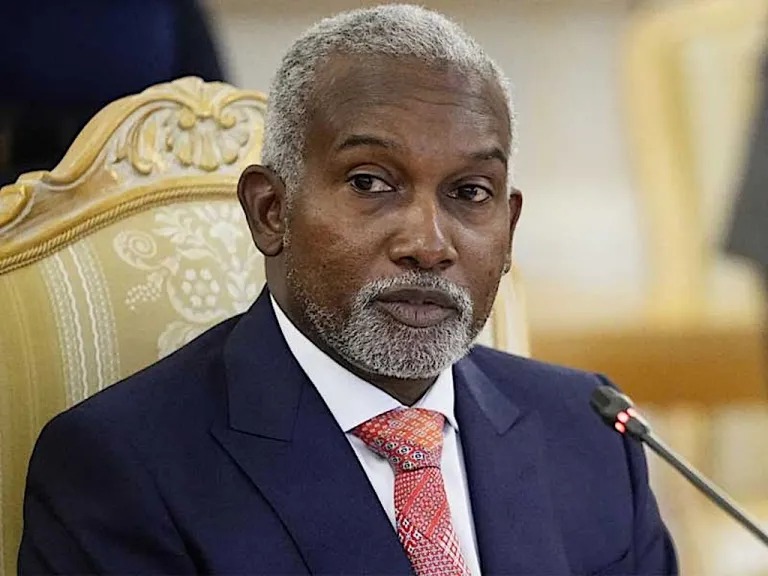
Nigeria’s political landscape witnessed a significant shift on Monday as the Minister of Foreign Affairs, Ambassador Yusuf Tuggar, officially resigned from his position to pursue his ambition of becoming the next governor of Bauchi State.
The development was confirmed in a brief statement issued by the ministry’s spokesperson, Kimiebi Ebienfa, who stated succinctly, “The resignation of the Honourable Minister of Foreign Affairs is confirmed.”
Though short on details, the announcement has since stirred conversations within political circles in Abuja and beyond, as Tuggar becomes one of the high-profile members of President Bola Ahmed Tinubu’s cabinet to relinquish office ahead of the next election cycle.
Political watchers had earlier anticipated such a move. Reports had indicated that Tuggar was among at least four ministers expected to resign from the Federal Executive Council to focus on personal political ambitions, particularly as preparations gradually intensify toward the 2027 general elections.
Tuggar’s resignation marks the end of his tenure as Nigeria’s chief diplomat, a role in which he played a visible part in shaping the country’s foreign policy direction and strengthening bilateral and multilateral relations. During his time in office, he was actively involved in diplomatic engagements aimed at promoting Nigeria’s economic interests, regional stability, and global partnerships.
His decision to step down is widely seen as a strategic move to fully concentrate on grassroots mobilisation and political consultations within Bauchi State. Analysts say the governorship race in the state is expected to be keenly contested, with Tuggar’s entry likely to reshape the dynamics of the contest.
Sources close to the development suggest that the former minister has been building political structures and alliances in Bauchi, positioning himself as a strong contender. His experience at both the national and international levels is also expected to feature prominently in his campaign narrative.
While the presidency has yet to announce an immediate replacement, insiders indicate that the transition process within the Ministry of Foreign Affairs is expected to be smooth, given the presence of career diplomats and senior officials who will ensure continuity in the country’s foreign engagements.
Tuggar’s exit also underscores a broader trend in Nigerian politics, where public office holders often step down ahead of elections to comply with legal and ethical requirements, as well as to avoid conflicts of interest while pursuing elective positions.
Reactions to the resignation have been mixed. Some stakeholders have commended the move as a demonstration of respect for democratic norms, while others have called for clearer guidelines on the timing of such resignations to ensure stability in governance.
In Bauchi State, news of Tuggar’s ambition has begun to generate interest among political actors, party loyalists, and voters, many of whom are eager to see how his candidacy will influence the political equation in the state.
As the countdown to the next electoral cycle continues, Tuggar’s transition from diplomacy to domestic politics highlights the evolving nature of Nigeria’s political space—where experience in governance and international relations increasingly intersects with grassroots political engagement.
For now, all eyes remain on Bauchi, where the former foreign affairs minister is expected to formally declare his candidacy and outline his vision for the state in the coming weeks.