A Critical Examination of the Fracture Between Throne, Pulpit, and the Soul of an Ancient City
Prologue: An Unsettled Land
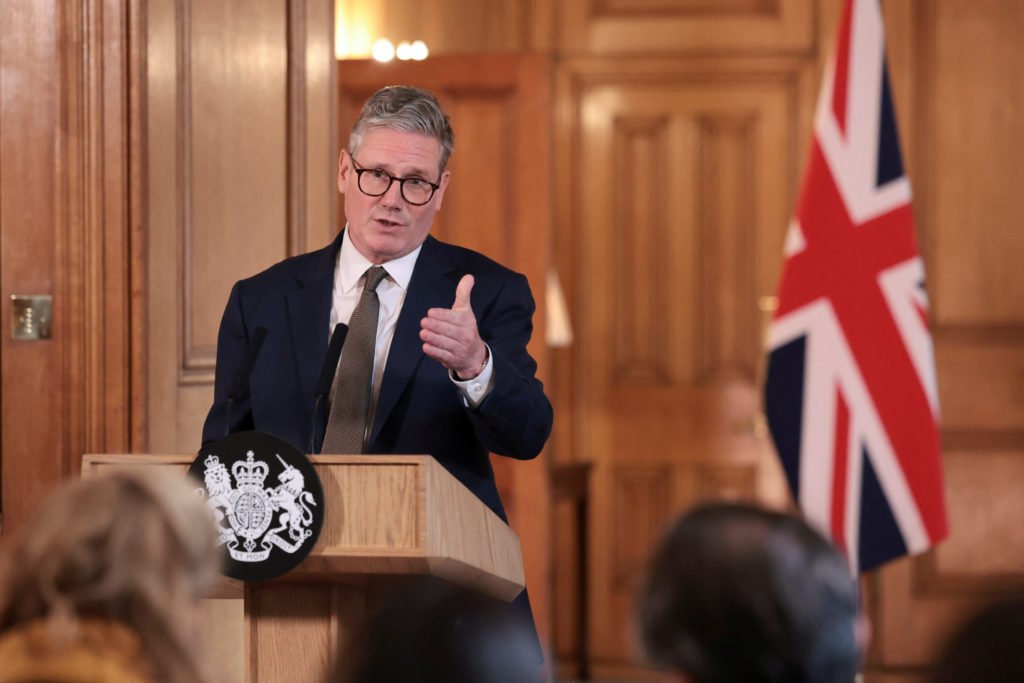
Ogbomoso is not settled. Her citizens dwell in a quagmire between purist and extremist, tradition and radicalism, the sacred and the sanctimonious. At the centre of this tempest sits Baba Kabiyesi, the Soun of Ogbomoso, Oba Ghandi Laoye, a monarch caught in turbulent waters not entirely of his making even though is the head that needs to blend things.
1. Two Kings, One Town
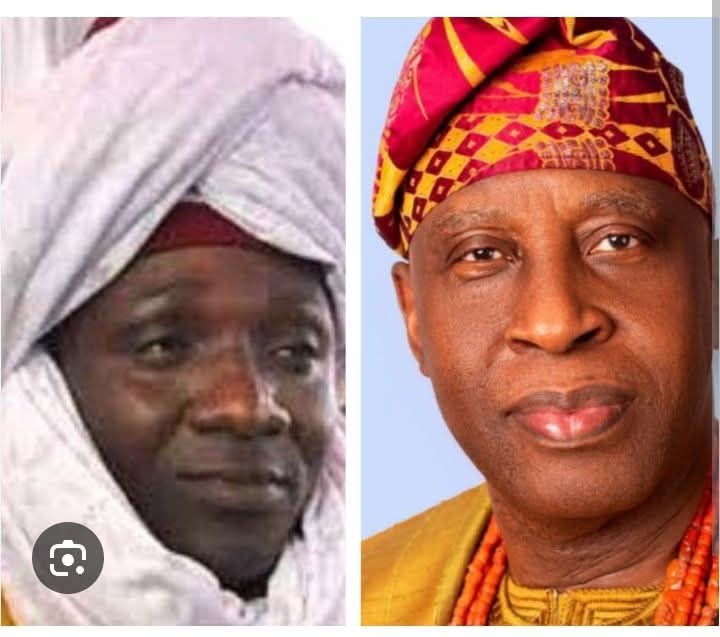
Ogbomoso presently houses two kings, though only one wears a crown.
1. The first is a traditional king, crowned by ancestral authority and clad in the regalia of chieftaincy. The second is a religious king, distinguished not by beaded crown but by the religious headgear of Islamic clerical authority.
2. One king is backed by deities and ancient treaties; the other, by the tenets and rites of his faith.
3. One speaks from the throne to his subjects with the measured cadence of royalty; the other speaks with expressions that land like stones thrown into a fragile gathering.
3. Public perception has rendered harsh verdicts. Many feel one is elderly but consumed by pride, resistant, unnecessarily authoritarian. Many feel the other is arrogant, mannerless, and unworthy of being crowned.
4. One king was chosen by ancestors, backed by his family lineage. The other, many whisper, was chosen by assessors and his own family, they say, has called him unworthy for his own family.
5. One speaks in parables and proxies, letting actions whisper where words would shout. The other speaks with unbridled tongue, unrestrained and volatile.
6. One is perceived as traditionalist, a conservationist of culture. The other is seen as extremist, a zealot.
7. One acts from the palace, the seat of governance. The other acts from the parlance and altar of the pulpit.
8. If one king dethrones a chief, the other will install that same chief in his own kingdom.
9. One is Kabiyesi, father of all, second in command to the deities. The other is Sheik spiritual father, leader of a faith.
This is the fault line upon which Ogbomoso now balances.
2. The Four Schools of Thought
Four perspectives currently shape the discourse around this debacle.
First, there are those who remain unhappy that a Christian, a pastor, ascended the throne of Soun after the reign of Oba Jimoh, who had occupied the stool since 1979.
Second, there are those who argue that a Christian king lacks the authority to determine who becomes Chief Imam, for he cannot be expected to understand the intricacies of Islamic tenets.
Third, there are those who contend that the current Chief Imam, Taliat, is a bastard, rejected by his own Ayilara family and therefore cannot legitimately parade himself as Chief Imam.
Fourth, there are those who believe Ogbomoso has become divided along religious lines ever since Oba Ghandi and Imam Taliat assumed their roles as kings in their respective houses.
3. My Submission: Neither Side Emerges Unblemished
Let me speak plainly, for this matters without siding anyone.
I have my reservation for Chief Imam of Ogbomoso. I have seen no trace of Omoluabi ethos in his expressions, his preaching, or even his manner. He carries himself without the refinement one expects of a well-bred Yoruba leader. Many have called him terrorist and extremist, Some of his expressions such as “Our religion said we should kill him”, suggest a radicalism that is alien to Yoruba cultural temperament.
Those who knew the previous Imam lament the contrast. They say Taliat has brought Ogbomoso’s name onto social media for all the wrong reasons. His preaching lacks the edifying quality of true Islamic scholarship, unlike Alfa Jamiu Amin Olorun, Sheikh Muyideen Ajadi Bello, Sheikh Murktaz, Sheikh Akewugba Gold, and Baba Agbotomokekere, the Chief Imam of Ibadan land. These men speak with wisdom; Taliat speaks with fire.
4. Yet the King Is Not Without Fault
Oba Ghandi Laoye is not blameless in this matter. He has shown restraint, yes but also rigidity.
Many accuse the king of excessive concern for power and absolute control. He wants, they say, to monitor everything. He lacks a forgiving spirit and bends only when he chooses. He used divide and rules and only attached to particular people.
I have read comments from his own subjects pleading that he learn the difference between the throne and the pulpit of his Redeemed Church. They say he has created enemies unnecessarily, and that he is losing the unity his predecessor, the late Soun Ajagungbade, laboured to build.
5. A Word of Wisdom to Both Sides
Let us be sincere. Oba Ghandi is old enough to father Imam Taliat,64 years to perhaps 45. A child should not insult an elder from the pulpit and expect the palace to bless such defiance. You cannot throw stones at the throne and expect the gown of royal favour. You become, instead, a mockery, a clown in the theatre of the palace.
The league of Imams has intervened. They have met with Kabiyesi and pleaded with Imam Taliat. But Taliat, it seems, lacks wisdom. Sometimes you cannot take everything simply because it is your right.
Conclusion: Before Anarchy Comes
The throne is sacred, a creation of our ancestors, not a trophy to be contested by factions.
I hope these two kings resolve their differences before anarchists and terrorists turn Ogbomoso into another fascist outpost in Yorubaland. For when the throne and the pulpit go to war, the people always lose.
No matter what Kabiyesi is Kabiyesi. May the Peace of God be with Kabiyesi and the Chief Imam.