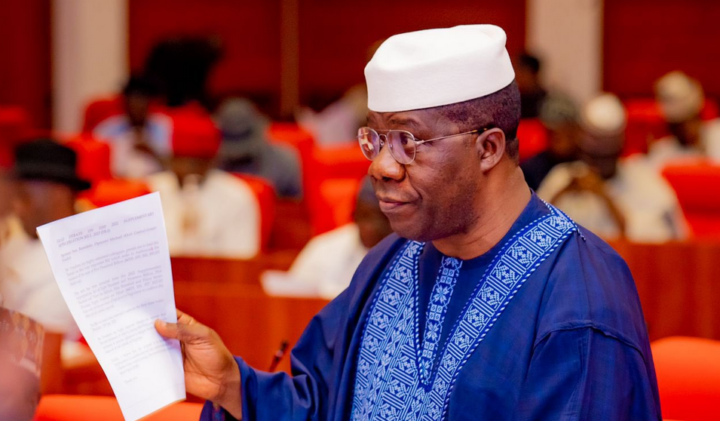
The Senate Leader, Opeyemi Bamidele, has disclosed that the National Assembly is currently working on a decentralised policing framework aimed at strengthening accountability, improving security operations, and preventing the misuse of policing powers by the political class.
Bamidele, who also serves as the Vice Chairman of the Senate Committee on the Review of the 1999 Constitution, said the proposed policing model is part of ongoing constitutional amendment efforts designed to address Nigeria’s growing security challenges through structural reforms.
According to him, the proposed framework seeks to devolve policing powers to sub-national authorities, including states and local structures, while putting in place strict safeguards to ensure transparency, justice, and respect for fundamental human rights.
He explained that one of the major concerns about decentralised policing in the past was the fear that it could be abused by political leaders at the state level. However, he said the National Assembly is working on a system that would include strong oversight mechanisms, clear operational guidelines, and institutional checks to prevent political interference or misuse.
The Senate Leader made these remarks in a statement issued in Abuja to mark the 74th birthday of President Bola Ahmed Tinubu, where he also commended the administration’s efforts to stabilise the country and tackle insecurity.
Bamidele noted that Nigeria’s current centralised policing structure has placed enormous pressure on federal security agencies, especially given the country’s size, population, and diverse security challenges ranging from banditry and kidnapping to communal clashes and terrorism.
He said decentralising policing would allow state and local authorities to play more active roles in maintaining security, gathering intelligence, and responding quickly to threats within their jurisdictions, since they are closer to the people and better understand local security dynamics.
According to him, the proposed system will not simply hand over policing powers without accountability, but will instead establish a balanced structure where federal and state policing institutions operate within clearly defined constitutional limits.
He said the constitutional review process is focusing on how to create a policing system that protects citizens rather than serving political interests, adding that the rights of Nigerians must remain at the center of any reform.
Bamidele also used the occasion to praise President Tinubu’s leadership, stating that the administration has demonstrated commitment to addressing Nigeria’s security and economic challenges through reforms and strategic policies.
He said the National Assembly is committed to supporting reforms that will strengthen democratic institutions, improve security, and promote national development, noting that constitutional amendment is one of the most important tools for achieving long-term stability.
Political analysts say the debate over state police and decentralised policing has been ongoing in Nigeria for many years, with supporters arguing that it will improve security, while critics fear it could be abused by state governments to target political opponents.
However, Bamidele insisted that the model being considered by the National Assembly would include institutional safeguards, independent oversight, and legal frameworks that would make abuse difficult and punishable under the law.
He emphasised that the goal is to create a modern policing system that reflects Nigeria’s federal structure while ensuring that citizens’ rights are protected at all times.
As the constitutional review process continues, Nigerians are expected to follow developments closely, as any change to the policing structure would mark a major shift in the country’s security architecture.
Observers say that if properly implemented, decentralised policing could improve response time to crimes, enhance intelligence gathering, and reduce the burden on federal security agencies, while also bringing law enforcement closer to the communities they serve.
The Senate Leader reaffirmed that the National Assembly remains committed to reforms that will strengthen democracy, promote justice, and ensure that Nigeria’s security institutions are more effective, accountable, and responsive to the needs of the people.