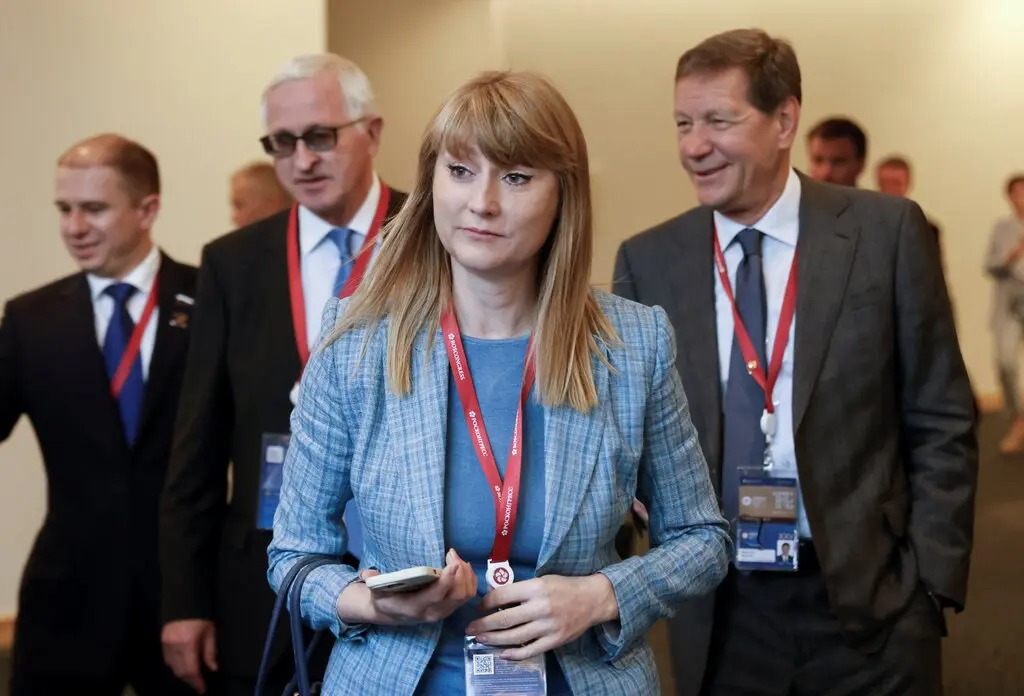
For the first time since Russia’s invasion of Ukraine, a delegation of five Russian lawmakers has visited the United States in a move aimed at restoring parliamentary contacts between the two countries, signaling a possible shift toward renewed legislative dialogue after years of strained relations.
The visit was disclosed by Vyacheslav Nikonov, Deputy Chairman of the Foreign Affairs Committee of the Russian State Duma. Speaking in Washington, Nikonov told Russian state news agency TASS that meetings with officials from the U.S. administration were scheduled for Friday as part of efforts to reopen communication channels between lawmakers in both countries.
According to Nikonov, the discussions during the visit focused primarily on rebuilding parliamentary relations that were effectively frozen following the outbreak of the war in Ukraine. The Russian delegation’s trip marks the first known in-person parliamentary engagement between Russian and American lawmakers since the conflict began, an indication that both sides may be exploring diplomatic backchannels through legislative institutions rather than formal executive negotiations.
The U.S. host for the visit is Anna Paulina Luna, a Republican congresswoman known for her support of Donald Trump and her criticism of continued U.S. financial and military aid to Ukraine. Her role in hosting the Russian delegation has drawn attention in political circles, particularly given the ongoing debate within the United States over foreign policy priorities and funding for the Ukraine war.
Nikonov explained that one of the key proposals discussed during the meetings was the creation of a joint parliamentary group involving members of the U.S. Congress and the Russian parliament. Such a group, if established, would serve as a platform for dialogue on bilateral relations, global security issues, and areas of mutual concern, even as broader diplomatic relations remain complicated.
He also revealed that discussions included the possibility of a reciprocal visit by American lawmakers to Moscow, potentially as early as May. The proposed visit would further formalize the reopening of parliamentary contacts and could represent a small but symbolic step toward rebuilding communication between the two countries.
Relations between the United States and Russia have been at their lowest point in decades since the start of the Ukraine conflict, with sanctions, diplomatic expulsions, and military tensions defining the relationship. Formal diplomatic engagements have been limited, and most communication has taken place through official diplomatic or security channels rather than parliamentary exchanges.
Political analysts say parliamentary diplomacy is sometimes used as an alternative channel of communication when official government-to-government relations are strained. Lawmakers, unlike executive branch officials, can engage in dialogue that is less formal and more exploratory, which can help test the possibility of broader diplomatic engagement.
However, the visit has also sparked debate in the United States, particularly among lawmakers who support continued aid to Ukraine and maintain a hardline stance against Russia. Critics argue that hosting Russian lawmakers could send the wrong signal at a time when the war in Ukraine is still ongoing.
Supporters of the engagement, on the other hand, argue that dialogue—even between rivals—is necessary to reduce tensions and prevent further escalation between two nuclear powers. They say parliamentary contacts do not necessarily represent a change in official policy but can serve as a communication bridge during periods of geopolitical tension.
For Russia, the visit is being presented as an opportunity to reopen dialogue with American lawmakers and potentially influence discussions in Washington on issues such as sanctions, security, and the future of U.S.-Russia relations.
For the United States, the visit highlights internal political divisions over foreign policy, particularly regarding Ukraine, Russia, and America’s global role.
While it remains unclear whether the visit will lead to any concrete policy changes, the mere fact that Russian lawmakers and U.S. legislators are meeting again marks a notable development in relations between the two countries. The proposed reciprocal visit to Moscow in May could further indicate whether both sides are willing to continue rebuilding parliamentary dialogue despite ongoing geopolitical tensions.
As global attention remains focused on the war in Ukraine and broader East-West relations, the outcome of these renewed parliamentary contacts may play a small but potentially significant role in shaping future diplomatic engagement between Washington and Moscow.