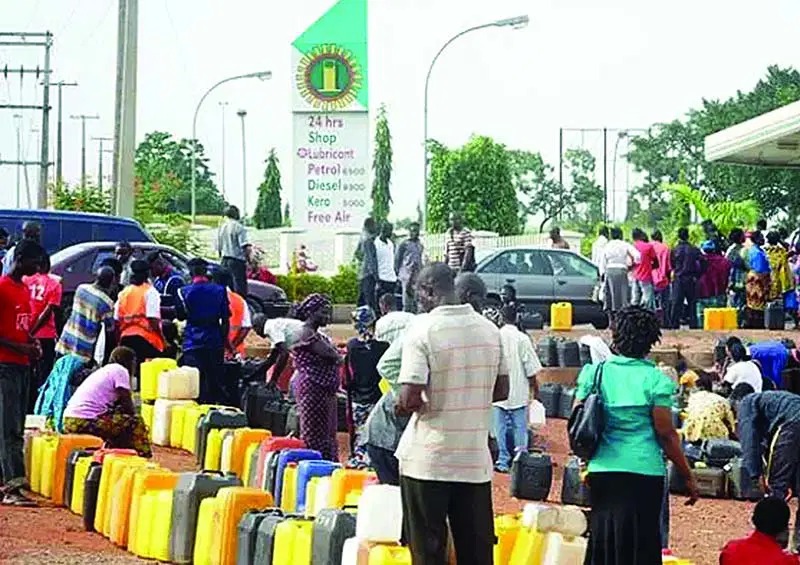
The needless and unprovoked war in the Middle East between the United States of America and Israel on one side and Iran on the other side, has caused untold hardship across the world besides the thousands of innocent people killed along with critical infrastructures destroyed in the countries. The most obvious impact is the fuel and gas supply disruptions that have affected economies around the world.
In an apparent show of power, Iran blocked the Strait of Hormuz, a vital water way connecting the Persian Gulf to the Gulf of Oman – a major choke point for global oil shipments. About 20 percent of the world’s oil passes through this narrow Strait, making it a critical route for international energy shipments.
The current fuel scarcity in Nigeria is caused by this disruption of global oil flows due to the Iran war, which has affected the supply of refined petroleum products from the Middle East, a region that accounts for about 75 percent of refined fuel imports to East and Southern Africa. This has led to a surge in demand for fuel from the Dangote refinery, Africa’s largest refinery.
Nigeria’s own refining capacity has been impacted by underinvestment, making the country more reliant on imports. The Dangote refinery, which is expected to meet Nigeria’s domestic fuel needs, is currently operating below optimal capacity due to crude supply gaps.
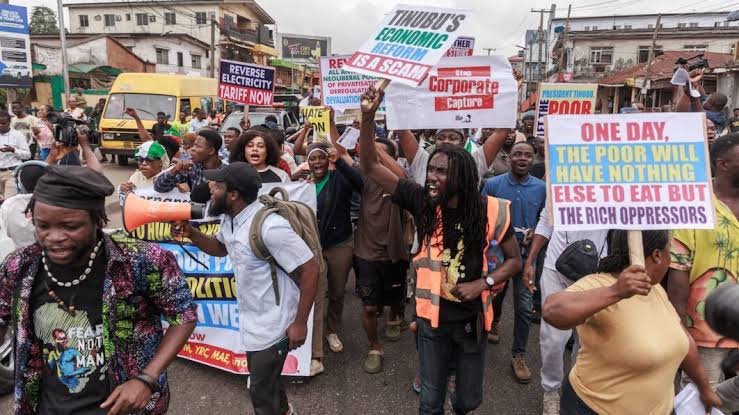
The fuel scarcity is biting hard and having a ripple effect on various sectors of the Nigerian economy. Transportation costs have skyrocketed, with transport fares increasing by up to 50 percent in some states, making it difficult to commute daily.
The pump price of fuel is up to N1,300/l, while black market goes for N 1,600/l. This is affecting businesses, as the cost of transporting goods and services rises, leading to higher prices for consumer goods.
Food prices are also on the rise, as transportation costs and energy expenses increase for farmers and distributors. This is particularly challenging for low income households, who spend a significant portion of their income on food.
Industries are struggling, with many forced to rely on expensive generators for power, increasing production costs and making their products less competitive. The manufacturing sector, in particular, is facing challenges due to high energy costs and transportation expenses.
The construction sector is also feeling the heat. The very high cost of building materials and transportation leads to delays and increased project cost. Overall, the fuel scarcity is exacerbating Nigeria’s economic woes, including inflation and unemployment. The government is under pressure to address the issue and mitigate its impact on the economy and citizen’s livelihood.
As it were, the Nigerian Government is taking steps to mitigate the impacts of the fuel scarcity. Reports say the Nigerian National Petroleum Company Limited (NNPCL) plans to boost gas supply by 1.8 billion cubic feet per day (bcf/d) in 2026 to meet rising domestic demand. This is part of the Gas Master Plan 2026, which aims to increase national gas production to 10 bcf/d by 2027, and 12 bcf/d by 2030. That will attract over 60 billion in new investments.
The government is also focusing on improving domestic refining capacity, with the Dangote refinery playing a significant role in stabilizing fuel supply. The refinery is expected to operate at 65-85 percent capacity, reducing Nigeria’s reliance on imported fuels.
Additionally, the government has reportedly suspended the 15 percent import levy on gasoline and diesel to ease pressure on fuel prices and supply.
The other initiatives being undertaken include: increasing gas production through NNPC’s subsidiaries, namely NUIMS and NEPL. These will increase production by 1,496 bcf/d and 223.6 million standard cubic feet per day respectively.
Hub-based development: The Gas Master Plan adopts a hub-based approach, clustering gas assets to optimize production and infrastructure.
There is also regulatory support by which government is working with regulatory support by which Government is working with regulatory bodies, like the Nigerian Midstream and Downstream Petroleum Regulatory Authority, to ensure policy consistency and support.
In addition to the government effort to address the fuel scarcity issue, Dangote refinery is taking several steps to mitigate the impacts of the fuel scarcity in Nigeria. The refinery is currently operating at full capacity, producing over 50 million liters of premium motor spirit (PMS), and 25 million litres of diesel daily, exceeding the country’s demand.
To ensure stable fuel supply, Dangote refinery is increasing production capacity. Plans are reportedly underway to expand the refinery’s capacity to 1.4 million barrels per day by 2028.
Improving logistics: The refinery operates a 24-hour loading system, evacuating over 1,000 trucks daily, thereby ensuring uninterrupted nationwide distribution.
Enhancing product quality: Dangote refinery delivers world-class fuels meeting Euro V specifications, with plans to export refined petrol to Europe and jet fuel to the Middle East.
Supporting energy security: The refinery’s crude-for-naira arrangement helps conserve foreign exchange and stabilize the naira. There is also investment in petro chemicals. Plans are underway for investments in polypropylene, base oils, and liquefied petroleum gas (LPG). These efforts aim to stabilize fuel prices, reduce dependence on imports, and boast Nigeria’s energy security.
Nigeria ought to have established a strategic petroleum products reserve to improve energy security and reduce exposure to global supply disruptions. The country’s Midstream and Downstream regulator, Farouk Ahmed, announced plans for the National Strategic Stock, modeled after the United State’s Strategic Petroleum Reserve, to mitigate supply, shocks and enhance energy security. Currently, Nigeria maintains petroleum products reserves covering approximately 30 days of supply, but the new reserve will be significantly larger.
The petroleum industry law mandates the regulator to issue bulk petroleum liquids storage licenses to private depots, allowing them to hold products for as long as needed. This move aims to build resilience against global supply fluctuation, leveraging Nigeria’s expanding domestic refining capacity, particularly the 650, 000 – barrel-per-day Dangote Refinery.
Countries are taking various measures to mitigate the impacts of the fuel scarcity. Some are releasing strategic petroleum reserves to stabilize prices and ensure supply. For instance, the United States, Japan, and several European countries have contributed to a 400 million barrel release from strategic reserves, coordinated by the International Energy Agency (IEA).
Others are exploring alternative energy sources and increasing domestic production. Australia, for example, is releasing petrol and diesel from domestic reserves, while Japan is asking Australia to boost liquefied natural gas (LNG) output. Thailand is maximizing LPG production and freezing prices of essential goods. Nigeria should be proactive in alleviating the worsening fuel scarcity trauma. The people should not be left to bear the hardship without support.
Dr. Onyekakeyah, a former member of The Guardian Editorial Board, is a public affairs commentator and a Daily Query columnist.