Three politicians—America, Britain, and Nigeria—died in a stampede over oil, influence, and global validation.
In the afterlife, they were received by Angel Gabriel, who said:
“You have lived by power and persuasion. As politicians, you have surely sinned. Before you enter Heaven, you must pass through the Swamp of Lies.”
As in life, America stepped forward first, eager and confident. He waded in and found the swamp barely reached his ankles. He smiled to himself: At least, whatever I did, I told my lies in the name of a greater good.
He turned to look back.
Britain was behind him, sunk to his knees in thick mud. America frowned and shouted:
“This makes no sense! You cheated, you enslaved and colonised everyone; you mastered empire, shaped the world in your image, bent truth to your will, and yet you are only knee-deep?”
Britain raised a finger to his lips and replied calmly:
“Lower your voice. I am standing on Nigeria… and he does not even know.”
The joke, as I have told it here, is an adaptation drawn by me from an anonymous source, its plot and characterisation I reworked to fit my own telling. Like all enduring humour, it turns the mirror inward. Look closely at the mud of lies: Britain stands, still, on the back of a submerged Nigeria.
This is not about being patriotic or not; and it is neither self-hate nor self -denigration. A joke about oneself is an invitation to self-examination and self-recognition, to laugh, and in laughing, to reckon. In his essay, ‘Liberty, Laughter and the Law: Jests and Jokes as Symbols of a Free People’ (May 1948), Nat Schmulowitz captures this insight with enduring clarity:
“The most salutary of all laughter is the laughter which we laugh at ourselves, for this kind of laughter means always that we have laid bare and discarded some weakness, some power of injustice in ourselves. A vain man, a frightened man, a bigoted man, or an angry man, cannot laugh at himself or be laughed at; but the man who can laugh at himself or be laughed at has taken another step towards the more perfect sanity which brings peace on earth and goodwill toward man.”
Nigeria is the joke, and, tragically, the laughter that sustains it.
I grew up hearing England described as Ilu ọba—the king’s country. It unsettled me each time I heard that. Were our own obas not kings? Why should a distant land exclusively own royalty which we have here in abundance?
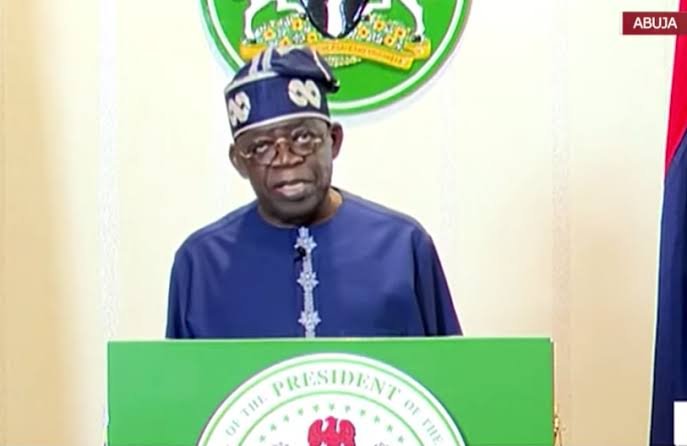
President Bola Tinubu’s recent visit to England, as guest of King Charles III, seemed to answer that question of my childhood. In that carefully staged moment, one truth quietly surfaced: there is only one king—the King of England.
And King Charles played his role to perfection: You saw him when he took our president’s hand and led him along the walkway. He did it with a faintly paternal air as though steadying our president, and in that gesture, quietly defining the terms of the relationship. The one that you plan to sell, you must first feed and make secure.
Then came the substance.
On Thursday, UK Prime Minister Keir Starmer hosted President Tinubu at Downing Street, where both countries sealed a deal tied to the refurbishment of the Lagos Port and TinCan Island Port. Under the £746 million arrangement, British Steel will supply 120,000 tonnes of steel for the work, with UK Export Finance guaranteeing the loans on the condition that at least 20 percent of the contracts go to British firms.
That last part channels no less than £236 million of the total sum back to the UK.
In simple terms, a substantial part of the “loan” effectively returns to the lender’s pocket. The principal is known, but the interest on the loan is not publicly stated and is not publicly known.
What do all these mean? I asked experts and they told me that the implications of the deal are significant, and not entirely comfortable.
They said the deal sits at the intersection of development finance and economic sovereignty.
They said that at its core, the contract is tied financing; the recipient must spend the funds on goods and services supplied by the lender. Broke Nigeria gets funding (via UK Export Finance), but on the condition that a big portion of the project must be executed by British firms.
They said the conditions attached to the deal is textbook paternalism: “We will help you but we will also decide how that help is used.” Alágbárí l’ògá múgù. They will use múgù’s money to eat àrósò.
They said that the loan structure carries several consequences. These consequences, they said, include reduced procurement freedom for Nigeria. By this they meant that, for the project, Nigeria cannot freely choose the most competitive suppliers globally.
They said that requiring at least 20 percent UK sourcing, the deal limits open competition, potentially excluding cheaper or more efficient alternatives from other countries, or even from local firms.
They mentioned capital flight and contrasted it with local retention. A guaranteed share of the contract (at least £236 million) flows back to UK companies. And what does that mean? It means less of the project value circulates within Nigeria. It means fewer opportunities for Nigerian contractors and manufacturers. It means reduced multiplier effect on the local economy. It means Nigeria is owing more than it is borrowing. It means the lender is also the receiver of the loan.
And, it is significant that the deal came in the same week the UK launched what it called a new steel strategy to revamp its steel industry, produce up to 50 percent of its own steel, cut imports by 60 percent, and impose a 50 percent tariff on excess imports.
UK Business Secretary, Peter Kyle, said: “I’m announcing really ambitious targets for use of British steel in the British economy, from 30 percent to 50 percent.” The strategy, according to him: “The UK government’s vision is a revitalised steel sector…that can provide a secure supply of steel to meet their customers’ needs, support our national security, and provide high-quality, secure and long-term jobs.”
The new strategy landed with the Nigerian deal, same week, different scenes. Coincidence? Someone said in encounters between power and need, coincidence is seldom accidental. Analytical psychologist, Carl Jung, says there are no coincidences; only connections we have not yet understood.
You hear all this and you ask: where is Nigeria’s own steel ambition in this deal? Ajaokuta? What, exactly, does Nigeria gain from this forward-and-backward loan arrangement?
Does this visit echo something more troubling—like leading the bull, gently, to the abattoir?
If that is it, then it is safe to say that the moment where King Charles III takes the president’s hand suggests a subtle hierarchy, paternal, guiding, almost instructional. The hand-holding is no longer metaphorical, it becomes contractual guidance. If you like, call it master–servant logic in economic form. The walkway movement intuited, the economics quietly confirmed.
The loan arrangement reinforces the asymmetry of benefit and control in international relations. Consider this: the UK hosts the Nigerian president; it secures export markets for its steel and contracts for its firms, sustains jobs in places like Scunthorpe, and advances its industrial policy. Nigeria, in return, comes home scented with the lingering perfume of King Charles’s courtly embrace.
At another level, the Nigerian child loves the white king. President Yar’Adua visited the White House in December 2007 and declared the visit eternally unforgettable:
“This is a moment that I’ll never forget in my life.” He blew that into his host’s microphone. President Tinubu did not use those cringing words but he said much more than that with swag and steez.
Critics of Tinubu’s London tourism liken him to Rome’s Emperor Nero who “sang and plucked his lyre while the capital of the world burnt down around him.” They say Tinubu should not have flown abroad while his own Rome faced the fire of terrorism and mass murder in Maiduguri. He has ignored the critics. He is aware that whatever he does won’t reduce the amount of libation daily poured at his shrine.
Indeed, those who call Tinubu Nero may, in fact, be paying him a compliment. In ‘Nero Reconsidered’, Edward Champlin describes the notorious Roman Emperor as a very “popular monster” who died at 30 and was for centuries wanted back by “everyone.”
He wrote: “The truth is that outside of court circles and Christian congregations, Nero was vastly popular, both before and after his death…Whatever else he may have been, Nero was a clever man, and one who was much more attuned to the psychology of his people than were some disgruntled elitists or angry sectaries.”
Nigeria has many of such “disgruntled elitists (and) angry sectaries” who criticise every act of the hardworking president.
Like Nero, our president loves the sound of his lyre and plays it undisturbed even if the capital is on fire. He understands the psychology of Nigerians. He knows they love him and his ways and would dance with him even if the country becomes Gaza at the hands of the enemy. He knows he did no wrong going to the House of Windsor to sell Nigeria.
Perhaps what we deserve is not really democracy. Perhaps it is what Thomas Jefferson might have recognised, in spirit, as monocracy, a curious blend of monarchy and democracy, a system based on the personal rule of an individual without legal or constitutional constraints. It is the reason power gathers today around one figure with a reverence that borders on the sacred.
Our president loves the British monarchy. We all do, and it showed in the ecstacy that governed our UK news throughout last week. We should also go further to make king out of our president – king with real powers. The Americans, whose system we borrowed, wrestled openly with the same tension. At the dawn of their republic, the absence of a king felt almost unnatural. Vice President John Adams worried aloud that without the trappings of monarchy, authority itself would wither. “Take away thrones and crowns from among men,” he warned, “and there will be an end of all dominion and justice.” He even fretted that the plain title ‘President’ would invite contempt from the world.
“What,” John Adams asked, “will the common people of foreign countries, what will the sailors and soldiers say, ‘George Washington, President of the United States’? They will despise him to all eternity.”
Never mind that there were dissenting voices to what Adams professed. They were fierce, irreverent, unyielding. They cautioned: “We did not dethrone King George only to enthrone King Congress.” And in his pamphlet, ‘Common Sense’, Thomas Paine stripped monarchy of its mystique, reducing it to accident and conquest, its grandeur a story too fragile to survive scrutiny.
Between Adams and Paine lies the enduring argument: the pull of monarchy against the (in)discipline of democracy.
And today with King Donald Trump, is America not back to what they spent centuries running away from? Monarchy.
It is within that unresolved tension that we must read the recent encounter in London.
When the king held the president’s hand, it was a small gesture, fleeting, almost incidental, yet heavy with suggestion. It lingered just long enough to invite interpretation: not quite two figures moving in equal stride, but one, however gently, steadying the other across an unseen threshold. In that clasp lay a metaphor too telling to ignore. The king owns the president.
With words you can enchant and capture. So, when the king decided to go Naija in his speech, he went WAZOBIA, strictly Yoruba, Hausa, Igbo. First, what he called a Yoruba proverb: Rain does not fall on only one roof. Next, according to him, a Hausa proverb: When the music changes, so does the dance. He decided to be so predictable with what came next. He called it an Igbo proverb: knowledge is never complete; two heads are better than one.
The king invoked not one, but three strands of Nigerian wisdom: shared fate, shifting power, and collaborative knowledge. But proverbs, like history, are layered. The rain falls on all roofs, but not all roofs are built alike. Some are tiled; others are thatched. Between Britain and Nigeria lies that uneven architecture—so uneven that when the rain comes, one household becomes the drainage for the other.
The steel-port arrangement is, in effect, one party’s way of using the other to shield its steel industry from the vagaries of a troubled global economy.
The future of Nigeria-Britain relations will be decided in how the tension between partnership and hierarchy is resolved. If the rain must fall on both roofs, then fairness demands that the two roofs be strengthened. If the music has truly changed, then both nations must help compose it. And if two heads are indeed better than one, then neither should seek to use the other for money ritual.