Nigeria and the United Kingdom have taken a major step toward improving trade transparency, agreeing to establish a structured data-sharing framework to address a £1.2 billion discrepancy in bilateral trade figures.
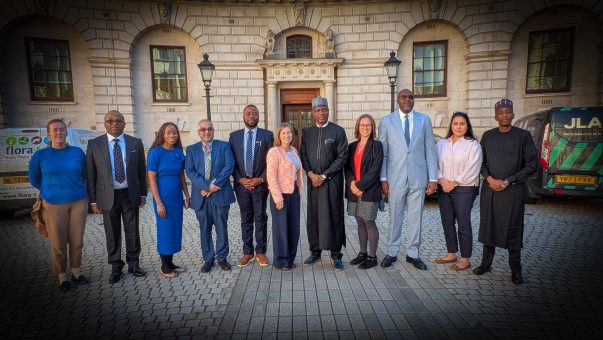
The breakthrough was reached during a high-level meeting in London on March 18, 2026, held on the sidelines of President Bola Ahmed Tinubu’s state visit to the United Kingdom. The engagement was conducted under the Nigeria–UK Enhanced Trade and Investment Partnership (ETIP), a platform designed to deepen economic cooperation between both nations.
According to a statement by the spokesperson of the Nigeria Customs Service, Abdullahi Maiwada, the agreement signals a renewed commitment to tackling long-standing inconsistencies that have hindered efficient trade flows between the two countries.
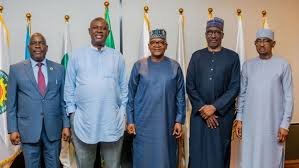
The meeting was led by the Comptroller-General of Customs, Adewale Adeniyi, and Ms Megan Shaw, Head of International Customs and Border Engagement at His Majesty’s Revenue and Customs. Discussions focused on modernising customs operations, enhancing transparency in trade data, and strengthening collaboration between both agencies.
Officials noted that discrepancies in trade figures—often arising from differences in reporting standards, valuation methods, and documentation—have for years created gaps in revenue tracking and economic planning. The newly proposed framework is expected to harmonise data collection and exchange, ensuring that both countries operate with accurate and consistent trade statistics.
The initiative is also seen as a strategic move to reinforce one of West Africa’s most vital trade corridors. By improving data integrity, authorities believe businesses will benefit from clearer regulations, reduced bottlenecks, and increased confidence in cross-border transactions.
Beyond resolving the immediate £1.2 billion gap, the partnership is expected to pave the way for broader reforms, including the adoption of digital customs systems, intelligence sharing, and coordinated enforcement against trade malpractices.
Analysts say the development reflects a maturing trade relationship between Nigeria and the UK, one that is increasingly focused on efficiency, accountability, and mutual economic growth.
As both sides move to operationalise the agreement, stakeholders will be watching closely to see how quickly the framework translates into measurable improvements in trade accuracy and revenue generation. If successfully implemented, the pact could serve as a model for similar collaborations between Nigeria and other global trading partners.