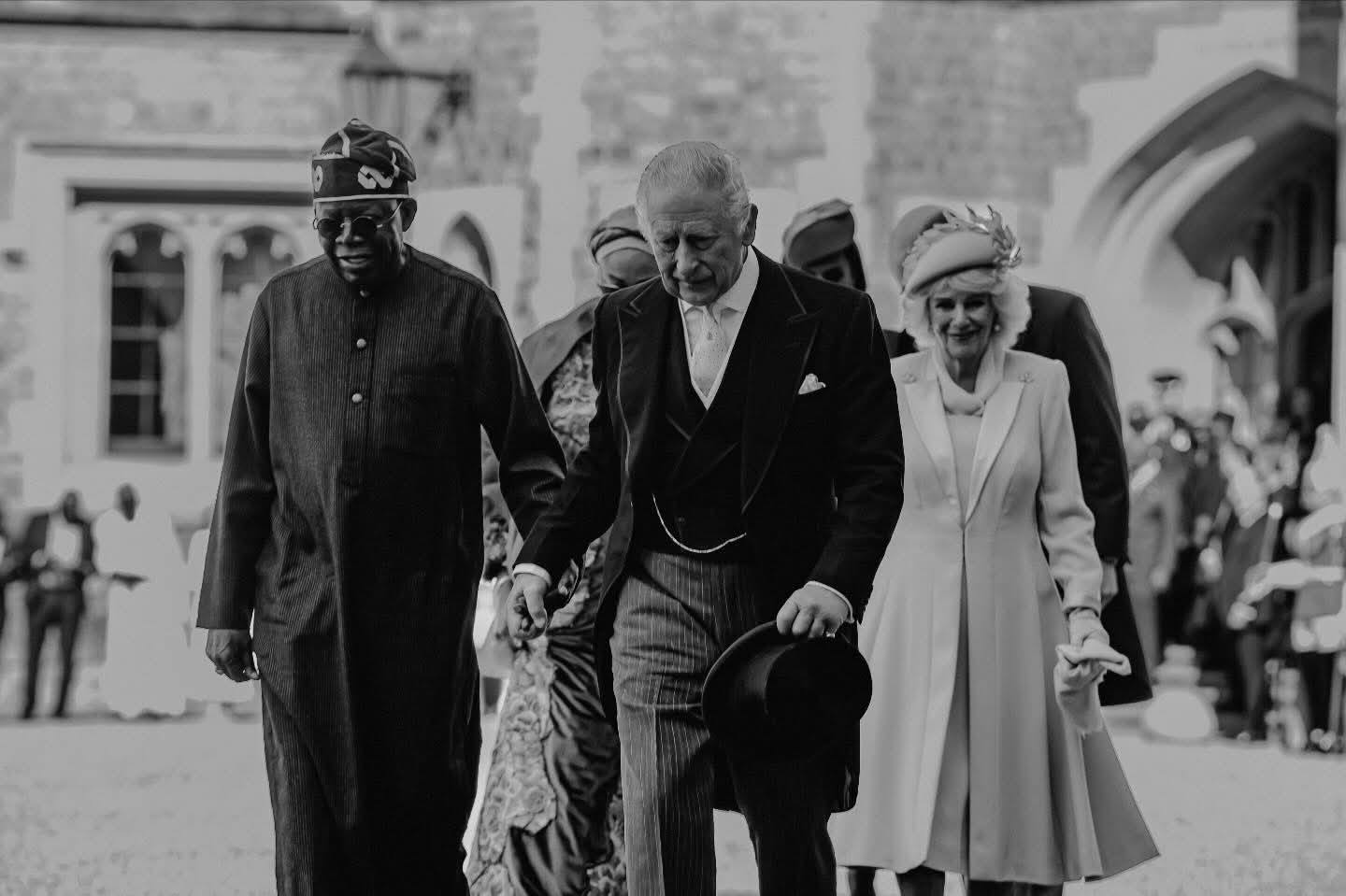
Amid the grandeur of Windsor Castle, a message of partnership and possibility echoed through the historic halls as King Charles III called on Nigeria to step boldly into a leadership role within the global community.
Speaking during a state banquet held in honour of Bola Ahmed Tinubu and First Lady Oluremi Tinubu, the British monarch described Nigeria as a pivotal force whose influence is essential to shaping the future of the Commonwealth of Nations.
The evening, rich in ceremony and symbolism, became a platform for a forward-looking vision—one centered on economic cooperation, shared prosperity, and the dismantling of barriers that have long hindered trade between nations.
King Charles III, addressing an audience of dignitaries and global stakeholders, emphasized the untapped potential within the Commonwealth, a network of nations bound by history yet increasingly defined by opportunity. At the heart of that potential, he placed Nigeria.
He urged the West African giant to take what he described as its “rightful place” within the bloc, not merely as a participant but as a driving force in advancing trade and economic integration.
Central to his message was the need for “barrierless” trade—an ecosystem where goods, services, and investments can flow more freely across borders. He highlighted the importance of harmonised standards, regulatory alignment, and the removal of structural obstacles that often discourage cross-border investment.
According to the King, such reforms would unlock vast economic benefits, not only for Nigeria and the United Kingdom but for the wider Commonwealth community.
“As we look towards the Commonwealth Heads of Government Meeting this year,” he said, “I hope we can demonstrate that the Commonwealth’s time has come.”
His remarks carried both urgency and optimism, reflecting a belief that the global economic landscape is shifting—and that institutions like the Commonwealth must evolve to remain relevant.
For Nigeria, the call represents both recognition and responsibility. With its large population, expanding economy, and strategic position in Africa, the country is increasingly seen as a key player in global trade discussions.
President Tinubu’s presence at the banquet underscored Nigeria’s willingness to engage at that level. His administration has repeatedly signaled interest in attracting foreign investment, boosting exports, and strengthening international partnerships—all of which align with the King’s vision of deeper collaboration.
Observers note that the timing of the remarks is significant. With the upcoming Commonwealth Heads of Government Meeting on the horizon, discussions around trade facilitation and economic integration are expected to take center stage.
For many, the King’s speech was more than ceremonial—it was a diplomatic nudge, encouraging Nigeria to seize the moment and help redefine the Commonwealth as a modern engine of growth.
Beyond policy and economics, the tone of the evening reflected a broader theme: partnership. King Charles spoke not just as a monarch, but as an advocate for cooperation, expressing confidence in a shared future built on mutual respect and aligned interests.
He concluded with a personal note, affirming that he and the Queen draw strength from relationships like the one with Nigeria—relationships grounded in friendship and a collective vision for progress.
As the banquet drew to a close, one idea lingered in the air: that the future of global trade may well depend on how nations like Nigeria step forward—not just to participate, but to lead.
And in that moment, within the centuries-old walls of Windsor Castle, Nigeria was being invited to do exactly that.