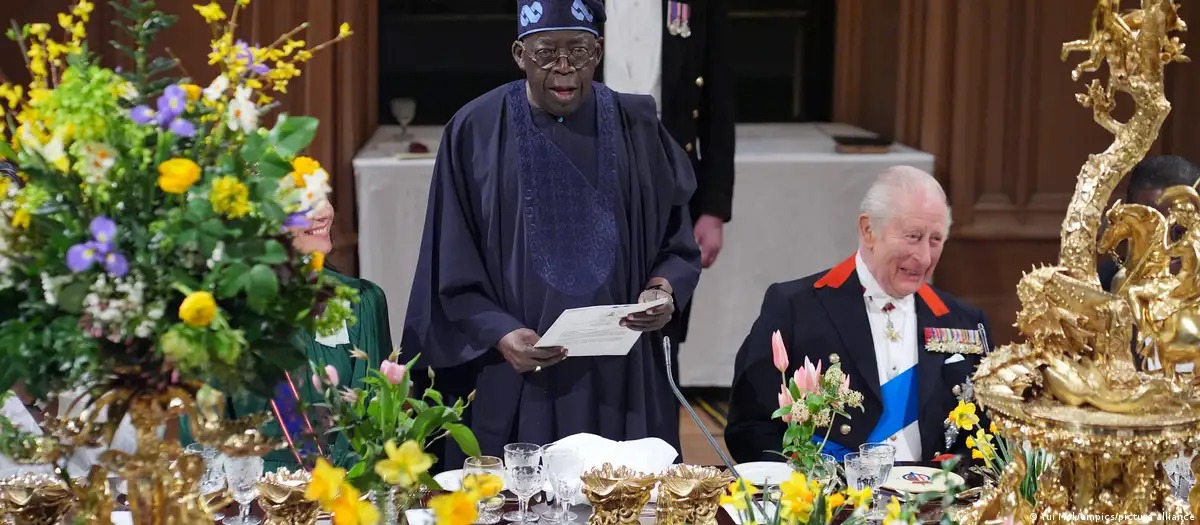
In the historic halls of Windsor Castle, where centuries of royal tradition meet modern diplomacy, a remarkable evening unfolded on Wednesday as King Charles III hosted Bola Ahmed Tinubu and Nigeria’s First Lady, Oluremi Tinubu, at a grand state banquet.
The glittering event, held inside the majestic St George’s Hall, formed the centerpiece of President Tinubu’s two-day state visit to the United Kingdom—an այց widely viewed by analysts as a strategic step toward deepening diplomatic, economic, and cultural ties between both nations. Dignitaries, diplomats, business leaders, and members of the Nigerian diaspora gathered under ornate chandeliers, their conversations reflecting anticipation about a new chapter in UK–Nigeria relations.
As the evening progressed, all eyes turned to King Charles III, who rose to deliver a speech that would soon resonate far beyond the castle walls. With a tone that blended royal poise and personal warmth, the monarch spoke glowingly of Nigeria—its history, its resilience, and its growing global influence.
He praised the dynamism of Nigerians both at home and abroad, noting their significant contributions to British society in fields ranging from medicine and academia to business and the arts. The King acknowledged the deep-rooted ties between the United Kingdom and Nigeria, describing them as “a partnership shaped by shared history, strengthened by shared values, and sustained by shared aspirations.”
Observers noted that the King’s remarks went beyond formal diplomacy. They reflected a genuine appreciation of Nigeria’s cultural richness and its youthful energy, which he described as a “force of innovation and optimism.”
But it was the closing moment of his speech that truly captured the spirit of the evening.
In a surprising and memorable gesture, King Charles III switched from formal English to Nigerian Pidgin—a move that instantly lit up the room. Smiling, he declared, “Naija No Dey Carry Last!”—a popular phrase celebrating Nigerian resilience and excellence. The hall erupted in laughter and applause, with many guests visibly delighted by the unexpected cultural nod.
The phrase, simple yet powerful, seemed to bridge continents in an instant, symbolizing not just respect, but a deeper connection between peoples.
Raising his glass, the monarch proposed a toast to President Tinubu and the people of Nigeria, reaffirming the United Kingdom’s commitment to strengthening cooperation in trade, security, education, and climate action.
For President Tinubu, the banquet was more than ceremonial pageantry—it was a platform to project Nigeria’s evolving role on the global stage. His visit is expected to yield discussions on investment opportunities, economic reforms, and partnerships aimed at addressing shared challenges, including energy transition and regional security.
Sources within diplomatic circles suggest that both countries are keen to expand collaboration in technology, infrastructure, and youth development—areas seen as critical to Nigeria’s long-term growth and stability.
The presence of First Lady Oluremi Tinubu added a distinct dimension to the visit, with her engagements expected to focus on social development, women’s empowerment, and education—key pillars of her advocacy.
Beyond the speeches and formalities, the atmosphere at Windsor Castle reflected something deeper: a recognition of Nigeria’s growing voice in global affairs and the enduring bond between two nations linked by history yet looking firmly toward the future.
As the evening drew to a close, guests departed with a sense that the banquet had marked more than a diplomatic milestone. It had offered a glimpse into a relationship being reshaped—one defined not only by policy and protocol, but by mutual respect, cultural exchange, and shared ambition.
And in the echo of the King’s Pidgin phrase—warm, unexpected, and heartfelt—many found a fitting summary of the night’s message: Nigeria’s story is one of progress, pride, and promise—and indeed, “Naija no dey carry last.”