With the release of the time table for the 2027 general election, the Independent National Electoral Commission (INEC) has officially blown the whistle for the formal commencement of political activities that would culminate with the presidential elections on January 16, and governorship and state elections on February 6. Going by what the time table stipulates, the presidential candidates of the different political parties would be known by May 30, 2026, the last day for the conduct of primaries which are scheduled to begin on April 22, 2026.
It is safe to conclude that long before the conduct of primaries, the candidate of the ruling All Progressives Congress (APC) is known to Nigerians, including INEC, in the person of President Bola Tinubu. From all indications, it is safe to speculate that Atiku Abubakar would emerge the candidate of the African Democratic Congress (ADC), out of three aspirants that include Peter Obi and Rotimi Amaechi. The other opposition parties, like the Peoples Democratic Party (PDP), Labour Party and the Social Democratic Party, are too engrossed in crises of survival to make any correct assessment of their preparedness for the election possible. They may not be organized enough to be able to participate in the election.
It may seem presumptuous to predict Atiku’s emergence as ADC’s presidential flagbearer, ahead of Obi and Amaechi. But this is based on empirical facts that are difficult to ignore, as the party prepares for perhaps the most defining aspect of its young existence – choosing its presidential candidate for an election that would either open a new chapter in Nigeria’s political history, or reaffirm the status quo.
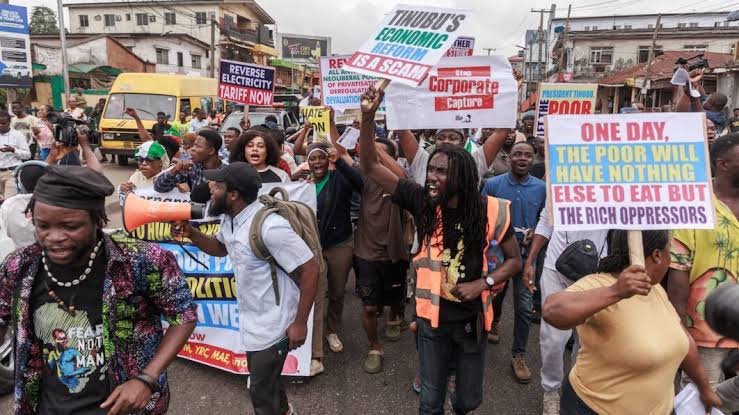
Atiku has a lot of the advantages stacked in his favour. One, the resentment against the Tinubu administration on account of the untold hardship which Nigerians have faced in the last three years is more pronounced in the northern part of the country than it is in the southern part. The general feeling in that part of the country is that the administration’s policies are patently anti-North. There is therefore the belief that only a leader of northern extraction can right the wrongs of the administration in favour of the North. Among those that have so indicated interest to run for president in 2027, no other politician fits the bill better than Atiku. Indeed, among northern political elites who have an axe to grind with Tinubu, Atiku is the messiah of the North.
The second factor that stands in favour of Atiku is the fact that among the three aspirants in ADC, he is the only one who is working to set up structures within the party – structures that would be useful to him at the primary. While the leadership of the party is working to establish structures across the country in terms of physical presence, Atiku is silently working to assemble the foot soldiers that would constitute his delegates at the primary. He is not just relying on northern support, he is building political bridges across the country. He was recently reported as having hosted a delegation of political leaders from the South East in his Abuja residence, as part of attempts to make inroads into what should be Obi’s section of Nigeria.
The icing on the cake for Atiku is that he boasts of a war chest that can deliver the presidential ticket to him, if it boils down to vote buying, as is typical of party primaries in Nigeria. Amaechi follows in a distant second position in terms of financial capacity, but certainly not anything of a threat to the former vice president.
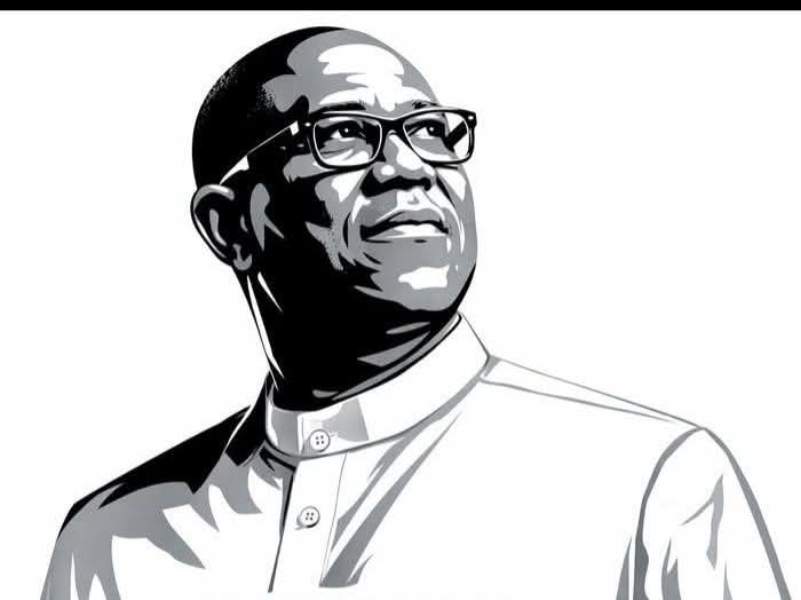
Where does this leave Obi? Quite interestingly, the factors that would work for Atiku are the same factors that are likely to work against Obi, especially the last two. The first major misstep of the 2023 Labour Party presidential candidate is that he is relying on the template he used in 2022 to prosecute his current campaign.
Obi went to the Labour Party primary in Asaba in May, 2022, without any delegate. It was his good fortune that three aspirants, including Professor Pat Utomi, unanimously stepped down for him to enable the party to adopt him as its consensus candidate. No such thing is going to happen in ADC, not when the party leadership, as well as Atiku, an aspirant, have made it clear there must be an open primary at which delegates would vote to choose the party’s candidate.
It is not preposterous to say Obi dos not have any potential delegate to the party primary that would be held in less than two months from now. In fact, it is not clear if he has any hold on the ADC structure in his home state of Anambra. This was evident in the governorship election that was held on Saturday, November 8, 2025, in which the party took a distant fifth position, with a miserable 8,208 votes, despite the fact that he is supposed to be the most popular politician in the state. What would pass for an indication that there may be an ADC structure was his visit to his state of origin in the weekend of March 7 to formally register as a member of the party. He was accompanied by party big wigs like Senator Victor Umeh and former senator, Ben Obi.
Rather than work to gather potential primary delegates, Obi is obviously putting the cart before the horse by focusing on strengthening his popularity across the length and breadth of Nigeria. He has obviously lost sight of the fact that he would need to win the presidential ticket and become the party’s candidate before he can benefit from his popularity across the country. His Obidients army, as well as other Nigerians who support him, are not card-carrying members of ADC, and will therefore not vote at the primary. They would only be useful to him if he is on the ballot on January 16, 2027. More than 99 per cent of Nigerians who voted for him in 2023 are not members of the Labour Party.
There has been no report of Obi holding consultative meetings with ADC stakeholders anywhere in the country, including Anambra, as a way of building structures he would need at the primary. He is content to engaging with youths at every possible forum, including donating monies to schools of nursing and other charitable causes, as well as criticizing the Tinubu administration at every opportunity.
In the last week of February, Amaechi, who does not come close to Obi in terms of popularity on a national scale, was reported to have received a pledge of support from some ADC South South stakeholders at a meeting in the house of Chief John Oyegun, party chieftain and pioneer national chairman of APC. Nigerians have not read such reports about Obi.
It is worthy of mention that Obi became popular among Nigerians only after he emerged the Labour Party candidate, not before, when they suddenly saw him as the only man, among the lot, who could make a difference by ushering in a new and different Nigeria. Nigerians who believe in him still see him in that light. But they are waiting for him to clinch a party’s presidential ticket before they can identify with him.
In our last article on Obi titled, “Labour Party: Obi’s last straw,” we advised the former presidential candidate to commence discussions with the Nenadi Usman-led executive of the party with a view to going back to the party on which platform he came close to becoming Nigeria’s president in 2023. We gave the advice based on the fact that only he can bring the party back to national consciousness and put it in good stead to produce the country’s next president in 2027. However, with the enactment of the 2026 Electoral Act, Obi’s chance of changing party is effectively foreclosed.
The new law makes it practically impossible for anybody to move from one party to another after registration. By the provisions of the law, parties are to submit the register of their members to INEC not later than April 1, 2026, after which no one can leave the party in which they registered to join another party. What this means is that as a registered member of ADC, Obi cannot go back to Labour Party, or join another party, even if he were compelled to do so by any circumstance. Succinctly put, the former Labour Party presidential candidate is stuck with ADC, whether or not he wins the party’s presidential ticket.
It is the same fate that is going to befall those who defected from other parties, especially PDP, into APC, in the hope of getting automatic tickets to run for office in 2027. They will discover, to their eternal regret, that they cannot return to their former parties, or join new ones, if they fail to secure tickets to participate in the election on the platform of APC.
The events that are going to play out in the coming weeks may paint a grim picture of a possible 2027 presidential election without Obi on the ballot. The questions that should agitate the minds of Nigerians who are desirous of the much needed change in the country’s trajectory are many. Will Obi be on the ballot on January 16, 2027? Can he be? Will his failure to contest the 2027 presidential election, as it seems highly probable, bring about the setting of his sun so early on his political journey?