It has been years since the night masked men drove into a quiet neighbourhood in Barnawa, Kaduna, and took away a young lecturer whose only known weapon was a smartphone.
No gunshots.
No ransom call.
No official arrest record.
Just absence.
And in Nigeria’s political memory, the disappearance of Abubakar Idris Dadiyata refuses to fade; not because of what is known, but because of what remains stubbornly unanswered.
The Night Nigeria Lost a Voice
On August 2, 2019, witnesses said armed men arrived in a Hilux vehicle, entered Dadiyata’s residence, and left with him. They took nothing else.
At the time, Dadiyata was a university lecturer and digital activist known for confronting disinformation and openly criticising powerful northern politicians, particularly the then Kaduna State governor, Nasir El‑Rufai.
Within hours, his name trended nationwide. Within days, the story crossed borders.
But the most important detail never arrived:
No agency admitted custody.
Police — no.
DSS — no.
Military — no.
And that vacuum created a narrative Nigeria has never escaped.
Why El-Rufai Entered the Story
The suspicion did not emerge from thin air.
Before his disappearance, Dadiyata had repeatedly accused the Kaduna government of running coordinated online propaganda campaigns and publicly confronted its supporters.
In Nigeria’s intensely polarised digital politics, that mattered.
Supporters of Dadiyata argued: The last people he openly confronted in a sustained political battle were government-aligned actors.
From there, the disappearance stopped being just a missing-person case, it became a political mystery.
El-Rufai has never been charged, indicted, or officially linked by investigators to the abduction.
Yet the absence of a credible investigative conclusion kept his name permanently attached to the story in public discourse.
A Son’s Reaction Rekindles the Fire
Years after the disappearance, public attention returned, not because of new evidence, but because of a reaction.
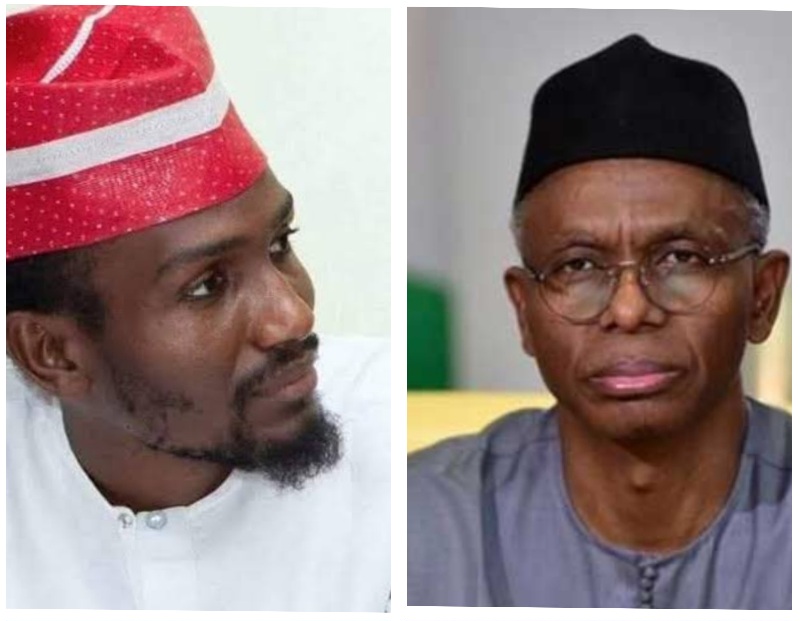
Bashir El‑Rufai, son of the former governor, responded online to renewed conversations about Dadiyata. His remarks, interpreted by critics as dismissive and lacking empathy, triggered a backlash.
For activists, the response reinforced suspicion.
For supporters, it was harassment fatigue.
But politically, it achieved one thing:
It reopened a wound that never healed.
The Investigation That Never Became One
Multiple petitions have been written.
Human rights organisations demanded judicial panels.
Lawyers filed freedom-of-information requests.
Journalists revisited the case repeatedly.
Yet the disappearance sits in a troubling category in Nigeria — cases that are neither active nor closed.
No prosecution.
No declared suspects.
No public investigative report.
In practical terms, the case exists only in memory and suspicion.
The Larger Fear
The Dadiyata case has endured because it represents something deeper than politics.
It became Nigeria’s most prominent modern example of alleged enforced disappearance tied to digital speech.
For young Nigerians especially, it changed behaviour online.
People began:
• deleting tweets
• locking accounts
• avoiding political commentary
The fear was not prison.
The fear was erasure.
A Question That Outlived Governments
Administrations have changed.
Security chiefs have been replaced.
Public attention has moved to new crises.
But one question refuses to age:
Where is Dadiyata?
Until a credible answer exists, whether criminal, political, or accidental, suspicion will continue to orbit power, and every careless comment will reopen the case.
Because in unresolved disappearances, silence is never neutral.
It always sounds like a secret.