By Ikeddy ISIGUZO
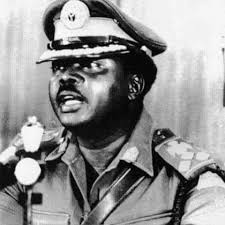
STERN, stiff, stiffling, and too brash to accommodate views that were opposed to his, General Murtala Muhammed, Nigeria’s third military Head of State was a man of few words whose words were more in his deeds.
Fifty years ago, exactly on Friday, 13 February 1976, Murtala was assassinated around the Federal Secretariat, Ikoyi, as his vehicle snaked its way in traffic on the Head of State’s way to work. It says something of those days – the low level of security around Murtala. Some attribute this to Murtala’s simplicity.
He died on the spot. So did his ADC Lieutenant Akintunde Akinsehinwa, and his driver, Sergeant Adamu Michika.
Though five decades ago, there are lessons in a Lieutenant being the ADC to a General, a Head of State who had seen action in Congo and during the Nigerian Civil War. Can that be compared to today when an ADC was nearly promoted to a Brigadier.
When Murtala was assassinated, he was just 37 with a military career dogged in controversies from beginning to the end.
Murtala was a signals officer who rose to prominence in 1966 as the leader of the counter-coup in which Major-General Johnson Thomas Umunnakwe Aguiyi-Ironsi, Nigeria’s first military Head of State was killed in Ibadan.
Murtala had to be persuaded to concede power to Lt-Col Yakubu Gowon who was his senior. Gowon had Murtala always near him, made him Commissioner (now Minister) of Communications.
At the outbreak of the Nigeria Civil War, Murtala led the 2nd Division of the Nigerian Army to series of disasters, in failed attempts to cross the River Niger to Onitsha from Asaba where it is on record that he supervised the Asaba massacre where more than 800 Asaba men and boys who had gathered at Ogbe-Osowa, the town’s square to welcome Nigerian soldiers to Asaba were surounded and shot to death.
At the epic Abagana battle where the Nigeria Army wanted to attack Biafra from Onitsha and Enugu axis, Murtala lost more than 1,000 troops, and supplies.
Later reports were that Col. Anthony Ochefu, then, Provost-Marshall of the Army, had recommended that Murtala be relieved of battle duties and put on trial for loss of troops, ammunition, and supplies. He was recalled but not tried.
Murtala attended the Joint Service Staff College in England, 1970-1971 and his supervisor’s report said this of him, ”A quick agile mind, considerable ability and common sense. He holds strong views which he puts forward in a forthright manner. He is a strong character and determined. However, he finds it difficult to moderate his opinions and finds it difficult to enter into debate with others whose views he may not share”.
Often praised for taking decisive actions that people hailed as “with immediate effect”, his months in power witnessed hyper actions that drew attention to him for their bluntness. He was on the speed lane and when he was crashed, some were glad.
Murtala in months purged the civil service broadly accused of corruption and sacked thousands of its staff. The sudden loss of jobs is held accountable for heightened levels of corruption in today’s public service. The civil service used to be where careers dovetailed to retirements with assured pensions.
When the purge started, some went to work, were told their services were no longer required. That same moment meant the concerned civil servants and their families became homeless, if they lived in government residences. Many of them never recovered from the loss of their jobs and their new circumstances as unemployed.
Civil servants started paying more attention to themselves than services to the public and governments. Corruption became incremental as civil servants tried to put things away since their jobs had ceased to be secure.
Murtala also demobilised the army. He sent 100,000 soldiers home, trimming the armed forces to 150,000.
His foreign policy centred on assisting the liberation struggles in Angola, Mozambique, Namibia, South Africa, and Zimbabwe for their country to attain independence. Nigeria’s commitment to the independence movements was comprehensive and including scholarships to their students and civil servants, training their military and provision of other supports.
Murtala nationalised Shell to punish Britain which was supporting minority regimes in South Africa and Zimbabwe.
In his brief regime, Murtala announced relocation of the federal capital from Lagos to Abuja, nationalised Daily Times and New Nigerian, two of Nigeria’s biggest newspapers, as his way of having a hold on the media.
His popularity rested on an anti-corruption campaign, support for liberation movements, creation of nine new States, and the plan for early return to civil rules which politicians liked.
Murtala was mourned for the sparkles that he showed in only 200 days. Otherwise, there was nothing spectacular about him.