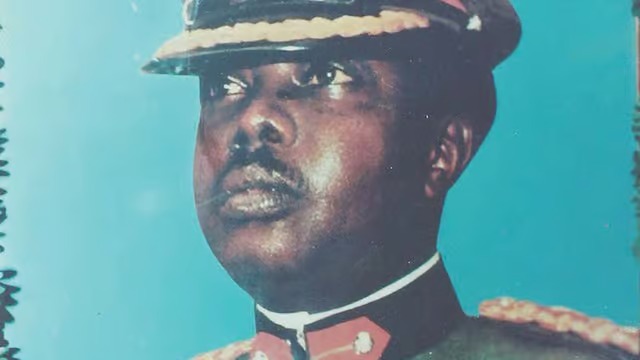
Fifty years have passed, yet the name Murtala Ramat Muhammed still echoes with uncommon force in the conscience of Nigeria. Time has thinned the ranks of those who walked the corridors of power with him, but it has not dimmed the light of his legacy.
He lived briefly in office, fell suddenly in death, and yet achieved what many leaders, blessed with long tenures, could not: he reshaped the moral imagination of a nation and rekindled its faith in leadership.
Born on November 8, 1938, in Kano, Murtala Muhammed was a soldier formed by discipline, courage, and a fierce love for country.
By the time destiny placed him at the helm of Nigeria on July 30, 1975, the nation was weary—burdened by economic uncertainty, administrative inertia, and a growing distance between the rulers and the ruled. His emergence was not merely a change of guard; it was a jolt of fresh air into a stifled political atmosphere.
From the first days of his administration, General Muhammed ruled with unmistakable clarity of purpose. His voice—direct, uncompromising, and urgent—signaled a break from hesitation.
Nigerians heard, many for the first time in years, a leader speak not in riddles but in resolve. He declared that Nigeria’s problems were not insurmountable; they only required honesty, discipline, and action.
One of his boldest acts was the sweeping purge of the public service. Thousands of officials were retired or dismissed in a controversial but decisive move to restore efficiency and accountability. To some, it was harsh. To many more, it was a long-awaited assertion that public office was a trust, not a privilege to be abused. For a nation struggling with corruption and complacency, the message was unmistakable: indolence would no longer be rewarded.
General Muhammed’s nationalism was neither loud nor theatrical; it was practical and deeply rooted in justice. On the international stage, he repositioned Nigeria as a principled African power. His unwavering support for the liberation of Angola and his defiance of Western pressure announced Nigeria’s foreign policy independence with confidence. Africa, long accustomed to cautious diplomacy, witnessed a Nigerian leader willing to stake moral authority on the side of freedom and self-determination.
At home, he laid foundations that still shape Nigeria today. His administration initiated the process that led to the creation of Abuja as Nigeria’s Federal Capital Territory, envisioning a neutral, centrally located capital that symbolized unity rather than division.
Though he would not live to see Abuja rise from blueprint to city, the idea itself bore the stamp of his foresight.
Yet, beyond policies and decrees, what endeared Murtala Muhammed to millions was his simplicity. He rejected excessive pomp, moved with minimal convoy, and insisted that leadership should not be insulated from the people it served. Nigerians saw in him a reflection of themselves—imperfect, determined, impatient with excuses, and hungry for progress.
Then came February 13, 1976—a dark Friday etched permanently into the nation’s memory. On his way to work in Lagos, General Murtala Muhammed was assassinated in a failed coup attempt. In a matter of moments, Nigeria lost not just a Head of State, but a symbol of hope. The shock was immediate and profound. Streets fell silent. Radios carried the news with disbelief. Tears flowed freely across ethnic, religious, and social lines.
His death exposed a painful truth: visionary leadership often walks a lonely and dangerous path. But it also revealed something powerful—how deeply a nation can love a leader who governs with sincerity. In death, as in life, Murtala Muhammed united Nigeria.
Fifty years later, his memory still challenges us. He stands as a reminder that leadership is not measured by years in office, but by impact. That courage in decision-making matters. That integrity is not naïve. That patriotism demands sacrifice.
Institutions, landmarks, and histories bear his name—Murtala Muhammed International Airport, streets, schools, and military formations—but his truest monument is the standard he set. Each generation of Nigerians returns to his story in moments of national uncertainty, asking the same question: What would Murtala have done?
As Nigeria marks the 50th anniversary of his assassination, this tribute is not merely an act of remembrance; it is a call to conscience.
A call for leaders to serve with urgency and honesty. A call for citizens to demand accountability. A call to believe, once again, that this nation can rise above its challenges.
General Murtala Ramat Muhammed lived only 37 years. He ruled for just 200 days. But in that brief span, he carved his name into history with uncommon clarity. He did not finish his journey, but he showed the way.
Gone too soon, remembered forever.
Nigeria salutes a soldier, a patriot, and a leader of rare conviction.