By Agbeze Ireke Kalu Onuma, AI-KO
I remember visiting a friend not too long ago, one of those easy, everyday visits where you expect nothing more dramatic than a shared meal and a bit of conversation. It was early evening, the kind of time when the day is settling down and everyone is easing into whatever plans they’ve made for the night. Someone was in the kitchen rinsing rice. Another person was sprawled on the couch scrolling through their phone. A show was playing on the TV, half-watched, half-background noise. It was all so ordinary that you didn’t even think about it – you just lived inside it.
Then the lights dipped.
Not sharply. Not suddenly. Just that slow, sinking dimness that everyone in this country recognizes instantly. The fan’s steady hum faltered, wobbling into a tired rattle before giving up completely. The TV froze mid-scene, then blinked off. The kitchen went quiet except for the soft clatter of a spoon being set down. No one gasped. No one cursed. No one even looked surprised. It was the kind of moment that has happened so often it no longer qualifies as an interruption – it’s simply part of the rhythm of life.
Someone tried the switch. Click. Click. Click. Not because they expected anything different, but because habit is stronger than hope. Another person let out a long sigh, the kind that comes from deep inside, shaped by years of repetition. A rechargeable lamp was brought out from a drawer, its harsh blue-white light cutting a small circle into the room. Everyone’s faces looked different in that light – flattened, washed out, almost unfamiliar. The room shrank to the size of that little glow.
My friend was trying to finish a work email on his phone, holding it close to his face like a lifeline. “Network is acting up,” he said, not angrily, just stating a fact. Someone else tried to read, shifting their book this way and that, trying to catch the light. The words kept slipping into the shadows. The pot on the stove was taken off the heat, and someone wondered aloud if the fridge would hold long enough to keep the food from spoiling. A phone charger was unplugged and set aside. Plans dissolved quietly.
The evening’s rhythm changed instantly. The conversation softened. Movements slowed. The room reorganized itself around the lamp like planets orbiting a weak sun. No one complained loudly. No one stormed off. Everyone simply adjusted, the way people do when they’ve been trained by their environment to expect disappointment. It wasn’t dramatic. It wasn’t tragic. It was just… normal.
And that was the part that stayed with me – the normalcy. The way the darkness didn’t feel like an event but a condition. A background rule. A tax on time, comfort, and ambition. The cost wasn’t measured in outrage; it was measured in small, relentless losses: the wasted hour, the food at risk, the data drained, the plans postponed, the quiet anxiety humming beneath everything. It was the way the room’s entire economy – its energy, its intentions, its momentum – simply paused because the infrastructure had failed again.
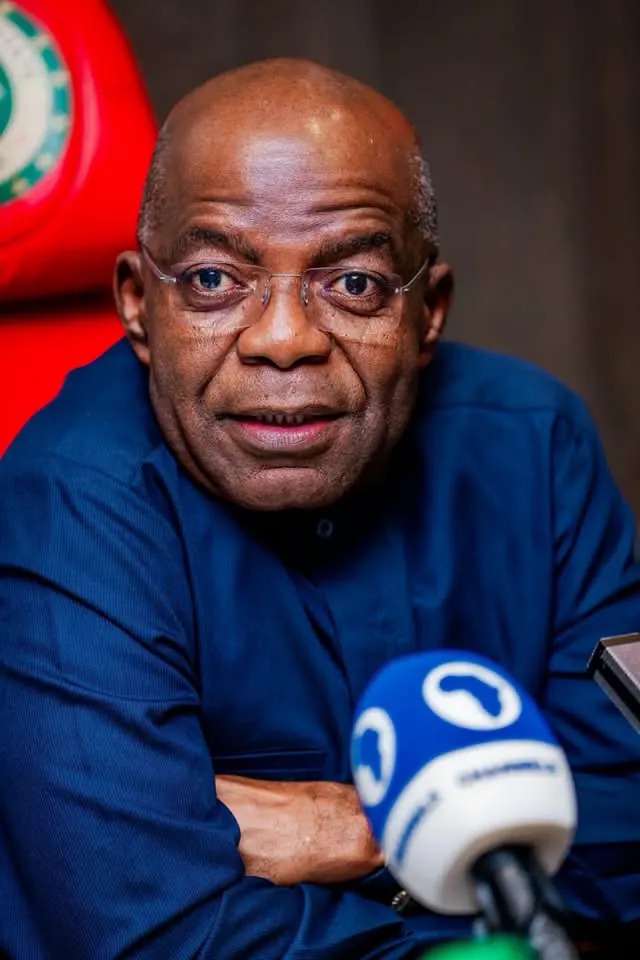
When I read Governor Alex Otti’s speech delivered at Enugu, that. Was what came back to me. It felt like a direct response to that room that night, that moment, that shared resignation: “The conversation has rightly shifted… it is no longer about the glory of individual states and communities but the destiny of the collective.”
In that dim room, the “collective” wasn’t an abstract political idea. It was the people sitting around that lamp. It was the inability to read a book. The struggle to send an email. The worry about food spoiling. The frustration of having your evening – and your intentions – held hostage by a system that cannot guarantee the simplest thing: light.
What struck me about Otti’s vision wasn’t that it promised something futuristic or grand. It was that it promised the return of the ordinary. The luxury of a fan that keeps turning. The comfort of a fridge that stays cold. The dignity of being able to plan your time and trust that the environment won’t betray you. The ability to live without constantly negotiating with darkness.
In that sense, his manifesto wasn’t just a technical document. It was a promise of restored humanity. A promise that life doesn’t have to be lived in fragments, constantly interrupted by power cuts. A promise that predictability – the most basic form of dignity – could return.
That evening with my friend isn’t a dramatic story I’m using to make a point. It is the point. It’s the lived reality that Otti’s blueprint is trying to solve. All the talk of regional grids, energy independence, and power tripods is simply the technical answer to a very human question: how much longer must we keep losing pieces of our lives to darkness.
Because the alternative isn’t just inconvenience. It’s erosion. A slow leak of potential. A steady draining of time, productivity, and hope. Hour by dim hour. Until you forget what uninterrupted light even feels like.
And that is why his vision matters. Because it isn’t about megawatts. It’s about reclaiming the simple, everyday moments that make a life whole.
Encountering Governor Alex Otti’s address at the South East Vision 2050 Regional Stakeholders’ Forum feels like stumbling upon a rare kind of political clarity, the sort that doesn’t hide behind slogans or reheated clichés. Instead of the usual political theatre – grandstanding, applause lines, and vague promises – what he offers is something closer to an architectural drawing for a future that refuses to wait for federal benevolence. His words carry the weight of someone who has studied the terrain, measured the cracks in the foundation, and decided that the only way forward is to build something entirely new. There is a kind of alchemy in the way he speaks, a transformation of technocratic language into a living, breathing vision of what a region can become when it stops begging for power – literally and figuratively – and starts generating its own.
In Nigeria, the national grid is no longer just infrastructure. It has become a metaphor, a flickering emblem of everything that has gone wrong with centralized governance. It is the physical manifestation of promises made and abandoned, of potential squandered, of a system that has grown too rigid and too indifferent to serve the people who depend on it. When Otti introduces the idea of “Energy Federalism,” he is not merely coining a catchy phrase. He is naming a rebellion – quiet, strategic, and grounded in economic logic rather than emotional outrage. It is a refusal to keep waiting for a center that has repeatedly shown it cannot hold.
What makes his vision so compelling is that it is not built on fantasy. There is no romanticism here, no illusion that change will come simply because it is desired. Instead, he lays out a path that is both ambitious and deeply practical. He frames regional energy independence not as a political provocation but as an economic necessity, a survival strategy for a region that has been held hostage by a system that cannot meet its needs. His manifesto reads like a blueprint for liberation, one that replaces the ceremonial sword of political rhetoric with the calibrated tools of engineers, planners, and innovators.
There is something almost celebratory in the way he positions this moment – a kind of intellectual “high-five” to the idea that regions can and should take their destinies into their own hands. It is the moment where ambition meets feasibility, where dreams stop floating in the abstract and begin to take on the weight and shape of real possibility. In a landscape long defined by underachievement and deferred hopes, Otti’s vision cuts a new path, one that feels both daring and inevitable.
And perhaps that is why his words resonate so deeply. They speak to anyone who has ever sat in the dark waiting for the lights to return. They speak to communities that have learned to make do with less, to innovate around scarcity, to survive despite the odds. They speak to a region that is tired of being defined by what it lacks and is ready to be known for what it can build. In Otti’s manifesto, the South East is not a supplicant but an architect, not a victim of circumstance but a designer of its own renaissance.
In the end, what he offers is more than an energy plan. It is a reimagining of power itself – who holds it, who generates it, who benefits from it. It is a reminder that the future does not belong to those who wait for permission but to those who dare to construct it with their own hands.
What Otti lays out next feels like someone quietly turning a heavy key in a long‑jammed lock, the kind of shift you don’t notice at first until suddenly the entire room opens up. At the heart of his argument is what he calls an enterprise‑friendly style of governance, though he doesn’t shout the phrase or dress it up with fireworks. Instead, he weaves it in gently, almost like a guiding current beneath the surface of his speech. What he’s really doing is moving the whole conversation away from the small, tired quarrels that have held the region back – the endless competition between states, the obsession with who is doing better than whom, the corrosive politics of envy and one‑upmanship. He calls this shift a movement from the mundane to the sublime, and it’s hard not to feel that something genuinely elevated is happening in that moment.
For decades, Nigerian development has been trapped in this cycle of rivalry, as if progress were a zero‑sum game where one state’s success automatically diminishes the others. Otti refuses to play that game. He deliberately widens the frame, insisting that the South East must think of itself as a single organism with shared arteries, shared ambitions, and a shared destiny. When he says the conversation has shifted away from the glory of individual states and toward the destiny of the collective, he isn’t just making a poetic point. He’s diagnosing a historical wound and prescribing a cure that feels both bold and overdue.
His analysis cuts especially deep when he turns to the famed itinerant nature of the Igbo people. For generations, the Igbo have been celebrated as natural travelers, natural entrepreneurs, natural wanderers. But Otti refuses to romanticize this. He names the truth many have quietly known: that this wandering spirit, this Onye Ije identity, is often less about adventure and more about escape. It is a diaspora born not from wanderlust but from the stark absence of opportunity at home. People leave because they must, not because they prefer to. And in saying this out loud, he reframes the entire narrative. He suggests that if the region can build real opportunity – stable power, thriving industries, supportive policies – then the same people who once left out of necessity might stay out of choice, or even return.
This is where his vision becomes not just philosophical but deeply practical. By treating development as a team sport, he makes it clear that the success of one state strengthens the entire region. If Enugu rises, Abia rises with it. If Ebonyi industrializes, Imo gains new markets. If Anambra innovates, the ripple spreads outward. It’s a kind of economic symbiosis that feels obvious once he says it, yet it has been ignored for far too long. He is not inventing a new ideology; he is reminding the region of what it once knew instinctively.
And that reminder is anchored in history – specifically, the era of Dr. M.I. Okpara, whose leadership of the old Eastern Region remains one of the most compelling examples of what visionary public policy can achieve. Under Okpara, the region didn’t just dream; it built. It built farms, industries, and entire economic ecosystems that fed into one another. It built a sense of shared purpose that transcended local boundaries. It built a model of collective action that worked so well it became a reference point for decades. Otti’s strategy is, in many ways, a digital‑age resurrection of that legacy. He is reaching back into a period when the East was not waiting for handouts or permissions but was actively shaping its own destiny.
What he proposes now is a modern version of that same spirit – updated, expanded, and sharpened for a world where energy is the backbone of everything from manufacturing to digital innovation. His enterprise‑friendly governance is not about making life easier for a few businesses; it is about creating an environment where the entire region becomes a magnet for investment, talent, and creativity. It is about building a home people no longer feel compelled to flee.
In that sense, Otti’s manifesto is not just a policy document. It is a quiet but powerful act of reclamation. It says: we have done this before, and we can do it again. It says: our future is not something to be waited for but something to be engineered. It says: the South East is ready to stop wandering and start building, not as isolated states but as a unified force with a shared horizon.
And in a country where darkness – literal and metaphorical – has too often dictated the rhythm of life, that kind of collective awakening feels nothing short of revolutionary.
What Otti does next is the part that makes you sit up a little straighter, because this is where the vision stops floating in the clouds and lands squarely on solid ground. It’s one thing to paint a beautiful picture of what could be; it’s another thing entirely to point to something already working and say, “Look – this is not theory. This is happening.” And that’s exactly what he does with what I like to call the Aba Model. It’s almost like he’s saying, if you doubt that this grand idea of energy federalism can work, then come to Aba and see it breathing, humming, powering lives in real time.
The Geometric Power Limited project is the anchor of his argument, the proof of concept that transforms his manifesto from poetry into engineering. Aba is not waiting for the national grid to get its act together. Aba has quietly stepped out of that toxic relationship. It has decoupled from the heartbreak, the unpredictability, the national drama of a grid that collapses more often than it delivers. And in doing so, Aba has become a kind of living laboratory for what the entire South East could become if it chose to stop begging for power and start generating it.
The effects of this decoupling are not abstract. They show up in the way factories now plan their production cycles with confidence, not fear. For the first time in decades, manufacturers in Aba can think in quarters, not days. They can map out output, negotiate contracts, and meet deadlines without the constant dread of a blackout wiping out their margins. Anyone who has ever watched a factory grind to a halt because the lights went out understands how revolutionary that is. Predictability is not a luxury; it is oxygen for industry.
And once industry can breathe, everything else begins to move. Real estate starts buzzing. Warehouses fill up. Shops reopen. Investors who once fled the darkness begin to trickle back, then return in waves. It becomes a kind of reverse capital flight – money, talent, and expertise flowing back into a city that had once been written off as a relic of its former industrial glory. You can almost feel the pulse of the place quickening again.
When Otti says the private sector will always go in the direction set for it by the public sector, he is tapping into a deep truth that economists have been shouting for decades. This is the heart of Developmental State Theory – the idea that government’s most important job is not to run businesses but to create an environment where businesses can thrive without fear. Government must de‑risk the terrain. It must build the roads, the laws, the power systems, the regulatory clarity. Once that foundation is in place, private capital, which is naturally cautious and skittish, will settle in and flourish.
Aba is his Exhibit A. It is the case study that shuts down every argument that says regional energy independence is too ambitious, too complicated, too unrealistic. Aba shows that when the public sector lays the groundwork with seriousness and competence, the private sector responds with enthusiasm and investment. It shows that the South East does not need to wait for a miracle from Abuja. It can build its own miracle, one substation, one industrial cluster, one megawatt at a time.
In the end, the Aba Model is more than a project. It is a declaration. It says: we are capable. It says: we are tired of excuses. It says: the future is not something to be begged for but something to be constructed with intention. And in that sense, Aba is not just a city with steady power. It is a symbol of what happens when vision meets execution, when leadership stops talking about potential and starts activating it.
From the Aba example, Otti’s thinking expands outward with the precision of someone who has spent years inside boardrooms where numbers, risks, and timelines are not abstract ideas but living forces. You can almost see the banker in him – calculating, structuring, layering – building a regional energy plan the way an engineer might design a bridge meant to last a century. He imagines this plan as a three‑legged tripod, each leg essential, each one carrying weight the others cannot. And because he frames it this way, you get the sense that he is not just theorizing but constructing something meant to stand firm even in the storms that have toppled so many Nigerian development dreams.
The first leg, Resource Identification and Optimisation, is where he becomes a kind of energy cartographer, mapping the South East not as a region of scarcity but as a treasure chest waiting to be unlocked. He speaks of Imo’s trillion cubic feet of natural gas with the excitement of someone pointing out a hidden vault. He reminds us of the coal lying quietly beneath Enugu and Ebonyi, the kind of resource that once powered entire economies before being left to gather metaphorical dust. He notes Abia’s own reserves of gas and crude, and then widens the lens to include the region’s abundant hydro, solar, and biomass potential. None of this is presented as a wish list. It feels more like a portfolio review – assets identified, categorized, and ready for deployment. You can almost imagine him sliding a folder across a polished table, saying, “Here is what we have. Here is what we can build with.”
Then comes the second leg: Infrastructure and Continuous Investment. This is where he stops being poetic and becomes stern, almost fatherly. He warns against the short-term thinking that has crippled so many public projects in Nigeria – the obsession with quick wins, ribbon-cuttings, and election-cycle theatrics. Power infrastructure, he reminds us, is not a sprint. It is a long, slow cultivation, more like raising a forest than planting a garden. You don’t plant a transformer today and expect an industrial revolution tomorrow. You need patience, capital, and a willingness to think in decades, not months.
And because he understands how capital behaves – how it fears uncertainty, how it hates political turbulence – he calls for long-term players, not speculators looking for a quick exit. His advocacy for a Build‑Operate‑Divest model is one of the most quietly brilliant parts of his entire strategy. He is essentially saying: let the state take the early punches. Let the government use its authority, its stability, its ability to absorb risk, to start these massive projects. Let the state nurture them through the fragile early years when private investors would rather watch from a distance. Then, once the projects are stable, once they are humming and profitable and predictable, hand them over to the private sector to run with the efficiency and discipline that governments rarely possess.
It is a perfect division of labor – public sector courage at the beginning, private sector competence for the long haul. It acknowledges the strengths and weaknesses of both sides without sentimentality. It is the kind of thinking that comes from someone who has seen deals collapse because the risk was too high, and who has also seen fortunes made when the groundwork was properly laid.
In the end, what Otti is building is not just an energy plan but a philosophy of development – one that treats resources as assets, time as an ally, and governance as a catalyst rather than a bottleneck. It is a tripod designed to hold the weight of a region’s ambitions, steady and unshakable, ready to support whatever comes next.
The third leg of Otti’s tripod is the one most politicians tiptoe around, the one they usually dress up in vague language or bury under committees and “further consultations.” But Otti doesn’t flinch. He calls it what it is: a market strategy built on pricing realism. And this is where he walks straight into the room where the two biggest elephants have been sitting for years – tariffs and metering – and instead of pretending not to see them, he drags them into the light.
He talks about the need for a fair deal, and he does it with a kind of blunt honesty that feels almost refreshing in a political landscape where everyone is trying to please everyone. He says investors must be allowed to make a reasonable profit, because no one sinks billions into power infrastructure out of charity. At the same time, he insists that consumers must be protected from exploitation, because electricity is not a luxury item; it is the bloodstream of modern life. He is trying to strike a balance that has eluded Nigeria for decades, a compact where both sides feel respected rather than cheated.
And then he takes aim at one of the most hated practices in the Nigerian power sector: estimated billing. His rejection of it is not just a political applause line – it is a moral stance and an economic necessity rolled into one. When he says estimated billing is exploitative and violates the principles of fair business, he is speaking directly to the everyday person who has been paying for light they never saw. But he is also speaking to the economists and investors who know that no market can function properly when pricing is arbitrary and opaque.
Metering is not just about fairness; it is about trust. And trust is the currency without which no technical solution can survive. You can build the best power plant, the most efficient grid, the most elegant regulatory framework, but if people believe the system is rigged against them, they will resist it, sabotage it, or simply refuse to pay. Otti understands this. He knows that social trust is the invisible infrastructure that must be built alongside the physical one.
By confronting tariffs and metering head-on, he is doing something far more profound than adjusting numbers on a spreadsheet. He is laying the emotional and psychological groundwork for a new kind of energy economy – one where people feel seen, respected, and treated as partners rather than prey. And in a region where distrust of public institutions runs deep, that might be the most transformative leg of the tripod.
In the end, this third leg completes the structure. Resource mapping gives the region something to build with. Long-term infrastructure investment gives it something to build on. But pricing realism gives it something to believe in. Without that belief, the whole thing collapses. With it, the tripod stands firm, ready to carry the weight of a regional renaissance.
What Otti does next is the kind of move that separates a cautious administrator from a leader willing to stake his reputation on uncomfortable truths. He steps directly into the minefield of the global climate debate, a space where many African leaders either whisper apologetically or avoid the conversation altogether. But he doesn’t dodge. He doesn’t sugarcoat. He doesn’t pretend the contradiction isn’t there. Instead, he names it boldly – the Coal Contradiction – and then proceeds to dismantle the shame that has long surrounded it.
He doesn’t deny the reality of climate change, and he doesn’t mock the global push toward green energy. What he does is insist on context, the kind of context that becomes impossible to ignore once it’s spoken aloud. Africa contributes a mere 5% of global emissions, yet it is often expected to behave as though it were the chief culprit. Meanwhile, the very nations preaching the loudest about carbon reduction – countries whose skylines were built on the backs of coal, oil, and gas – continue to burn fossil fuels at staggering levels. China still leans heavily on coal. The United States still relies on it. Europe still dips into it when winter bites harder than expected. And yet, somehow, Africa is the one being asked to dim its lights for the sake of global virtue.
Otti refuses that script. He says, in essence, that the South East cannot be starved of light in the name of climate goals written in conference rooms thousands of miles away. He is not rejecting environmental responsibility; he is demanding environmental fairness. He is arguing for what can only be called Pragmatic Environmentalism – the idea that you cannot ask a region still struggling with basic electricity to leapfrog into a green utopia without first giving it the tools to survive.
His stance is not reckless. It is survivalist. He is saying that before you can talk about solar farms and wind corridors and futuristic grids, you must first build the industrial backbone that will allow those dreams to stand. And if coal is one of the few abundant, accessible resources capable of jumpstarting that process, then it must be used – not forever, not irresponsibly, but strategically, as a stepping stone toward a more sustainable future.
When he observes that for millions living in darkness, potential and reality are worlds apart, he is speaking a truth that is both painful and liberating. It is painful because it exposes how far behind the region has been pushed. It is liberating because it frees the conversation from the guilt that has long paralyzed African energy policy. He is essentially saying: we cannot apologize for wanting to live. We cannot apologize for wanting factories that run, hospitals that function, schools that stay lit, and cities that breathe with the rhythm of modern life.
This is not a leader chasing global applause. This is a leader choosing his people over international pressure, choosing immediate existential needs over distant policy ideals. It is a calculated gamble, yes, but one rooted in the simple logic that no region can negotiate its place in the future if it cannot power its present.
In that moment, Otti stops sounding like a governor and starts sounding like something far rarer: a strategist of survival, a steward of reality, a leader willing to carry the weight of contradiction because he understands that development is never clean, never linear, never free of trade-offs. It is messy, it is political, it is moral, and above all, it is urgent.
For all these reasons, you can almost feel the moment when Governor Otti earns that big, metaphorical high‑five – the kind you give someone who not only understands the assignment but elevates it into something larger than itself. What stands out first is the sheer intellectual force he brings into the room. He doesn’t treat governance as a stage for theatrics or a place to recycle old talking points. He approaches it like an applied science, a discipline that demands rigor, curiosity, and constant engagement. When he references his academic lectures or his years as a columnist, it never feels like he’s padding his résumé. It feels like he’s showing his work, letting you see the mind of someone who has spent years wrestling with complex systems and learning how to make them behave.
Then there’s his collaborative instinct, which is almost radical in a political culture that often rewards territorial thinking. Instead of retreating into an “Abia‑first” bunker, he does the opposite. He talks about expanding Geometric Power’s capacity so that Aba’s electricity can be wheeled into neighboring states. That’s not just generosity; it’s strategic clarity. He understands that a bright Aba surrounded by darkness is still a dim region. Prosperity cannot be fenced in. Light must spill over. Growth must radiate outward. He sees the South East as an interconnected organism, not a collection of isolated fiefdoms, and that alone marks a profound shift in mindset.
But perhaps the most transformative thing he does – the thing that truly breaks the jinx – is how he reframes electricity itself. He doesn’t treat power as just another item on a long list of development priorities. He treats it as the master key, the thing that unlocks everything else. He draws a straight, unbroken line between stable electricity and functional healthcare. Between electricity and modern education. Between electricity and national security. Between electricity and the region’s ability to dream beyond survival. He makes it impossible to ignore the truth that without power, Vision 2050 is nothing more than a beautifully carved box with no way to open it.
And in naming that truth so plainly, he shifts the entire paradigm. He forces everyone – politicians, investors, citizens – to confront the fact that electricity is not a luxury or a convenience. It is the foundation upon which every other aspiration rests. It is the difference between a region that merely exists and one that thrives. It is the difference between potential and reality.
That is why his manifesto feels so alive. It is not just a plan. It is a recalibration of how the South East understands itself and what it must do to reclaim its future. It is a reminder that progress is not magic; it is engineered. It is built. It is powered. And with Otti’s clarity, courage, and refusal to settle for small thinking, the region finally has someone willing to pick up the master key and turn it in the lock.
In final contemplation, what Otti delivers in that speech feels like the moment when a region finally exhales after holding its breath for far too long. It is a masterclass in how to think, how to plan, and how to lead. He takes the conversation away from the endless, draining ritual of blaming the distant “center,” that familiar national pastime that has produced more heat than light, and he shifts it toward something far more empowering: taking ownership of the region’s energy destiny. It is a call not to wait, not to beg, not to hope – but to build, to generate, to own.
And when he speaks of the South East generating between 10,000 and 15,000 megawatts, he is not tossing out a grandiose number for applause. He is sketching the outline of a future where the region stops defining itself through borrowed metaphors. For decades, people have called the South East the “Japan of Africa,” a phrase soaked in nostalgia, a compliment that points backward rather than forward. But Otti’s vision is not about imitation. It is about self-definition. If the region can summon the will, the capital, and the discipline to produce that level of power, it will become something entirely new – an industrial force that does not need comparison because it stands on its own terms.
That is the quiet brilliance of his manifesto. It is not just about electricity. It is about dignity. It is about agency. It is about refusing to let the future be something that happens to the region rather than something the region engineers for itself. He understands, at a level that feels almost instinctive, that in the economy of development, talk is cheap but light is life. Without power, every dream remains trapped in theory. With power, everything becomes possible.
And in the end, that is what he offers: a blueprint to switch it all on. A map out of darkness. A strategy rooted in realism, courage, and a refusal to settle for the smallness that has been imposed on the region for too long. It is leadership that does not merely describe the future but dares to build it.