By Emeka Omeihe
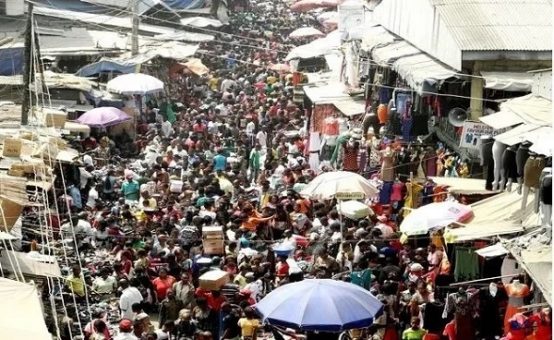
It is getting clearer the shut-down of Onitsha Main Market by Anambra state government did not offer the best option in addressing concerns on the market’s continued closure in compliance with the sit-at-home ritual on Mondays.
Not with the spontaneity of protests and demonstrations the measure escalated last Tuesday. Not with the pro-Biafra sentiments and agitations it re-ignited for the release of jailed leader of the Indigenous People of Biafra (IPOB), Nnamdi Kanu.
The social media was so awash with such sentiments that Anambra state police command in a statement expressed concerns about what it called the “pattern of individuals using social media platforms to incite violence, disrupt public peace as well as the sharing of unverified videos regarding the security situation in the area”.
Before then, the state government had amassed an armada of security agencies to ensure traders did not gain entry into the market with prospects for unpredictable outcomes. Good enough, the security agencies were able to manage the situation in the most professional and competent manner as there have been no reports of any fatality.
Even then, the meeting summoned by the state government last Thursday during which they dialogued with the traders’ unions on issues relating to continued observance of the sit-at-home order long suspended by the IPOB signposts lack of adequate consultations before the market shutdown.
It is immaterial whether the meeting was summoned at the instance of the traders’ unions as the state government claimed. The very fact the government saw sufficient reasons to hold the meeting is suggestive of one or two things.
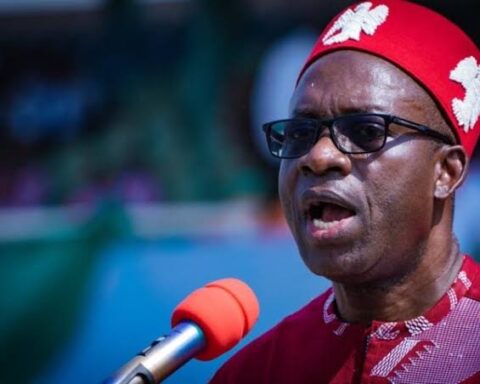
It goes with the unmistakable impression that Governor Chukwuma Soludo did not exhaust all avenues for the peaceful resolution of the matter before resorting to the one-week closure of the market. There is no evidence that he consulted with the traders’ unions widely before shutting down the market with an armada of security agencies.
Had there been such discussions, neither the traders’ unions nor the state government would be quick in seeking or acceding to last Thursdays’ meeting. Issues that arose at the meeting would have been factored into government’s decision to mitigate the ruffled atmosphere created by the closure. It is probable the state government underestimated the capacity of its action to escalate sentiments surrounding the sit-at-home order.
Video footages from the demonstrations showed the traders expressing solidarity with Kanu and calling for his release. The protest even entered the second day when some of the traders blocked the Niger bridge linking Onitsha to Asaba, preventing entry and exit into the commercial city. It took the efforts of the security agencies to clear the obstacles and restore free movement on the bridge.
There is no doubt the market shutdown had the potentials of injecting complications into the fragile security situation of the state but for its mature handling by the security agencies. Soludo may have justifiable reasons for seeking normalcy to return to the market. The state government estimates that a whooping N8 billion is lost each Monday the traders do not open the market.
That is a huge revenue loss. Ironically, the same state government has further increased that loss by the closure of the market for one week. It even threatened to shut it for a further one month if the traders refuse to open with a further threat to bulldoze and pull down the market.
A government that is genuinely concerned about the losses incurred every Monday and desirous of reversing the trend, should not be seen issuing such drastic and counterproductive threats. They are contradictory in terms.
Soludo may have been led to these extreme threats by frustration. But he should not be seen through his actions to be exacerbating the same situation he seeks to remedy. Besides, it is improbable whether the use of force or high-handedness offers the best option in addressing the issues to the sit-at-home observance.
At the centre of it all is insecurity. Attempts in the past by some traders to resume activities on Mondays had attracted dire outcomes including loss of lives in the Onitsha axis. So, those who refuse to venture out on Mondays do so out of safety for their lives in the absence of adequate security protection from the law enforcement agencies.
One of the protesters in Onitsha captured this contradiction succinctly when he said in a trending video clip, if the security presence amassed to enforce the market closure could be deployed to safeguard traders, he will have no problem opening his shop. But that says only part of the story.
That angle cannot diminish the groundswell of dissatisfaction in the zone with the judicial rather than political resolution of the Nnamdi Kanu matter. It is not for nothing that the closure immediately re-ignited sentiments for self-determination and the release of Nnamdi Kanu. So, it not just a matter of re-opening the market and doing away with sit-at-home. We may have to contend with the sentiments surrounding it for a long time to come. That is why political resolution as demanded severally by key leaders and socio-cultural organisations in the zone cannot be wished away.
Just last week, reports had it that Yoruba self-determination leader, Sunday Adeyemo’s (Sunday Igboho) name was taken off the wanted list. In fact, he returned to Ibadan triumphantly to a rousing reception. There are parallels between what he stood for and the campaigns mounted by Kanu.
No less a group than, Miyetti Allah Cattle Breeders Association of Nigeria (MACBAN) latched on to such parallels to pick holes with what they described as presidential pardon given to Sunday Igboho. They listed the harm to lives and property which the activities of the Yoruba self-determination leader allegedly wrought on the Fulani living in Oyo state.
The point MACBAN seemed to have elevated to the fore by such comparison is that political solution can also be found for the Kanu case. That may offer a better prospect for the full resolution of all issues to the sit-at-home observance and eventual return of peace and tranquillity in the zone.
Even then, force in getting the traders re-open their shops is of questionable value. The relative return of normal activities in some state capitals was neither procured by force, intimidation or blackmail. It stemmed from enhanced confidence in law and order and feeling of safety from harms’ way by residents. The situation is remarkably different in the hinterlands because of the absence of these conditions.
Former Anambra state Police commissioner, Aderemi Adeoye, captured this dialectic in one occasion with Soludo standing, when he said “it is not the duty of the police to drag people out of their homes as it will infringe on their fundamental human rights. Our duty is to make the environment conducive for those who want to come out. We have a duty to protect them” Soludo should show evidence that he has caged those Christians whom he said were killing Christians in Anambra state for the traders to be sure of their safety on Mondays.