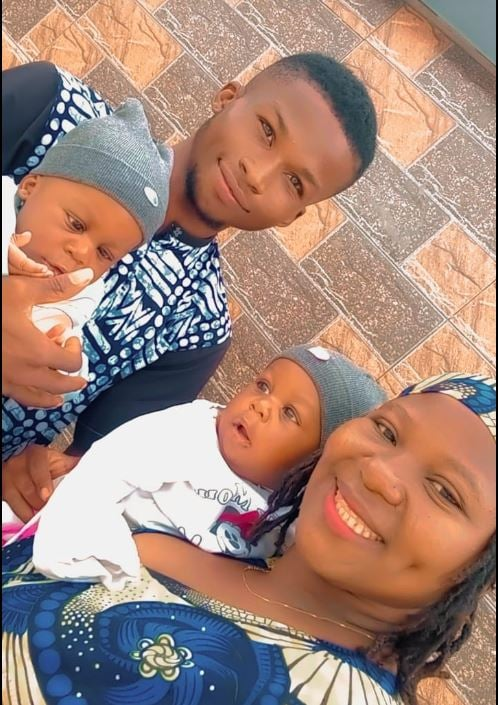
Promise Samuel’s twin boys were healthy when he carried them into a government primary health centre in Ajangbadi, Lagos, on the morning of December 24, 2025.
By the next morning, both children were dead.
The nine-month-old twins, Samuel said, had shown no signs of illness before receiving routine immunisation injections at the facility. But moments after the shots were administered, the babies began to weaken, their bodies burning with fever.
“They were perfectly fine when we arrived,” Samuel told reporters. “After the injections, everything changed.”
According to Samuel, nurses administered injections to both infants and instructed the parents to immediately give them portions of a tablet medication. Shortly after, the twins developed dangerously high temperatures before the family had even left the clinic.
When concerns were raised, Samuel said the nurse advised fever medication at home and warm baths if the temperature worsened. The family paid ₦2,500 in fees and left with a mosquito net given as a Christmas gift.
Within hours, the twins were vomiting.
By nightfall, they were stooling uncontrollably and growing weaker by the minute. By morning, they were no longer breathing.
“When I reached the hospital, they were already gone,” Samuel said. “Their colour had changed. Their teeth were clenched. I couldn’t believe it.”
In shock, Samuel took the babies to multiple hospitals, all of which confirmed their deaths. Still refusing to accept reality, he carried their bodies to a church, hoping for a miracle.
“I only accepted it was over when I noticed the smell,” he said.
Government officials later suggested food contamination as a possible cause, an explanation Samuel rejects outright.
“They didn’t eat after the immunisation,” he said. “All their food is still in my house—untouched. How can the same food kill two babies at the same time, on the same day?”
Initially asked to pay nearly ₦1 million for an autopsy, Samuel said he could not afford it. Authorities later conducted the autopsy themselves. The results remain pending.
Fearing a cover-up, Samuel took the case to the police. The investigation has moved from FESTAC to Okokomaiko and now to the State CID in Yaba.
“I don’t want the truth buried,” he said. “If negligence killed my children, the government must admit it.”
The tragedy has shattered the family emotionally and financially. Already facing eviction, Samuel says his savings are gone, and his wife—now staying with her mother—has been unable to cope.
“I loved them deeply,” he said. “Their food is still there. Every time I see it, I break down.”
His regret is stark and unresolved.
“I regret taking my children to a government health centre,” he said. “Nigeria happened to me.”
Now, in a small Lagos home, two untouched feeding bottles sit where laughter once lived, and a father wakes each morning to the silence of a double grave. The clinic has moved on. The officials are “awaiting results.”
But for Promise Samuel, justice is already overdue—because whatever the autopsy says, his children did not die of statistics or bureaucracy. They died in a system that asked for trust, gave injections, and returned him two lifeless bodies by Christmas morning.