By Stephanie Shaakaa
WHEN the last delegation leaves, the camp does not change.
Nothing here at the camp follows it.
When they leave, the camp exhales and stays the same.
The tents remain. The dust settles. Children still wake up hungry. Women still line up for water. Men still sit quietly, measuring the distance between who they were and who they have become.
The only thing that disappears is attention.
Benue’s internally displaced persons have lived through violence loud enough to summon national outrage. They have been photographed, counted, sympathised with, and promised relief. Their suffering has trended. Their camps have hosted convoys. Their pain has been acknowledged briefly.
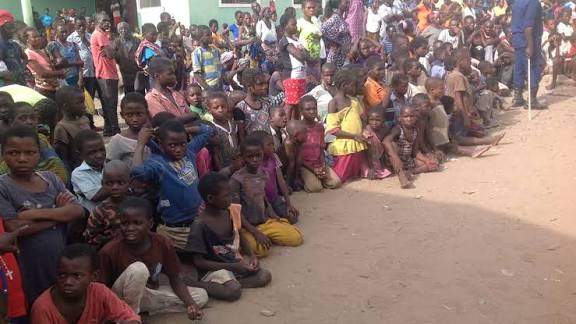
Then the spotlight moved on.
What remains is life after attention, and it is here that the real story begins.
In the camps, survival has stopped being dramatic. It has become administrative. Days are organised around distributions that may not come, medical outreaches that arrive sporadically, and rumours that travel faster than official information. Emergency has quietly transformed into routine.
This is no longer a crisis moment.
It is a prolonged human condition.
Mental health
The unseen wound
Trauma does not announce itself loudly in the camps. It sits. It watches. It waits.
Many displaced persons in Benue no longer speak about what happened to them not because they have healed, but because retelling loss requires emotional energy they no longer possess. Silence has become a coping mechanism.
Sleep is fractured. Nightmares are common. Sudden noises trigger fear. Children wet beds they never used to wet. Adults stare for long periods, their bodies present but their minds elsewhere.
There are no counsellors permanently stationed in most camps. Mental health is treated as a secondary concern, something to be addressed after food, shelter, and security. But trauma does not wait its turn. It seeps into everything,parenting, decision-making, relationships, hope.
In the absence of therapy, people improvise. Women speak quietly among themselves. Men withdraw. Faith becomes both refuge and question. Children learn early how to read adult moods, how to avoid asking the wrong questions, how to grow up too fast.
Physical health: Bodies under strain
Illness is common, but rarely dramatic enough to attract attention.
Skin infections spread easily in crowded conditions. Malaria is constant. Respiratory illnesses linger. Pregnant women attend antenatal care irregularly, depending on distance, cost, and whether transport is available that day. Chronic conditions go untreated. Pain becomes normal.
Healthcare, when it arrives, is often reactive rather than preventive. Medication is rationed. Follow-up is uncertain. By the time help comes, bodies are already exhausted.
The body, like the camp, is expected to endure.
Dignity and identity: What a camp takes quietly
Displacement does not only remove people from their homes. It disrupts identity.
Farmers no longer farm. Traders no longer trade. Elders who once mediated disputes now wait in line for aid. Men who measured their worth by productivity now measure it by patience. Women who ran households now negotiate space with strangers.
Dependency is not chosen.
It is imposed.
And it corrodes dignity slowly.
People begin to ask themselves questions they never asked before
Who am I if I cannot provide?
Who am I if I cannot protect?
Who am I if my children only remember tents?
These questions have no immediate answers.
Children and a future on pause
For children in Benue’s IDP camps, childhood is interrupted, not ended.
Schooling is inconsistent. Learning happens in fragments under trees, on cardboard, when volunteers are available. Concentration is difficult for children who have seen too much, lost too much, or absorbed adult anxiety as background noise.
Play still exists, but it is altered. Games are invented from scarcity. Laughter comes quickly and disappears just as fast. The idea of home becomes abstract.
What does it mean to plan a future when the present is unstable?
After humanitarianism, what next?
Aid saves lives. There is no question about that. But aid is not designed to replace living.
What happens when displacement stretches from months into years? When camps become semi-permanent settlements? When children are born into emergency and grow up inside it?
The question facing Benue is no longer only how to respond to violence, but how to prevent displacement from becoming destiny.
Because the most dangerous moment in any humanitarian crisis is not the beginning.
It is when suffering becomes familiar.
The quiet truth
Benue’s IDPs are not asking for sympathy. They are asking for normalcy, for safety that lasts, for the ability to return, rebuild, or resettle with dignity, and for systems that recognise them not as a temporary inconvenience, but as citizens whose lives have been interrupted by forces beyond their control.
They are still here, thinking, remembering, parenting, healing imperfectly, surviving stubbornly.
The spotlight has moved on.
Their lives have not.
And until we learn to stay with its displaced people beyond moments of outrage, the camps will continue to fill not just with bodies, but with unanswered questions about whose humanity truly counts.
What remains is not a crisis, but a test of how long a nation can look away.