by Tunde Rahman
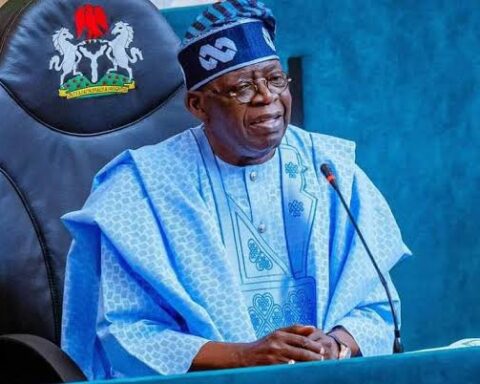
President Bola Ahmed Tinubu Presenting the 2026 Federal Budget Estimates to the Joint Session of the National Assembly, in Abuja, FCT
Nigeria’s 2026 Budget is guided by three basic principles: better revenue mobilisation, better spending by prioritising projects, and better accountability through strengthened procurement discipline, monitoring, and reporting. There is a strong optimism that it will yield outcomes that benefit all
To state that there are gaps in the implementation of the 2024 and 2025 budgets is actually stating the obvious. One does not need to be an economist or an expert in fiscal matters to know this.
Top government functionaries charged with budgetary matters have all made the point and confirmed that the budgets were not fully funded for apparent reasons.
In August, at a stakeholders’ engagement on the implementation of the 2025 capital budget and related issues in Abuja, Dr. Tanimu Yakubu, Director-General of the Budget Office of the Federation, pointed out that the Federal Government was funding the capital component of the 2024 budget, using revenue accruing under the 2025 Budget.
He also noted that the 2025 revenue projections in the budget had been underperforming because the country had not met the oil production quota.
Questions, therefore, arose in some quarters about the level of budget implementation. President Bola Ahmed Tinubu’s announcement in August that the administration had met its 2025 non-oil revenue target even triggered more questions. What then was the issue regarding budget implementation?
It must be noted, however, that there are additional revenue sources for funding budgets beyond Internally-Generated Revenue. These include funding by development partners and foreign and domestic loans.
If the IGR performs, and there are gaps in other revenue sources, there could also be limitations in budget implementation.
In that seemingly innocuous statement, President Tinubu was referring to the non-oil revenue component of the budget for the year.
Following the below-par performance of the 2024 Budget, the National Assembly approved the rollover of the budget into 2025.
The parliament later also approved the rollover of 70 percent of the 2025 capital projects into 2026.
Given this background of poor budget execution, some had suggested a holistic review of the budgeting process to upend the cycle of rollovers and non-implementation.
Dr. Muda Yusuf, Chief Executive Officer (CEO) of the Centre for the Promotion of Private Enterprises (CPPE), among others, proposed that rather than discard projects that were approved but not implemented, it would be more prudent to consolidate outstanding projects, clear the accumulated backlog and re-present them within a more coherent and credible framework.
Two weeks ago, President Tinubu moved decisively to address the implementation problems associated with the 2024 and 2025 Budgets by using the practical template of the 2026 budget.
Presenting the N58.18 trillion 2026 Budget proposals to the National Assembly Thursday, December 18, 2025, the President declared an end to budget rollovers and multiple budgets.
Despite the challenges, the 2026 budget aligns well with the December-January budget cycle.
Aptly titled: “Budget of Consolidation, Renewed Resilience and Shared Prosperity”, this new budget is essentially anchored on fiscal planning, discipline, resilience and sustainable development in line with the Renewed Hope Agenda.
With the budget, President Tinubu plans to consolidate macroeconomic stability, improve the business and investment environment, promote job‑rich growth, reduce poverty and strengthen human capital development, while protecting the vulnerable.
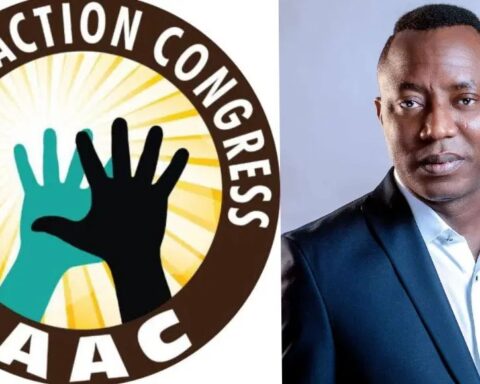
But rather than appreciate the government’s challenge, the courage demonstrated in accepting the fact of poor implementation of the budget and the firm resolve to correct the anomaly, the opposition African Democratic Congress took the notoriously mischievous route to upbraid President Tinubu.
The party described the new budget and the government’s remedial plans as “a copy and paste” of previous years’ spending plans.
The party’s interim National Publicity Secretary, Bolaji Abdullahi, said ADC’s economists reviewed the budget, claiming that “it reflects fiscal recklessness and unrealistic projections.”
Propagating a doomsday theory, ADC opined that, like its predecessors, the 2026 Budget would end up as another unimplemented document.
It is fair to argue that the 2025 budget faced the challenge of transition and competing execution demands.
But presenting the 2026 Budget to the lawmakers, President Tinubu assured that the budgetary situation would be different this time.
The President said: “As of Q3 2025, we recorded: 18.6 trillion naira in revenue — representing 61% of our target; and 24.66 trillion naira in expenditure — representing 60% of our target.
“Let me be clear: 2026 will be a year of stronger discipline in budget execution.
“I have issued directives to the Honourable Minister of Finance and Coordinating Minister of the Economy, the Honourable Minister of Budget and Economic Planning, the Accountant‑General of the Federation, and the Director‑General of the Budget Office of the Federation to ensure that the 2026 Budget is implemented strictly in line with the appropriated details and timelines.
“We expect improved revenue performance through the new National Tax Acts and the ongoing reforms in the oil and gas sector — reforms designed not merely to raise revenue, but to drive transparency, efficiency, fairness, and long‑term value in our fiscal architecture,” he added.
President Tinubu recognises the importance of fiscal guardrails, as evidenced by his clear directive to Government‑owned Enterprises and to the heads of all agencies to meet their assigned revenue targets.
To support this, he said: “An end‑to‑end digitisation of revenue mobilisation — standardised e‑collections, interoperable payment rails, automated reconciliation, data‑driven risk profiling, and real‑time performance dashboards — will be deployed so that leakages are sealed, compliance is verifiable, and remittances are prompt.”
These targets, President Tinubu noted, will form core components of performance evaluations and institutional scorecards.
“Nigeria can no longer afford leakages, inefficiencies, or underperformance in strategic agencies. Every institution must play its part.
In short: we will spend with purpose, manage debt with discipline, and pursue broad-based, sustainable growth.”
These are grand plans and clear directives from President Tinubu. The National Assembly, too, has a vital role to play in ensuring the successful implementation of the 2026 budget.
Many of the unimplemented projects in the 2025 Budget, for instance, were constituency projects, the brunt of which was borne by lawmakers who tended to allocate the jobs even when the projects had not been cash-backed.
Beyond approving the 2026 appropriation, therefore, the lawmakers must show greater restraint and prudence in handling their constituency projects.
The 2026 budget has other notable aspects. One, it re-presents a defining moment in the national journey of reform and transformation.
The 2026 Budget, as President Tinubu said, “reflects the government’s determination to lock in macroeconomic stability, deepen competitiveness, and ensure that growth translates into decent jobs, rising incomes, and a better quality of life for every Nigerian.”
Two, in line with the Renewed Hope Agenda and the practical needs of Nigerians, the budget prioritises five critical sectors: Defence and security – N5.41 trillion; infrastructure – N3.56 trillion; education – N3.52 trillion; and health – N2.48 trillion.
As the President rightly said, these priorities are interlinked: “Without security, investment will not thrive.
“Without educated and healthy citizens, productivity will not rise. Without infrastructure, jobs and enterprises will not scale.”
To all intents and purposes, the government has drawn appropriate lessons from the drawbacks of the 2024 and 2025 budgets.
That is why the 2026 Budget is guided by three basic principles: better revenue mobilisation, better spending by prioritising projects, and better accountability through strengthened procurement discipline, monitoring, and reporting.
There is a strong optimism that it will yield outcomes that benefit all, which hopefully the perennial cynics would acknowledge.
Rahman is Senior Special Assistant to the President on Media & Special Duties.