By Sonnie Ekwowusi
Today is born our Saviour, Christ the Lord” (Psalm 96:1–2). We intone this responsorial psalm as we joyously celebrate another mystery of the Nativity—yes, that inscrutable and impenetrable mystery called Christmas.
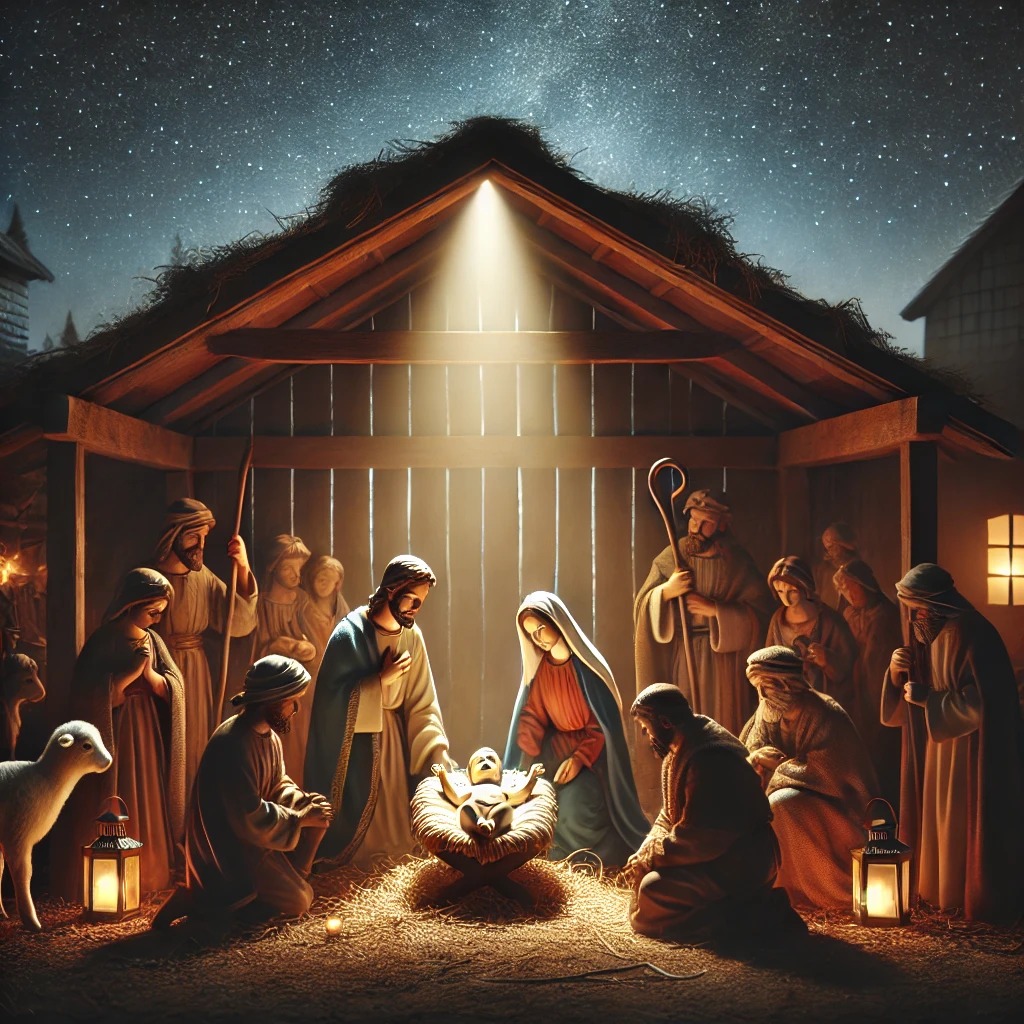
In order to save you and I, the Second Person of the Blessed Trinity, Jesus Christ, entered human history by taking flesh in the womb of the Blessed Virgin Mary, to be born in a pen—a place where animals are kept. The Virgin Mary, his mother and our mother, longed for him. John the Baptist sang of his coming.
In the great antiphons of the Advent liturgy, we had been longing for the coming of the Saviour. “Veni Emmanuel,” we sang. For Cardinal John Henry Newman, this not only heralds Christmas but is also a continuation of the Solemnity of the Immaculate Conception.
As the prophet Isaiah puts it: “A child shall be born for us, and he will be called God, the Almighty; every tribe of the earth shall be blessed by him” (Isaiah 9:6). The prophet Malachi unhesitatingly joins in, re-echoing the urgency, immediacy, and eschatological underpinning of his coming: “But who will endure the day of his coming? And who can stand when he appears?” (Malachi 3:1–4).
For St Thomas Aquinas, Christ’s Incarnation occurred plenitudo temporis—at the fullness of time—a phrase he borrowed from St Paul’s Letter to the Galatians (4:4). The Incarnation, for Thomas, was not just a theological nicety: if Christ had not been incarnated, humanity would have despaired.
When peaceful silence enveloped the earth and the night had run half of its swift course, God—who had taken flesh in the womb of the Blessed Virgin Mary—chose to be born in the relatively humble city of David called Bethlehem.
St Josemaría Escrivá recaptured this mystery in these words: “When the fullness of time came, no philosophical genius—no Plato or Socrates—appears to fulfil the mission of redemption. Nor does a powerful conqueror, another Alexander, take over the earth. Instead, a child is born in Bethlehem.”
At long last, the Saviour has come. Today Christ is born among us. Christmas is the fulfilment of the ancient prophetic oracles. Even though twenty-one centuries have elapsed since the first Christmas, we are invited this Christmas—and every Christmas—not to revel in militant consumerism, but rather to relive that deepest mystery that took place more than two thousand years ago, when Jesus Christ took flesh in the womb of the Blessed Virgin Mary to be born among us.
“Christ triumphed through humility,” writes St Josemaría Escrivá. Jesus is the Creator of all the alluring material things on this earth. He could have chosen to be born in the most expensive hospital on earth, attended by the best gynaecologist. Instead, he chose to be born in a stable—a place where animals are kept. Can you imagine it? Christ, the Saviour of mankind, choosing to be born in such a place. The Bible tells us that there was no room for him, his mother Mary, and his foster father Joseph in the inn.
What a striking paradox. There is room for the materially rich, room for those dressed in fine apparel, and room for travellers arriving from distant places. Yet there was no room in the inn for the Creator of the universe. He was laid in a manger, not on a golden bed. Animals witnessed his birth and surrounded him thereafter.
Before his public ministry, Jesus spent thirty long years in obscurity, working as a carpenter with St Joseph, his foster father. For humanity’s salvation, he submitted himself to arrest and death on the cross—an ignominious end by any standard.
As Nigerians celebrate Christmas 2025, the country finds itself in one of the most perilous moments in its modern history. Terrorist attacks, banditry, and mass kidnappings have reached alarming levels. Schools have been attacked, worship centres desecrated, and rural communities terrorized. It is against this grim backdrop that Nigeria and the United States recently launched a Joint Working Group to confront the security crisis.
Yet, even during this Christmas, fear persists. Highways are increasingly unsafe as kidnappers and armed robbers target travelers. Reckless driving, consumer fraud, and official corruption continue unchecked. Major federal roads—particularly the Benin–Ore Expressway and the Benin Bypass—remain in deplorable condition. Many Nigerians will celebrate Christmas in darkness due to persistent electricity failures that have paralysed social and communal life. Others will mark the season behind bars, including those detained unlawfully in our Correction Centres.
Hospitals across the country tell a quieter but equally tragic story. Poverty is widespread. Many sick Nigerians die without care. Hunger stalks households. Mental health challenges are rising sharply. Medical professionals warn that one in four Nigerians is at risk of mental breakdown under current social pressures.
The human cost is evident. In Lagos, a legal practitioner suffering from mental illness was found lying in a gutter opposite Eko Hotel, Victoria Island after two months, rescued only through the vigilance of a colleague. Her story is not unique—it is a symptom of a society under severe strain.
At the centre of this crisis is governance failure. The federal government has repeatedly fallen short of its constitutional responsibility to protect lives and property. Political office holders continue to live in ostentatious comfort, even as millions struggle for survival. The contrast is stark and morally indefensible.
Still, responsibility does not rest with the government alone. The Christmas message calls every citizen to action. Nation-building is a collective task. Service, compassion, and solidarity must guide individual conduct. Christ’s life offers a model: he served rather than sought to be served, identified with the poor, healed the sick, comforted the grieving, and shared in human suffering.
This vision underpins the call for a new humanism in Nigeria—one that sees neighbours not as tools for exploitation but as fellow human beings deserving dignity. The quiet self-giving of Jesus, Mary, and Joseph at the first Christmas remains a powerful reminder of what society especially the family can become.
In his Fourth Sunday of Advent Catechisis, Pope Leo described Saint Joseph as “a welcoming manger, a hospitable home, and a sign of God’s presence.” It is a description that resonates deeply in a country searching for moral direction.
Christmas, however, is not only a time for reflection—it is also a time for hope. Despite economic hardship, insecurity, grief, and loss, despair must not have the final word. The Christian message insists that hope survives even in darkness.
Nothing is gained by surrendering to melancholy. Hope remains humanity’s greatest asset. When hope dies, despair takes its place—and despair extinguishes joy. Christmas calls Nigerians to recover their humanity, their laughter, and their capacity to hope.
This column now proceeds on Christmas vacation and will return, by the grace of God, in January 2026. I thank readers for their steadfast engagement throughout 2025 in this demanding task of speaking truth in the public square.