The shocking reports, the other day, that seven women protesters in Adamawa State were shot and killed by soldiers has sparked wild outrage across the country. At a time the country is battling with battered image over allegations of Christian genocide perpetrated by Boko Haram and other Islamic Jihadists, it is most dastardly to learn that soldiers, who are supposed to protect beleaguered citizens are the ones who turned around to kill the same citizens. Although, the Army has denied the allegation, the damage has been done. The image battering of Nigeria can’t easily be erased.
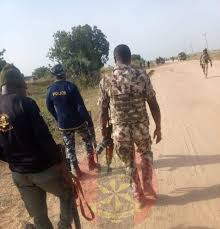
According to the chilling unconfirmed report, at least seven women were shot dead by soldiers escorting the Brigade Commander, Amechi Agwu, of 23 Brigade, Nigeria Army Yola.
This reportedly occurred after troops opened fire on the group of protesting women in Lamurde. The tragic incident which occurred at Rigange Junction, has deepened tension already inflamed by a violent assault by suspected Chobo speaking militia, who launched coordinated attacks on multiple communities in Lamurde Local Government Area.
An unnamed community leader reportedly told Sahara reporters that 12 women were shot, with seven dying instantly, while five others were battling for their lives at Numan General Hospital.
According to sources, the women had gathered to protest what they described as the late arrival of security forces to the villages hours after the attackers had rampaged and retreated unchallenged. The women were reportedly angry and frustrated and tired of burying their own.
But the Nigerian Army’s 23 Brigade in reaction, denied allegations that its troops killed women protesters in Adamawa State. According to the Army, the women were killed by indiscriminate gunfire from local militia in the area. It said the Brigade Commander was not present at the scene at the time of the incident.
The Army says its troops were responding to a communal clash between the Bachamal and Chobo communities in Lamurde Local Government Area, which was sparked by a long–standing land dispute. It said that the troops were attacked by armed the militia and in the exchange of fire; three gunmen were neutralized while the other fled.
As it were, the Army has expressed sympathy with the families of the diseased women and urged the warring communities to embrace peace. It also reiterated its commitment to protecting civilians and maintaining security in the area.
It needs to be noted at this juncture, that soldiers opening fire on unarmed civilians, including women, is a serious human rights violation and a grave concern. International law, including the Universal Declaration of Human Right and the African Charter on Human and People’s Right, protects the right to life and prohibits excessive use of force.
Similarly, the Nigerian Constitution guarantees the right to life and dignity, while the Police and Army force acts regulate the use of force. Soldiers are trained to protect civilians, not to harm them.
Unfortunately, there have been cases where security forces have used excessive force, leading to civilian causalities. One notable incident is the Zaria massacre in 2015, where hundreds of unarmed civilians, including woman and children, were killed by the Nigerian military. Another incident reportedly occurred in 2020, when soldiers opened fire on peaceful protesters in Lagos, killing at least 12 people. These incidents the need greater accountability and transparency in Nigeria security forces to prevent such tragedies from happening again.
These incidents have sparked outrage and calls for an independent investigation, with community leaders and human rights organizations demanding justice for the victims. The Nigerian army has not issued an official statement on the incident, and the Adamawa state government has also remained silent. There is need for independent investigation to unravel the veracity of the case to establish who actually killed the hapless women.
Onyekakeyah, a former member of The Guardian Editorial Board , is a public affairs commentator and a Daily Query columnist.
Follow us on all social media platforms @dailyquery for news and analyses around the globe.